



 EN
EN  RU
RU 
The logistics industry is ushering in unprecedented changes. From automated warehouses to unmanned transportation tools, the continuous emergence of innovative technologies has presented both significant challenges and opportunities to traditional transportation methods. Against this background, as one of the representatives of future transportation solutions, the “Wing Container” came into being. It is not only a technological innovation but also a microcosm of the green and intelligent development of the logistics industry.
Design Principles and Core Advantages of Wing Containers
From Standard Boxes to Side-Opening Innovation
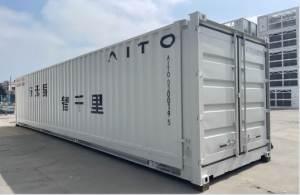
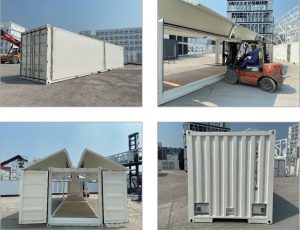
Traditional shipping containers are usually front- or rear-opening, designed for stacking and easy intermodal transport. While these designs have been effective for decades, they create bottlenecks in certain scenarios—especially where space is limited or where quick access to goods is essential. The Wing Container changes this by incorporating double-side-opening panels, allowing access to cargo from either side without requiring the container to be repositioned.
This innovation enables cargo to be loaded or unloaded quickly in congested ports, narrow warehouses, or even roadside unloading points, thereby minimizing delays. The double-sided opening design is particularly valuable for long or oversized items, such as steel pipes, machinery, or prefabricated building materials, which are difficult to handle through standard rear doors.
Structure, Safety, and Durability
The Wing Container’s design integrates reinforced hinges, sealed locking systems, and weather-resistant gaskets to ensure safety during transit. Its opening mechanism can be manual, hydraulic, or electric, depending on operational needs. In coastal regions or areas with high humidity, anti-corrosion coatings extend container life, while structural reinforcements ensure stability during crane lifting or train loading.
This focus on durability and adaptability makes Wing Containers suitable for multiple transport modes—road, rail, or maritime—without compromising cargo safety.
Rapid Loading and Unloading: Efficiency in Action
In multi-stop delivery scenarios, standard containers often require full or partial unloading to access goods located deeper inside. This creates inefficiencies, additional labor costs, and potential damage from repeated handling. Wing Containers solve this by enabling selective access—unloading goods for one destination without disturbing others.
Forklifts can operate directly alongside the container, loading or unloading pallets within minutes. This is particularly important in high-turnover industries like retail distribution, where operational speed is critical.
Intelligence Through IoT Integration
Beyond its mechanical advantages, the Wing Container can be equipped with IoT-based tracking and monitoring systems. These include:
GPS tracking for real-time location updates.
Temperature and humidity sensors for cold chain goods.
Door-opening sensors for security monitoring.
Shock and tilt detectors to record potential damage events.
Such features enable logistics managers to monitor cargo conditions in real time, trigger alerts for abnormal situations, and optimize route planning. Combined with cloud-based platforms, this allows better resource allocation and decision-making.
Market Prospects and Application Scenarios of Wing Containers
Road Transport: Solving the Urban Logistics Challenge
Urban logistics faces multiple constraints—traffic congestion, limited unloading space, and strict time windows. Wing Containers address these issues by enabling side unloading without requiring a truck to reverse into a loading bay. This reduces road obstruction time, improves driver safety, and aligns with “last-mile” delivery efficiency.
For emergency relief operations, such as disaster recovery, side-opening containers allow quick distribution of aid supplies without complex equipment, ensuring faster response in critical situations.
Maritime and Rail Transport: Optimizing the Supply Chain
In maritime shipping, the time a vessel spends in port directly impacts operating costs. Wing Containers reduce port stay by speeding up cargo handling, especially when partial unloading is required for multi-port itineraries.
In rail transport, where cargo is often loaded and unloaded in sequence, side-opening containers eliminate the need to reposition wagons for access. This enables mixed cargo deliveries along long-distance rail routes without significant delays.
Engineering, Construction, and Exhibition Applications
In construction sites, where space is tight and schedules are demanding, Wing Containers allow cranes or forklifts to load and unload large equipment from the side without moving the container. Similarly, for exhibitions or temporary events, Wing Containers can be transformed into pop-up showrooms or workstations, quickly set up and dismantled as needed.
Challenges and Technical Bottlenecks
Cost and Return on Investment
The specialized structure, reinforced panels, and hydraulic systems make Wing Containers more expensive than conventional containers. For companies managing large fleets, the initial capital outlay can be significant. However, faster turnaround, reduced labor costs, and lower operational downtime can offset these expenses over time.
Maintenance and Standardization
Wing Containers have more moving parts than standard containers, meaning higher maintenance requirements. Regular inspections of hinges, locking systems, and sealing components are necessary to prevent operational failures. Furthermore, integration into global logistics requires compliance with ISO container standards and CSC safety certifications, ensuring compatibility with cranes, chassis, and stacking systems worldwide.
Market Education and Industry Acceptance
Like many innovations, Wing Containers must overcome industry conservatism. Logistics companies need clear evidence of operational benefits before making large-scale investments. Pilot programs, joint ventures with major logistics players, and government incentives for green logistics adoption could accelerate acceptance.
Green and Intelligent Future Development
CIMC TLC | RYC | XLC, a leading manufacturer of modular logistics equipment, is actively developing Wing Containers to meet both efficiency and sustainability goals. The company integrates high-strength lightweight materials to reduce container weight, thereby lowering fuel consumption during transport.
By reducing truck idle time during loading/unloading, Wing Containers also contributes to lower greenhouse gas emissions. When combined with autonomous trucks, unmanned port cranes, and AI-driven scheduling systems, they can become a core component of fully automated logistics corridors.
Looking ahead, the integration of renewable energy—such as solar panels for powering IoT devices—and the use of recyclable materials will make Wing Containers not only operationally superior but also environmentally responsible. In a future where speed, sustainability, and digital control define competitiveness, Wing Containers are poised to play a central role.