



 EN
EN  RU
RU 
The Growing Need for Prefab Clinics
- Bridging Healthcare Gaps in Underserved Areas
Many rural and isolated regions — such as mountainous zones, islands, and marginalized urban areas — suffer from a severe lack of accessible healthcare. This results in late diagnoses, untreated diseases, and poor epidemic control. Prefab Clinics effectively bridge this gap by bringing primary medical care directly to these communities, enhancing overall health outcomes and accessibility. - Rapid Response to Emergencies
Natural disasters, outbreaks, and emergencies demand immediate medical interventions. Conventional hospital construction typically takes between six and twelve months, which is often too slow to address urgent needs. In contrast, Prefab Clinics can be manufactured, shipped, and installed within 45 to 90 days, providing critical frontline medical support during crises. - Supporting Modern Tiered Healthcare Models
Many health systems worldwide are moving toward tiered care structures, where community-level facilities handle basic healthcare, while hospitals manage specialized treatments. Prefab Clinics act as vital hubs offering services such as immunization, maternal and child health, chronic disease management, diagnostic screening, and telemedicine, seamlessly integrating into the broader healthcare ecosystem
What Is a Prefab Clinic?
Prefab Clinics are factory-built medical modules designed for easy transport and rapid assembly on site. Typically constructed as standardized 40-foot container units or steel-frame modules, they come fully pre-wired, plumbed, and equipped with the necessary medical systems before shipment. Multiple modules can be combined to create a comprehensive healthcare facility customized to specific requirements.
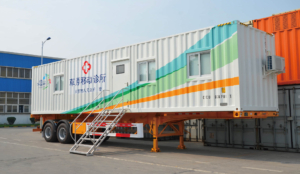
Core Functional Modules of the Prefab Clinic
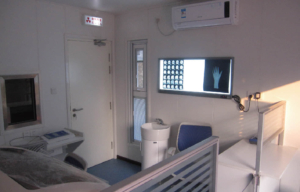
- Consultation and Treatment Rooms are designed for patient diagnosis and care
- Laboratory and Diagnostic Imaging Units are equipped for on-site testing and scanning
- Negative Pressure Isolation Rooms to safely contain infectious patients
- Pharmacy and Medical Storage for proper drug and equipment management
- Telehealth Workstations enabling remote consultations and electronic medical record (EMR) access
- Auxiliary Modules for power supply, water treatment, and sanitation systems
Design Features and Technical Specifications
Modular and Scalable Construction
Modules are engineered with precision joints and bolted connections, allowing horizontal and vertical expansion to suit varying spatial and capacity needs. This flexible configuration ensures adaptability to diverse site layouts and future scalability.
Medical-Grade Interior Finishes
- Antibacterial, anti-slip PVC flooring that is easy to clean and maintain
- Walls covered with mildew-resistant and anti-germ panels, enhancing hygiene
- HVAC systems integrated with HEPA filters and ultraviolet sterilization to maintain air purity
Comprehensive Medical Systems Integration
- Air management with positive and negative pressure zones to control infection spread
- Fire safety systems include smoke detectors, alarms, extinguishers, and emergency exits
- Pre-installed medical gas pipelines for oxygen and compressed air supply
- Independent plumbing for potable water and wastewater, including septic or treatment units
- Power systems featuring uninterruptible power supply (UPS), backup generators, and optional solar panels
- Advanced IT infrastructure supporting Wi-Fi, 5G connectivity, telemedicine hardware, and health data management
Durable and Adapted to Harsh Environments
CIMC TLC | RYC | XLC Prefab Clinics meet stringent ISO, CE, and NFPA certifications, ensuring robust performance under challenging conditions such as:
- Extreme temperatures ranging from -40°C to +60°C
- High winds, including typhoons and hurricanes
- Corrosive marine or desert atmospheres
- High-altitude locations with thin air and increased UV exposure
- Off-grid sites powered by renewable energy solutions
Manufacturing, Logistics, and Deployment
- Needs Assessment & Custom Design: Analyze clinical scope, local regulations, and site conditions to create tailored solutions.
- Factory Assembly: Build steel-frame modules and install utilities in a controlled environment.
- Systems Integration & Testing: Conduct negative pressure tests, HVAC calibration, electrical load tests, and plumbing integrity checks.
- Quality Assurance: Obtain necessary certifications and perform final functional inspections.
- Packing & Transportation: Securely pack modules for ocean, rail, or road shipment, including customs clearance support.
- Site Assembly & Commissioning: Use cranes for placement, connect utilities, adjust systems, and train staff on operations.
This streamlined workflow results in lead times of just 45 to 90 days, significantly faster than conventional construction.
Application Scenarios for Prefab Clinics
- Rural and Remote Communities: Deliver essential health services including vaccination, maternal care, and chronic disease management.
- Disaster and Emergency Relief: Rapidly establish field hospitals and triage centers following natural or man-made disasters.
- Border and Epidemic Control: Deploy screening and quarantine units equipped with infrared thermography and PCR testing booths.
- Remote Industrial Bases: Provide mobile healthcare support for personnel in isolated or harsh environments.
- Corporate and Educational Campuses: Facilitate on-site health monitoring, occupational medicine, and telehealth consultations.
Cost and Time Benefits
| Criteria | Traditional Hospital | Prefab Clinic |
|---|---|---|
| Construction Time | 6 to 12 months | 45 to 90 days |
| Setup Requirements | Extensive foundation and excavation | Simple slab or gravel base |
| Cost | High initial investment | 30–60% lower overall cost |
| Mobility | Fixed, non-relocatable | Fully portable and reusable |
| Scalability | Limited expansion capability | Highly modular and expandable |
Future Innovations and Trends
- Integration of AI for diagnostics, triage, and patient monitoring
- Green energy implementations such as solar power and rainwater harvesting
- Automated lab benches, mobile CT/X-ray units, and vaccine delivery pods
- Enhanced connectivity enabling integration into national health IT systems
CIMC TLC | RYC | XLC Prefab Clinics represent a transformative leap in healthcare infrastructure, combining speed, quality, adaptability, and cost-efficiency. This innovative solution brings accessible, modern medical care to areas traditionally underserved or difficult to reach, meeting the demands of the 21st century.
Whether addressing routine healthcare, emergency response, or pandemic control, the Prefab Clinic is ready to deploy, delivering care where and when it is needed most.
CIMC TLC | RYC | XLC is your partner from concept to care.