


 EN
EN  RU
RU 
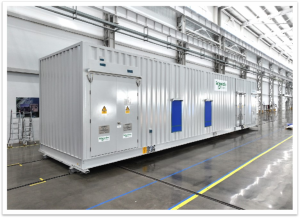
In today’s rapidly evolving industrial landscape, the demand for reliable, flexible, and mobile power distribution solutions has led to the emergence of the E-House container. Also known as a mobile substation, electrical house, or power house module, the E-House container is revolutionizing how electrical infrastructure is deployed, maintained, and scaled, especially in remote, temporary, or fast-paced project environments.
This article explores the E-House container from multiple dimensions, including its structure, benefits, applications, global market trends, and future opportunities. Whether you’re an electrical engineer, project manager, or procurement officer, this guide aims to provide deep insights and practical knowledge.
What Is an E-House Container?
An E-House container, short for “Electrical House,” is a prefabricated, modular, and fully integrated enclosure that contains medium-voltage and low-voltage switchgear, control systems, automation, and other electrical components. It is designed to be a plug-and-play power distribution solution, ready for deployment with minimal on-site work.
Unlike conventional electrical buildings, E-Houses are:
Pre-assembled in a factory
Fully tested before delivery
Transportable by road, rail, or sea
Designed to withstand harsh environments
These containers are especially popular in oil & gas, mining, renewables, and heavy industry sectors.

Core Structure of an E-House Container
The typical structure of an E-House container includes:
External Shell
Built from reinforced steel or aluminum
ISO container dimensions (e.g., 20ft, 40ft)
Insulation for heat, moisture, and dust protection
Weatherproof coatings and paint
Electrical Equipment Inside
MV and LV switchgear
Transformers (dry or oil-type)
UPS (Uninterruptible Power Supply)
Motor control centers (MCCs)
Protection relays and SCADA systems
Environmental Systems
HVAC (Heating, Ventilation, and Air Conditioning)
Fire suppression systems
Lighting and emergency exit signage
Cable Management and Grounding
Integrated cable trays
Floor grommets
Earthing systems for safety
This modular yet comprehensive setup is what makes the E-House container so effective for rapid deployment.
Key Benefits of Using an E-House Container
- Reduced Installation Time
Traditional substation buildings can take months to construct, whereas E-Houses can be ready in a matter of weeks. Since they are built and tested off-site, onsite commissioning time is minimized. - Cost Savings
E-Houses eliminate civil construction costs, reduce labor expenses, and avoid delays due to weather or site conditions. - Mobility and Reusability
Their container-based design allows them to be relocated and reused for multiple projects or phases of a single project. - Customized Configurations
Each E-House can be designed to specific project needs—whether that involves specific voltage requirements, control systems, or space constraints. - Improved Safety and Quality Control
Being assembled in a controlled factory environment improves build quality, safety, and compliance with standards such as IEC, ANSI, and NEMA.
Applications Across Industries
The E-House container serves a wide range of industries that require temporary or remote power distribution:
- Mining Operations
In remote mining sites where power infrastructure is nonexistent, E-Houses offer a plug-and-play solution to energize machinery and processing plants. - Oil and Gas Fields
Whether for offshore platforms or desert pipelines, E-Houses serve as a central node for electrical distribution and control. - Renewable Energy Projects
Wind and solar farms often require mobile substations for step-up transformation and grid connection. - Infrastructure Projects
During the construction of railways, highways, or airports, E-Houses provide temporary but robust power solutions. - Data Centers
Modular data centers rely on E-Houses for backup power, switchgear, and control systems that must be deployed quickly and flexibly.
Comparison: E-House Container vs Traditional Electrical Rooms
| Feature | E-House Container | Traditional Electrical Room |
|---|---|---|
| Installation Time | 4–8 weeks | 6–12 months |
| Cost | Lower (no civil works) | Higher (requires foundations/building) |
| Portability | High (can be moved) | Fixed location |
| Customization Flexibility | Very high | Moderate |
| Environmental Tolerance | Designed for harsh conditions | Needs additional protection |
E-Houses are not meant to replace traditional substations completely but to complement them where mobility, speed, or modularity is required.
Global Market Trends
The global E-House market is projected to grow significantly due to several factors:
– Renewable Energy Boom
As countries invest in renewable energy, they need flexible substations and control rooms that can be easily relocated or adjusted.
– Rise of Remote Projects
Mining and oil & gas operations are moving to more remote areas, where traditional infrastructure isn’t feasible.
– Disaster Recovery & Emergency Power
Governments are investing in mobile power systems that can be rapidly deployed after natural disasters.
– Digitalization
Smart grid and automation technologies are being integrated into E-Houses, allowing real-time monitoring and control.
According to recent reports, the E-House market is expected to exceed USD 2 billion by 2030, with CAGR growth driven by both developed and emerging economies.
How to Choose the Right E-House Container
Selecting the right E-House container depends on a range of technical and operational considerations:
1. Voltage and Load Requirements
Understand your medium-voltage and low-voltage power needs, and specify the types of switchgear accordingly.
2. Environmental Conditions
Consider whether the unit will be placed in extreme climates—snow, desert, marine environments, etc.
3. Size Constraints
Containerized E-Houses are available in multiple dimensions (20ft, 40ft, custom). The site and equipment will determine the footprint needed.
4. Safety Standards and Certifications
Ensure compliance with IEC, UL, ANSI, and other relevant safety and electrical codes.
5. Maintenance Accessibility
Design the internal layout for easy inspection, replacement, and future upgrades.
Challenges and Considerations
Despite their advantages, E-Houses also come with challenges:
Transportation Restrictions: Oversized or overweight containers may require special permits.
Initial Design Complexity: Custom designs must be carefully engineered to avoid later rework.
Limited Expansion: Once built, expanding a container module isn’t always feasible; a new one may be required.
However, with proper planning and engineering, these limitations can be mitigated.
Future of E-House Containers: Smart, Green, and Autonomous
Looking ahead, E-Houses will evolve beyond just being mobile substations. Expect to see:
– Smart E-Houses
With integrated IoT, AI-driven diagnostics, and cloud-based SCADA, smart E-Houses will offer predictive maintenance, remote troubleshooting, and energy optimization.
– Hybrid Power Integration
Next-gen E-Houses may incorporate battery energy storage systems (BESS), solar inverters, or fuel cells, creating hybrid power modules.
– Green Materials & Energy Efficiency
New builds will focus on low-carbon materials, recyclable components, and energy-saving HVAC systems to align with ESG goals.
– Autonomous E-Houses
Advanced E-Houses will self-monitor, self-adjust, and even deploy robotic maintenance tools—especially in unmanned locations.
In today’s rapidly evolving industrial landscape, the E-House container has become a strategic asset. With its integrated design, mobility, and quick deployment capabilities, it supports diverse power demands—from solar farms and mining sites to emergency response operations—offering a more cost-effective and scalable alternative to traditional systems.
As a global leader in the manufacturing of standard and special logistics equipment, CIMC TLC | RYC | XLC is committed to the design and production of high-quality, innovative products. Our offerings include cold chain equipment, containerized modular buildings, and integrated energy systems, providing reliable and customized solutions for customers worldwide.