



 EN
EN  RU
RU 
Offshore operations have different regulations from onshore projects. Distance, exposure, motion, and risk alter every decision, especially regarding the transport, storage, and housing of equipment. In these habitats, containers aren’t simply used as transportation tools. They become integral components of the procedure itself.
Common containers, which are successful in coastal areas, are often thought to be adequate for offshore use. That supposition is valid until the environment begins to exert forces on those containers that they were not built to withstand. Salty air, constant motion, wave-induced movement, and limited access lead to design limitations that become serious threats to operation.
This is where offshore containers become necessary rather than optional. Their role is not defined by convenience, but by survival under conditions where failure carries high financial and safety consequences.
Offshore Environments Create Non-Negotiable Demands
Offshore platforms, vessels, and floating facilities are present in an ever-competitive environment. Unlike land-based facilities, they have no protection from wind, humidity, or corrosion. The equipment must be able to function continuously in environments that would adversely affect the standard infrastructure in just a few months.
The offshore environment has a tendency to add stress to the already-present. Salty soil promotes corrosion on soil-d coated surfaces. Structural loads are subject to fluctuations that are dependent on the platform’s movement and flexibility. Access to the maintenance area is limited, which means that preventive design is more important than reactive repair.
In this context, containers are no longer passive storage units. They are exposed to:
- Continuous saltwater corrosion risk
- Dynamic loads caused by wave motion and vessel movement
- Restricted maintenance access once installed
- Strict safety and certification requirements
Offshore containers are designed with these realities in mind. Reinforced structures, corrosion-resistant materials, and controlled internal environments are not upgrades; they are baseline requirements.
Why Standard Containers Fail Offshore
Standard ISO containers are designed for land and sea travel, but don’t have a long lifespan in offshore environments. They’re designed to stack, process, and have an efficiency cost of around 7%, assuming a consistent placement and expected exposure.
Once located offshore, these estimates are flawed. Containers may be moved constantly, with unbalanced loading, and may be directly exposed to marine components. Eventually, structural fatigue will set in. The seals on the doors are deteriorating. Electrical systems are susceptible. Minor corrosion is quickly established in the absence of regular maintenance.
Failure doesn’t always seem to be dramatic at first. It typically begins with small imperfections, surface corrosion, or misaligned doors. In offshore operations, these early signs are typically followed by a rapid increase in damage, because the window of opportunity for repair is limited and the logistics of replacing the damaged part are complex.
The cost of container failure offshore is not measured only in replacement expenses. It includes downtime, safety risk, regulatory penalties, and potential project delays. Offshore containers are required precisely because these risks cannot be absorbed casually.
Safety and Compliance as Operational Drivers
The safety of offshore operations is not a guide, but instead is a prerequisite to operation. The equipment utilized on offshore platforms must follow the stringent standards established by societies of classification, regulatory bodies, and project owners. Containers employed in offshore projects often harbor critical systems, instruments, or even personnel assistance equipment.
Offshore containers are intended to satisfy specific requirements that regular containers cannot accomplish. These may include the ability to resist fire, strengthen the structure, have controlled ventilation, and have certified lifting points that are designed for use with offshore cranes.
In many offshore projects, the selection of containers is scrutinized as part of the project’s approval. Using uncertified equipment can void insurance or cause a delay in getting started. In this regard, offshore containers serve not only as objects with physical attributes, but also as instruments to enforce compliance.
When safety systems are reliant on the integrity of containers, there is little room for flexibility. Offshore containers have a consistent performance that is unacceptable.
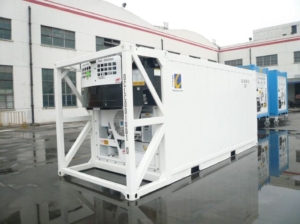
When Offshore Containers Become Mandatory
Offshore containers are not required for every marine-adjacent activity. Their necessity emerges when operational conditions exceed the tolerance of general-purpose solutions. Certain scenarios consistently trigger this requirement.
Offshore containers become mandatory when:
- Equipment must remain installed offshore for extended periods
- Containers are exposed to constant motion or vibration
- Internal systems are sensitive to humidity, temperature, or contamination
- Regulatory approval depends on certified offshore-rated equipment
At this stage, container selection becomes part of risk management rather than procurement. Offshore containers are chosen not because they are specialized, but because standard options introduce unacceptable uncertainty.
This transition often coincides with project scaling. As operations grow more complex, tolerance for failure decreases. Offshore containers provide a controlled, predictable environment within an inherently unstable setting.
How Offshore Containers Change Operational Reliability
The implementation of offshore containers promotes stabilizing operations that surpass the physical limits of stability. Predictability is the most beneficial attribute. The equipment is still effective in the face of extreme weather. Maintenance Schedules become more consistent. The inspection results are enhanced.
Offshore containers also facilitate planning. Knowing how to store goods, workshops, or control rooms will preserve their integrity, allowing project managers to concentrate on the operational execution of the project instead of on planning for potential problems.
From a human perspective, offshore containers have a safety culture. Personnel rely on the infrastructure to support their efforts. A distinct division between hazardous areas and protected spaces increases faith and efficiency.
These benefits are accrued over time, which reduces the apparent and hidden costs of offshore operations.
Offshore Containers Versus Standard Containers in Practice
The difference between offshore containers and standard containers becomes most visible when comparing real-world performance rather than specifications.
| Aspect | Standard Container | Offshore Container |
|---|---|---|
| Structural design | Transport-focused | Long-term offshore deployment |
| Corrosion resistance | Limited | Enhanced for marine exposure |
| Certification | ISO transport standards | Offshore and safety certifications |
| Maintenance tolerance | Frequent access assumed | Limited access assumed |
| Operational risk | High offshore | Controlled offshore |
This comparison explains why offshore containers are required in certain operations. The distinction lies not in size or appearance, but in design philosophy.
Offshore Containers as Risk-Control Infrastructure
Offshore containers are often considered to be equipment, but in practice, they serve as infrastructure. They facilitate safe, conforming, and predictable operations in environments that lack safety.
The choice of using offshore containers is indicative of a larger perspective. It indicates that the recognition of offshore environments necessitates specialized solutions, not alterations to onshore tools. This acknowledgement is often indicative of a significant change in the project’s maturity level.
In offshore operations, success is measured in anticipation of failure prior to its occurrence. Offshore containers represent that approach. They aren’t selected to enhance performance in ideal conditions, but instead to avoid failure in real ones. When scrutinized through this lens, the question no longer concerns the cost or length of time required for offshore containers. The actual question is how long an offshore company can afford to maintain operations without them.
CIMC TLC | RYC | XLC is a leading manufacturer of offshore container centers and a wide range of standard and customized logistics equipment. With years of industry experience, the company focuses on the design, production, and distribution of high-quality, innovative solutions that meet the specific needs of customers worldwide. Its product portfolio covers refrigerated containers, cold chain systems, containerized equipment integration, modular buildings, and more — all built with precision and creativity.