



 EN
EN  RU
RU 
The building industry is experiencing greater competition than ever before. Project deadlines are diminishing, labor is becoming less difficult to come by, material prices are changing frequently, and environmental regulations are still being enforced across the globe. Additionally, clients desire superior quality, greater comfort, and a longer lifespan from every building commitment. These competing requirements have illustrated the limitations of traditional on-site methods of construction.
Conventional building is primarily based on a series of processes that are dependent on the weather, as well as a large presence of labor on-site. Any irregularities—rain, labor shortages, subcontractor tardy responses, or material delivery issues—can swiftly move a project back on schedule and within budget. As sustainability becomes a matter of priority instead of an option, the inefficiencies of this approach become more difficult to explain.
Modular Building is popular for its practicality in addressing these issues. Instead of being considered a temporary solution to a problem, it represents a significant alteration in the way buildings are designed, produced, and delivered. By placing the majority of construction activities in a controlled environment that is similar to a factory, Modular Building addresses the speed, quality, cost of control, and environmental responsibility all at the same time.
Faster Project Delivery Through Off-Site Manufacturing and Parallel Construction
One of the most obvious benefits of modular construction is the dramatic decrease in construction time. Unlike traditional projects, which must all be completed on site before the next phase can begin, modular construction allows for multiple processes to occur simultaneously.
In most instances, the majority of the construction effort is conducted inside a facility. Structural support, insulation, electrical components, interior design, and quality assessment are all conducted in a controlled environment. While this manufacturing procedure is ongoing, preparation of the site can be done simultaneously. This single procedure alone is capable of reducing the overall project timeline by months.
The weather is also an important factor. Traditional construction sites are susceptible to precipitation, extreme temperatures, wind, and seasonal changes. Modular factories are independent of the conditions listed above. The production schedule is consistently unchanged throughout the year, which ensures that the delivery timeline is not disrupted by erratic weather. This reliability is of special importance for projects in areas with harsh climates or limited construction periods.
Once the modular components have been completed, on-site assembly is extremely effective. Modules are ready to be installed; they require less labor and equipment than other methods. Instead of the continuous month of site activity, installation can take a few weeks or days, depending on the project’s scope. This speed is not only associated with the completion of projects, but also decreases the disruption to surrounding communities and businesses.
When contrasted with traditional buildings, the distinction is evident. The modular building method changes the way construction is conducted from a slow, linear process to a more rapid, collective manufacturing and assembly approach. This approach has a greater effect on quality while still maintaining a high level of quality.
Schedule Control, Reliability, and Consistent Quality
Speed alone is not sufficient if timelines are not trusted. One of the less obvious but still significant benefits of Modular Building is its capacity to produce consistent results and reliable schedules.
Factory-based production is characterized by a standardized production protocol, a defined progression of steps, and a stringent approach to material procurement. Unlike traditional sites, which have progressed in large part through multiple subcontractors with varying levels of expertise, modular factories are built around pretrained, consistent teams that work within preestablished systems. This stability has a significant effect on decreasing the likelihood of unplanned waits.
The material management process is also of paramount importance. In a modular manufacturing system, materials are pre-sourced, they are inspected upon arrival, and they are stored in a proper manner. This eliminates many of the frequent problems associated with construction sites, including a lack of materials, damage, or inconsistent quality. Because components are made repeatedly with the same specifications, Deviations are quickly recognized and rectified.
Quality control is part of every production stage. Each modular unit is evaluated before leaving the facility; this ensures that the structural integrity, insulation quality, and system components all meet defined standards. Defects that are harder to recognize on a traditional site are more easily detected and resolved in a controlled environment.
As such, the modular method of building provides a degree of consistency that traditional building cannot match. Clients enjoy receiving accurate timetable information, having less risk, and buildings that perform as originally intended from the first day. This reliability is of special importance to projects that are commercial, industrial, and public-oriented, as they have the potential to lead to significant financial and operational consequences if they are delayed.
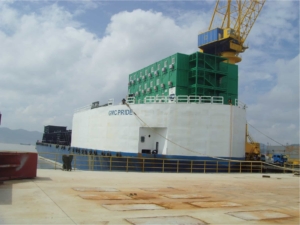
Structural Strength, Thermal Performance, and Long-Term Comfort
A common misconception is that increased speed will lead to weaker structures or less comfort. In practice, Modular Building typically has a stronger structural capacity and superior thermal efficiency than conventional methods.
Many modular structures utilize steel structural systems that are intended to withstand travel, lifting, and installation. These structures are designed with exactness and built to have a strict tolerance, which results in excellent stability and durability. Compared to traditional structural concrete, steel-based modular buildings have a comparable strength while also providing greater flexibility and simpler handling after their service life is over.
Other areas of thermal performance are also superior in modular construction. The insulation panels are installed in the factory, the airtight joints are precise, and the thermal bridges are minimal. This results in buildings that have minimal thermal resistance and air loss. These traits directly affect the comfort of the interior, decreasing the temperature fluctuations and enhancing energy efficiency.
Because building occurs in a controlled environment, insulation materials are positioned correctly and protected from moisture or damage. This degree of exactness is not consistently achieved on sites that are open to the public. The outcome is a structure that is consistently successful in different climates, and it provides a comfortable residence and work space throughout the year.
Over time, these structural and thermal benefits lead to lower energy consumption, less maintenance, and a longer service life. Modular Building is not simply more efficient at the start; it continues to provide value after the installation process is complete.
Cost Efficiency and Financial Advantages Across the Building Lifecycle
From a financial perspective, Modular Building has benefits that are significant beyond the initial cost of construction. While upfront pricing may appear similar to conventional pricing in certain instances, the overall financial portrait is different.
Factory-based production allows for large quantities of material purchases, which reduces costs and minimizes waste. The efficiency of labor is greatly increased, as skilled workers operate in optimal conditions with standardized procedures. On-site labor requirements are decreased, which lowers the cost of supervision, housing, and safety management.
Also, the shorter construction timelines have an indirect effect on the funding costs. Faster project completion leads to a decrease in interest payments, earlier occupancy, and quicker revenue generation. For developers and investors, this period of time can greatly enhance the overall return of projects.
Other important factors to consider are the operational costs. Buildings that have superior insulation and are airtight have a lower consumption of energy for heating or cooling. Over the lifetime of a modular building, these savings in energy can be significant. Also, the costs of maintenance are lower because components that are factory-built are typically more consistent and long-lasting.
When considered as a whole, the lifespan of a Modular Building is more profitable than traditional construction. Cost efficiency is achieved through planning, manufacturing, and performance over time.
Sustainability, Environmental Protection, and Resource Efficiency
Sustainability is now an important part of the design process itself—it is a necessity. Modular Building addresses environmental issues throughout the building process.
Shorter construction deadlines directly reduce the carbon emissions associated with on-site machinery, transportation, and temporary structures. Factory production promotes more exact material utilization, which diminishes the amount of waste generated during construction. Any extra materials that are surplus can be reutilized or recycled more easily in a manufacturing context.
Also, the volume of water consumed is lower. Traditional construction sites often necessitate large amounts of water for the purpose of concrete construction, dust control, and cleaning. Modular factories have a greater degree of efficiency; they minimize the use of water and prevent the contamination of nearby land.
At the conclusion of a building’s lifespan, modular structures have a significant advantage. Components made of steel are simpler to remove and have a higher recycling rate than components made of concrete, which reduces the amount of demolition waste and environmental impact. Often, entire modules can be moved or reused, increasing their lifespan of function and reducing the need for new materials.
These factors contribute to the practicality of Modular Building as a solution to organizations that want to reduce their environmental impact while still achieving modern performance.
Flexibility, Reuse, and Human-Centered Benefits
Flexibility is one of the most disregarded powers of Modular Construction. Modular units are built with versatility in mind, which allows buildings to evolve based on the needs of the time. Entire structures or individual components can be moved, enlarged, or altered with minimal hassle.
This reusability has a significant effect on reducing the long-term consumption of resources. Instead of destroying and then rebuilding, modular buildings can be reconfigured for a different purpose or location. This method is similar to the circular economy and aims to achieve sustainable development.
Beyond the technical and environmental benefits, Modular Building also has a significant human component. Construction workers operate in more stable, hygienic, and predictable environments than outdoor sites. The intensity of labor is decreased, the conditions surrounding labor are improved, and the development of skills is more structured and more sustainable.
For communities, the decreased noise, dust, and disruption associated with modular construction lead to a lower volume of complaints and a more positive relationship between projects and their surroundings. Modular Building has both aesthetic and functional benefits, the latter of which are evident in the design of the building and the way it is constructed into society.
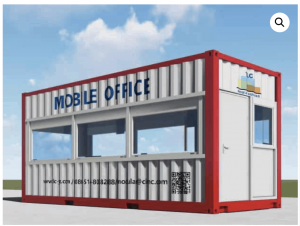
Why Modular Building Is a Smarter Way to Build for the Future
Modular Building succeeds not because it focuses on a single advantage, but because it addresses multiple challenges at once. Faster project delivery, reliable schedules, consistent quality, strong structural performance, cost efficiency, and environmental responsibility all converge within a single construction approach.
As the construction industry continues to evolve under economic, environmental, and social pressures, solutions that offer both efficiency and sustainability will define the future. Modular Building stands out as a proven, scalable, and forward-looking method that meets these demands without compromise. For developers, businesses, and governments seeking smarter ways to build, Modular Building is no longer an alternative—it is becoming the benchmark for modern construction.
CIMC TLC | RYC | XLC is a leading manufacturer of modular building centers and a wide range of standard and customized logistics equipment. With years of industry experience, the company focuses on the design, production, and distribution of high-quality, innovative solutions that meet the specific needs of customers worldwide. Its product portfolio covers refrigerated containers, cold chain systems, containerized equipment integration, modular buildings, and more — all built with precision and creativity.