


 EN
EN  RU
RU 
Power infrastructure is no longer built in a calm, predictable world. Energy demand is growing in some regions and decentralizing in others. Renewable generation is scaling rapidly. Grid stability requirements are increasing. Financing windows are tightening. Every stakeholder—from EPC contractors to investors—wants one thing above all else: efficiency.
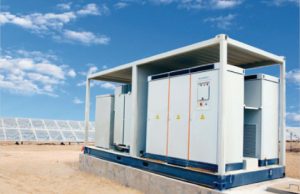
A container substation answers that demand in a practical, engineering-driven way. By integrating transformers, switchgear, protection systems, inverters, and auxiliary systems inside a prefabricated steel enclosure, it transforms what was once a civil-heavy construction project into a modular industrial product. This shift may look simple from the outside, but it fundamentally changes how power projects are executed, controlled, and optimized.
Efficiency in this context is not merely about speed. It is about reducing uncertainty, minimizing waste, standardizing design, improving reliability, and accelerating return on investment. When examined across the entire lifecycle of a power project—from concept to commissioning to long-term operation—the container substation demonstrates measurable advantages.
The Efficiency Imperative in Modern Power Infrastructure
Power projects today operate in compressed timelines. Solar farms must reach grid connection quickly to secure tariffs. Energy storage systems must respond to fluctuating market conditions. Industrial facilities require rapid electrification. Emergency deployments demand instant reliability.
Traditional substations rely heavily on on-site civil works. Foundations are poured. Structures are assembled. Equipment is installed piece by piece. Wiring, protection, and commissioning occur sequentially in the field. This process is labor-intensive and exposed to weather delays, workforce variability, and logistical uncertainty.
Container substations reverse this logic. Instead of building the substation at the site, they build it in the factory. The site becomes a deployment location rather than a construction zone. This shift is where efficiency begins.
Efficiency improves when:
Construction activities are relocated from uncontrolled environments to controlled manufacturing conditions
Engineering variables are minimized through standardized modular design
Installation processes are simplified to lifting, positioning, and connecting
Commissioning time is reduced because systems are pre-tested before shipment
By industrializing the substation, developers gain predictability. Predictability is the foundation of efficiency.
Factory Prefabrication and Time Compression
Time efficiency is often the most visible advantage of container substations. In conventional builds, civil engineering, structural assembly, electrical installation, and system testing occur sequentially. Each stage depends on the completion of the previous one. Delays compound.
A container substation is assembled and wired in a factory environment. Electrical cabinets, inverter systems, ventilation structures, protection relays, and fire protection systems are integrated before delivery. Internal decoration, insulation, cable routing, and finishing are completed off-site.
The result is significant compression of the construction schedule.
Consider the difference in workflow logic:
Traditional Substation: Design → Civil Works → Equipment Delivery → On-Site Installation → Wiring → Testing → Commissioning
Container Substation: Design → Factory Integration → Pre-Testing → Transportation → Positioning → External Connections → Commissioning
By moving integration into the manufacturing phase, parallel processes become possible. Civil foundation work at the project site can proceed simultaneously with factory assembly. When the container arrives, the project is already halfway complete.
This approach shortens project cycles, reduces exposure to labor shortages, and enables faster grid connection. For renewable projects operating under tariff deadlines or power purchase agreements, even a few weeks of acceleration can translate into substantial financial benefit.
Engineering Standardization and Reduced Complexity
Efficiency is not only about speed. It is about reducing engineering uncertainty.
Traditional substations are often designed uniquely for each project. This customization increases design workload, documentation complexity, and risk of error. Every deviation introduces variables that must be evaluated, approved, and managed.
Container substations embrace modular engineering. Structural dimensions, ventilation pathways, internal layouts, cable routing logic, and protection systems follow standardized frameworks. While customization remains possible, it is controlled within defined parameters.
This standardization improves efficiency in several ways:
Engineering drawings become repeatable and scalable
Procurement processes are simplified
Quality control procedures are consistent across projects
Spare parts management becomes more predictable
Expansion or replication of similar projects becomes easier
Reduced variability translates into fewer surprises. Fewer surprises mean fewer delays and fewer cost overruns.
Cost Efficiency Across the Project Lifecycle
Cost efficiency extends beyond initial equipment pricing. It includes labor, financing, risk mitigation, and operational stability.
A container substation reduces on-site labor requirements significantly. Installation becomes primarily a mechanical positioning and electrical connection task rather than a prolonged construction effort. Reduced field labor lowers direct costs and decreases safety risk exposure.
Shortened project timelines also reduce indirect costs. Financing charges, temporary site facilities, and project management overhead all decrease when completion accelerates. For renewable projects, earlier commissioning means earlier revenue generation.
Operational efficiency further contributes to cost savings. Integrated systems are factory-tested, reducing the likelihood of installation errors. Efficient energy conversion minimizes technical losses. Proper insulation and ventilation structures improve thermal performance, extending equipment lifespan.
The following table illustrates a simplified comparison at the project level:
| Project Dimension | Traditional Substation | Container Substation |
|---|---|---|
| Construction Time | Extended, multi-stage on-site build | Compressed through factory prefabrication |
| Labor Requirement | High field workforce demand | Reduced on-site labor |
| Engineering Variability | Highly customized per project | Modular and standardized |
| Transportation | Equipment shipped separately | Integrated, containerized delivery |
| Expansion Flexibility | Requires additional civil work | Modular expansion possible |
| Deployment Mobility | Permanent installation | Relocatable if required |
While specific project outcomes vary, the structural advantages of containerization consistently support cost optimization.
Adaptability in Complex Environments
Efficiency also depends on environmental adaptability. Projects located in deserts, coastal zones, cold climates, or high-dust industrial areas face unique challenges.
Container substations are designed with durable steel exteriors, corrosion-resistant coatings, and integrated insulation systems. Vertical air supply and exhaust structures maintain internal temperature control. High-density dust protection prevents contamination of sensitive electrical components. Waterproofing structures are optimized for rapid installation and long-term durability.
Because these features are built into the standardized design, additional environmental customization is minimized. The system arrives ready for harsh conditions without extensive modification.
Adaptability improves deployment efficiency in remote regions, where skilled labor and specialized construction resources may be limited. Instead of building environmental protection solutions on-site, they are delivered as part of the product.

Operational Efficiency After Commissioning
Efficiency does not end at grid connection. Operational performance determines long-term value.
Container substations integrate power conversion equipment, protection systems, and optional energy storage components within a sealed and controlled environment. High-efficiency inverters convert DC to AC with minimal loss. Integrated battery systems allow energy storage for use during grid outages or low-generation periods.
Operational benefits include:
Stable and reliable power supply due to pre-integrated protection systems
Reduced maintenance complexity because equipment is centralized
Improved safety through sealed and insulated compartments
Low noise operation suitable for urban or sensitive environments
When maintenance is required, technicians access a defined and organized interior layout. Cable management, emergency lighting, and fire-fighting systems are integrated during manufacturing, reducing retrofit complexity.
Reliability is an efficiency multiplier. Downtime is expensive. A design that minimizes operational disruption preserves both revenue and reputation.
Mobility and Asset Flexibility
One often overlooked advantage of container substations is mobility. Traditional substations are permanent civil structures. If project requirements change, relocation is impractical.
Containerized systems can be transported by road, rail, or sea. For temporary industrial sites, mining operations, or phased renewable developments, this mobility enables redeployment. Capital assets remain usable beyond a single project lifecycle.
This flexibility supports strategic efficiency. Infrastructure becomes modular capital rather than a fixed, immovable expense. In markets where demand patterns evolve rapidly, adaptability enhances financial resilience.
Integration with Renewable and Storage Systems
As renewable energy adoption expands, integration efficiency becomes critical. Solar farms, wind installations, and hybrid storage systems require coordinated power conversion and distribution infrastructure.
Container substations serve as integrated hubs. PV containers house inverter systems that convert solar DC output. Energy storage modules connect seamlessly for DC coupling or AC coupling configurations. Internal layouts are optimized for safe cable routing and thermal management.
Because these systems are pre-engineered for integration, compatibility challenges are minimized. Developers avoid the complexity of coordinating multiple separate enclosures and site-built structures.
The result is streamlined renewable deployment. Faster integration translates into quicker market participation.
Risk Reduction as an Efficiency Driver
Risk is the hidden cost in power projects. Weather delays, labor shortages, design errors, and supply chain disruptions all threaten timelines and budgets.
Factory-prefabricated container substations mitigate many of these risks. Manufacturing environments provide consistent quality control. Structural integrity and electrical integration are verified before shipment. Reducing on-site complexity decreases exposure to unpredictable variables.
Risk reduction improves efficiency because contingency planning shrinks. When fewer uncertainties exist, project managers allocate fewer buffers in schedules and budgets. Predictability improves stakeholder confidence.
The Broader Shift Toward Modular Infrastructure
Container substations reflect a larger industrial shift. Across industries, infrastructure is moving toward modular, prefabricated, and standardized solutions. Data centers are modularized. Industrial facilities are assembled from repeatable components. Renewable energy systems are increasingly productized.
The underlying principle is consistent: transferring complexity from the field to the factory improves efficiency. Factories offer controlled environments, scalable processes, and repeatable quality standards.
In this sense, container substations are not merely equipment choices. They represent a methodological evolution in infrastructure development.
Efficiency as Intelligent Infrastructure
A container substation improves power project efficiency by addressing every stage of the project lifecycle. It compresses timelines through factory prefabrication. It reduces engineering complexity through modular standardization. It lowers costs by minimizing field labor and accelerating revenue generation. It enhances operational reliability through integrated systems. It adapts to diverse environments without extensive modification. It enables mobility and redeployment when strategic needs shift.
Efficiency, in modern power projects, is not simply about doing things faster. It is about doing them with fewer variables, lower risk, and greater predictability. Container substations embody that philosophy. They transform substations from bespoke construction efforts into scalable industrial assets. As renewable energy expansion accelerates and grid systems become more dynamic, infrastructure solutions that combine speed, reliability, and adaptability will define competitive advantage. Container substations stand at the intersection of these demands, offering a practical path toward smarter and more efficient power delivery systems.
CIMC TLC | RYC | XLC is a leading manufacturer of container substation and a wide range of standard and customized logistics equipment. With years of industry experience, the company focuses on the design, production, and distribution of high-quality, innovative solutions that meet the specific needs of customers worldwide. Its product portfolio covers refrigerated containers, cold chain systems, containerized equipment integration, modular buildings, and more — all built with precision and creativity.