



 EN
EN  RU
RU 
Global trade in temperature-sensitive goods has expanded rapidly over the past two decades. Fresh fruit from South America reaches European supermarkets within weeks. Seafood harvested in Asia is delivered to North America without compromising quality. Vaccines and pharmaceutical products move across continents under strict thermal control. None of this would be possible without the reefer shipping container.
A reefer shipping container, often referred to simply as a reefer container or RF container in logistics documentation, is an insulated container equipped with an integrated mechanical refrigeration unit. It is designed to transport perishable cargo by sea, road, or rail while maintaining a stable internal temperature. Unlike a standard dry container, which provides only structural protection, a reefer container actively controls the cargo environment.
Among the most commonly used models worldwide are the 20 reefer and 40 reefer containers. In shipping documentation and port operations, these are frequently abbreviated as 20 RF and 40 RF. These two sizes form the backbone of global cold chain transport, balancing capacity, energy efficiency, and intermodal compatibility.
How reefer shipping containers are built, how they function, and how different sizes support logistics strategies is essential for exporters, freight forwarders, cold storage operators, and global supply chain planners.
The Fundamental Concept of a Reefer Shipping Container
At its core, a reefer shipping container is an insulated steel structure with an integrated refrigeration system mounted on the front frame. It is engineered to maintain cargo temperatures typically ranging from -25°C to +25°C, though certain models can operate within wider limits depending on configuration.
Unlike passive insulated boxes, reefers actively cool or maintain cargo temperatures through:
- A one-piece refrigeration unit
- High-density polyurethane insulation
- Controlled air circulation systems
- Temperature monitoring and control modules
The refrigeration unit continuously circulates conditioned air through the cargo space. Cold air is delivered beneath the cargo through a T-floor system and returns via upper air channels, creating a uniform airflow loop. This prevents temperature stratification and ensures that goods at the rear of the container remain within specification.
The structure must withstand global transport conditions, including stacking pressure on container vessels, vibration during rail movement, and long-distance road hauling. This dual requirement—thermal control and structural strength—defines the engineering complexity of a reefer container.
Why the Term RF Container Appears in Global Shipping
In logistics and port documentation, 20 reefer and 40 reefer containers are commonly coded as 20 RF and 40 RF. The abbreviation RF stands for Refrigerated Freight or Reefer.
For example:
- 20 RF refers to a 20-foot refrigerated container
- 40 RF refers to a 40-foot refrigerated container
These codes are used in booking systems, vessel stowage plans, customs declarations, and container yard operations. Understanding this terminology is important for exporters and logistics professionals who manage intermodal shipping documentation.
The term reefer shipping container is often used to emphasize maritime transport, whereas reefer container is a broader industrial term that includes land-based applications.
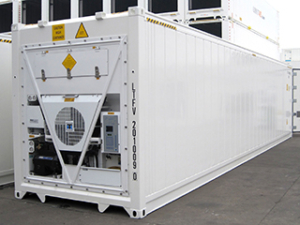
Structural Design Behind 20 Reefer and 40 RF Containers
The performance of a reefer shipping container depends heavily on its structural and insulation design. A container transporting frozen seafood across the Pacific must endure salt air exposure, mechanical stress, and constant temperature regulation for weeks.
The key structural elements include:
Insulation System
Polyurethane foam is the industry standard for thermal insulation. In most high-performance containers:
- Wall insulation thickness ranges from 50 mm to 120 mm
- Typical PU density is 40 to 60 kg per cubic meter
- K value (thermal conductivity) is kept below 0.4 W/m²·K
The density and thickness directly affect thermal retention. Higher density improves structural strength while maintaining low thermal conductivity. In large-scale manufacturing, foam injection must be carefully controlled to reduce void formation and ensure uniform distribution.
Panel Construction
Outer panels are typically manufactured from marine-grade steel or stainless steel, often MGSS or Corten steel, joined using TIG welding. This ensures durability against corrosion and mechanical stress.
The inner lining is usually aluminum or coated steel sheets, designed for hygiene and easy cleaning, particularly important in food and pharmaceutical transport.
Floor System
The T-floor design allows cold air to circulate beneath cargo pallets. Aluminum extrusion floors are commonly used because they combine structural strength with airflow efficiency.
Air Leakage Control
High-performance reefer containers limit air leakage to approximately 5 m³ per hour at 250 Pa pressure differential. This ensures thermal efficiency and reduces refrigeration workload.
These engineering features apply to both 20 reefer and 40 reefer containers, though dimensional and stacking differences affect application strategy.
Comparing 20 Reefer and 40 Reefer Containers
Both sizes are ISO standardized and designed for intermodal compatibility, but their operational roles differ.
A 20 reefer container is typically chosen for:
- Medium-volume shipments
- Pharmaceutical logistics
- High-value frozen goods
- Ports with weight restrictions
Its smaller internal volume allows for more precise temperature stabilization, particularly useful for sensitive medical cargo.
A 40 reefer container, often recorded as 40 RF in documentation, is used for:
- Large-volume food exports
- Long-haul ocean shipping
- Cost optimization per cubic meter
- Consolidated cold chain shipments
Because of its higher capacity, a 40 reefer reduces per-unit freight costs when fully loaded. It is especially common in fruit, meat, and seafood export industries.
From a logistics standpoint, choosing between 20 RF and 40 RF involves analyzing cargo density, shipping route, and stacking strategy.
Temperature Control and Cold Chain Integrity
Maintaining cold chain integrity is the primary function of any reefer shipping container. Cold chain refers to the uninterrupted temperature-controlled supply chain required for perishable goods.
Temperature control in reefers involves:
- Pre-cooling cargo before loading
- Setting precise temperature parameters
- Monitoring return air temperature
- Managing ventilation settings for fresh produce
For frozen goods, temperature deviation should not exceed 3°C during long transport. For chilled cargo such as pharmaceuticals, the acceptable deviation may be limited to 0.5°C or even 0.25°C.
Fresh fruits and vegetables require ventilation management to remove ethylene and excess humidity. In contrast, frozen meat shipments require closed air vents to maintain stable internal air circulation.
Cold chain failure can result in cargo rejection, insurance claims, and brand damage. Therefore, structural insulation, refrigeration system reliability, and real-time monitoring all play critical roles.
International Standards Governing Reefer Shipping Containers
Reefer containers are built and certified in accordance with international regulations to ensure safety and compatibility across global ports.
Key standards include:
- ISO 668 for dimensions and ratings
- ISO 1496-2 for thermal container testing
- ISO 6346 for coding and identification
- ISO 1161 for corner fittings
- CSC Convention for safe container certification
- TIR requirements for customs transit
- Classification society certification, such as ABS, BV, or LR
Compliance with these standards ensures containers can be stacked up to nine high in cell guides on container vessels, lifted safely from corner castings, and transported across multiple transport modes without structural compromise.
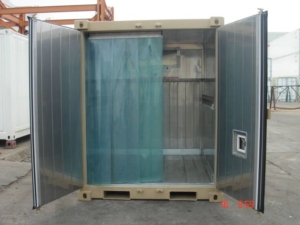
Transportation and Stacking Capabilities
A reefer shipping container must operate seamlessly across marine, road, and rail networks.
In marine transport:
- Containers may be stacked nine high in cell guides
- Four high on deck with vertical and diagonal lashings
On road transport:
- Secured to flatbed or skeleton chassis using twist locks
On rail:
- Mounted on specialized container flatcars with locking systems
Lifting operations can occur at the top or bottom corner fittings using spreaders, shackles, or slings at defined angles. Structural reinforcement ensures that lifting does not deform the container frame.
These capabilities make 20 RF and 40 RF containers globally interoperable assets in intermodal transport systems.
Applications Across Industries
Reefer shipping containers are indispensable in several sectors.
In the food industry, they transport frozen meat, seafood, dairy products, and fresh produce. Temperature stability preserves texture, taste, and shelf life.
In pharmaceuticals, reefers support vaccine transport and temperature-sensitive medications, often requiring narrow thermal tolerances.
In chemicals and specialty products, certain materials require temperature control to prevent degradation or hazardous reactions.
The versatility of 20 reefer and 40 reefer containers allows companies to tailor logistics strategies according to cargo volume and temperature sensitivity.
Selecting the Right Reefer Shipping Container
Choosing the appropriate container size and configuration requires analyzing several factors:
- Cargo volume and density
- Required temperature range
- Duration of transport
- Power supply availability during transit
- Destination port infrastructure
For small but high-value cargo, a 20 reefer may offer better cost control and temperature stability. For bulk exports, a 40 reefer optimizes freight efficiency.
Exporters must also ensure cargo is pre-cooled before loading and that airflow pathways are not blocked during stacking.
The Role of an Experienced Reefer Container Manufacturer
Behind every reliable reefer shipping container is a manufacturer with strong engineering capabilities. Experience in PU foaming, panel welding, structural testing, and refrigeration integration determines product durability.
A manufacturer with over two decades of design and production experience typically offers:
- Advanced PU foaming lines
- Precision welding technology
- International certification compliance
- Custom configuration options
- Long-term after-sales support
Such capabilities ensure consistent insulation performance, structural strength, and long service life.
A reefer shipping container is far more than a cold box on a vessel. It is a highly engineered system that integrates insulation science, mechanical refrigeration, structural engineering, and global regulatory compliance.
Through models such as 20 reefer and 40 reefer, commonly referred to as 20 RF and 40 RF in logistics operations, global cold chain transport becomes reliable, scalable, and efficient. These containers enable the safe movement of food, pharmaceuticals, and sensitive goods across continents without compromising quality.
As global trade in perishable products continues to expand, the role of high-performance reefer shipping containers will only grow more critical. Selecting the right size, ensuring compliance with international standards, and partnering with experienced manufacturers are all essential steps in maintaining cold chain integrity worldwide.
CIMC TLC | RYC | XLC is a leading manufacturer of reefer shipping containers and a wide range of standard and customized logistics equipment. With years of industry experience, the company focuses on the design, production, and distribution of high-quality, innovative solutions that meet the specific needs of customers worldwide. Its product portfolio covers refrigerated containers, cold chain systems, containerized equipment integration, modular buildings, and more — all built with precision and creativity.