


 EN
EN  RU
RU 
In the current supply chain, containerization is a major factor in the safe and efficient movement of goods across different zones and sectors. With special container types, Tricon and Quadcon containers are noticed due to their modularity, flexibility, and wide usage. Even though both are mini combinable containers meant to bring flexibility and efficacy, they have structural differences along with variances in their operational capabilities, which make them appropriate for varied scenarios. Differences between Tricon and Quadcon containers, including features plus practical uses, are discussed here to give an insightful overview to logistics professionals as well as commercial users.
Tricon Containers: Design and Features
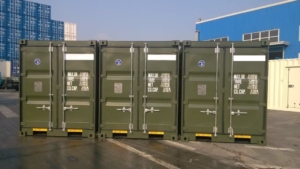
A Tricon container consists of three mini containers combined to form a unit comparable in length to a standard 20-foot container. This modular design allows every single box to function independently while maintaining compatibility when combined. Trucks are widely used for transporting materials in commercial, industrial settings due to their versatility and operational efficiency.
Structural Characteristics
Tricon containers are built with steel frames, vertical corrugated steel walls, horizontal corrugated steel double doors, and a die-stamped steel roof with reinforced corners. The welding process uses CO2 continuous welding for exterior frames and stitched interior welds where necessary. The wooden floors are secured with zinc-plated self-tapping screws, and sealants such as chloroprene and butyl are applied to prevent water ingress.
Key specifications include:
External Size: 1968(L) x 2438(W) x 2438(H) mm
Internal Size: 1882(L) x 2288(W) x 2185(H) mm
Internal Cubic Capacity: 9.7 cubic meters
Maximum Gross Weight: 6760 kilograms
Tare Weight: 1180 kilograms
Maximum Payload: 5580 kilograms
Stacking Test Load per Post: 86400 kilograms
The design ensures that each Tricon unit can endure heavy loads and withstand rigorous handling during transport and storage.
Operational Advantages
Tricon containers offer significant operational benefits:
Independent Loading and Unloading: Each mini container can be accessed separately, making it easy to load or unload partial shipments without moving the entire assembly.
Flexibility in Transport: In remote areas with limited infrastructure, Tricon containers can be split into single units and transported using utility vehicles capable of navigating rough terrain.
Security and Concealment: Tricons can be used to transport sensitive or non-weapon materials while minimizing visibility and enhancing security.
Stacking Capability: Individual units can be stacked up to seven empty containers high, providing space efficiency during storage.
Connector System
The combination of the three Tricon units relies on a twist-lock connector system, which secures the boxes together:
Align the connector lock and flange with the corner end holes of a single box and rotate the handle to lock it in place.
Use a forklift to position the second box, aligning the connector with its corner end hole.
Rotate the handle to secure the connection.
Repeat for the third box to complete the combined Tricon unit.
This system allows rapid assembly and disassembly, providing flexibility for different shipping and storage requirements.
Quadcon Containers: Design and Features
A Quadcon container is similar to a Tricon container but consists of four mini boxes that can be combined to form a larger unit. Quadcons provide additional volume and payload capacity, making them suitable for situations requiring greater storage and transport capabilities.
Structural Characteristics
Quadcon containers share many design elements with Tricons, including:
Steel frames and corrugated walls for durability
Double-door rear access for individual units
Forklift pockets for independent handling
Reinforced corners and stacking capability
The main difference lies in the additional unit, which increases the combined cubic capacity and allows more flexible load distribution. Quadcons can be split into four individual boxes, each accessible and transportable independently.
Operational Advantages
Higher Combined Capacity: With four units, Quadcons offer approximately 33% more volume than Tricons.
Load Distribution: The additional unit allows for better weight distribution across the combined container.
Versatility in Distribution: Each mini box can be sent to different destinations, facilitating complex supply chains.
Durability: Quadcons are built to handle maximum payloads similar to Tricons, with reinforced frames and ISO-standard corner fittings.
Comparing Tricon and Quadcon Containers
The differences between Tricon and Quadcon containers can be analyzed in several aspects:
Number of Units
Tricon: Three mini boxes combined to form a single unit.
Quadcon: Four mini boxes combined, resulting in greater volume.
Combined Volume and Payload
Quadcons offer a larger combined volume, which is ideal for transporting bulky materials. While Tricons are sufficient for standard TEU-sized shipments, Quadcons accommodate higher payloads without increasing the footprint significantly.
Flexibility and Transport
Tricons are ideal for remote operations where partial container transport is necessary. They allow for 1/3 TEU transport with minimal equipment. Quadcons provide even finer distribution control, allowing 1/4 TEU shipments, which is particularly useful in complex logistical networks.
Loading and Unloading
Both Tricons and Quadcons have doors on each mini box, but Quadcons require additional coordination due to the extra unit. Forklift handling and twist-lock connectors ensure secure assembly and efficient handling of combined units.
Detailed Structural Analysis
Wall and Roof Construction
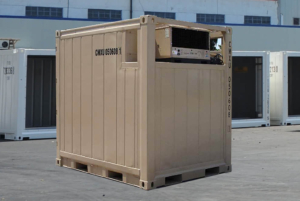
Both Tricon and Quadcon containers use vertical corrugated steel for walls and die-stamped steel for roofs. This ensures rigidity while maintaining a manageable weight. Corrugation design optimises strength and allows for better resistance to bending and deformation during transport.
Base Frame
The base frame consists of two side rails and multiple cross members, constructed from cold-formed double Z-section steel. Cross members vary in thickness depending on the floor joint requirements. Forklift pockets are integrated for handling each mini box independently.
Corner Fittings
Corner fittings comply with ISO 1161 standards, allowing safe stacking, lifting, and secure connection of units. They are designed to accommodate maximum payloads and withstand transport stresses.
Sealing and Flooring
Wooden floors are fixed with zinc-plated screws, and sealants are applied to prevent water ingress. These features ensure cargo protection and container longevity.
Practical Use Cases
Remote Field Operations
Tricons can be deployed in remote areas with poor infrastructure. Each unit can be transported using off-road vehicles, ensuring supplies reach even inaccessible locations. Quadcons, due to their larger combined size, are better suited for transport hubs where full assembly and high volume are required.
Port and Warehouse Logistics
In ports and warehouses, modular containers allow for efficient loading and unloading, reducing turnaround times. Tricons facilitate partial shipments, while Quadcons enable bulk material transport.
Advantages of Modular Mini Containers
Operational Flexibility: Units can be combined or separated depending on logistical needs.
Optimised Space Usage: The modular design minimises unused volume.
Scalability: Shipment size can be adjusted by adding or removing units.
Rapid Deployment: Twist-lock connectors enable fast assembly and disassembly.
Durability and Safety: Reinforced steel frames, ISO-standard corners, and robust floors ensure safe handling under heavy loads.
Future Trends
The development of modular containers is expanding, with trends focusing on:
Customizable Units: Adapting container dimensions, materials, and features to specific cargo needs.
Advanced Materials: Using corrosion-resistant steel and lightweight composites to improve durability and reduce weight.
Automation Integration: Equipping containers with tracking sensors and smart locking systems.
Environmentally Friendly Design: Enhancing energy efficiency and reducing environmental impact during transport and storage.
CIMC TLC|RYC|XLC is a leading manufacturer of Tricon Containers and Quadcon Containers, with years of experience focusing on the design, production, and distribution of high-quality, innovative logistics solutions that meet the specific needs of customers. Tricon and Quadcon containers primarily differ in the number of mini-boxes they carry—three for Tricon and four for Quadcon—which directly affects their combined volume, payload, and operational applications. Tricons are ideal for very remote locations and flexible deployment scenarios, whereas Quadcons are best suited for high-capacity transport and centralized storage operations.
Both container types enhance the security and safety of transported goods while improving overall operational efficiency. Despite being designed for delivery, they can be adapted for multiple purposes within logistics chains due to their robust structure, modularity, and portability. Choosing the right container depends on the required volume, transport conditions, and operational priorities. Integrating Tricon or Quadcon containers into a logistics plan ensures efficient transportation between locations, reduces operational complexity, and increases the adaptability of supply chains in diverse environments.
For customers seeking high-quality and innovative logistics equipment—including refrigerated containers, cold chain solutions, containerised equipment integration, and modular buildings—CIMC TLC|RYC|XLC offers a reliable and professional choice. The company welcomes inquiries from clients worldwide and looks forward to establishing long-term cooperative relationships.