



 EN
EN  RU
RU 
Offshore undertakings, comprising activities like oil and gas exploration, offshore wind farms, as well as marine research, need secure and robust transport solutions. Ordinary shipping containers, though appropriate for logistics on land, do not always match up to the tough conditions of offshore environments. Strong winds beside heavy waves, accompanied by corrosive saltwater, plus limited port facilities, render these traditional containers inadequate in carrying vital apparatus and provisions.
DNV containers are what come in handy. DNV containers are defined as offshore containers. They have been designed and developed under stringent standards specifically for offshore applications in a way that guarantees safety, security, soundness, and flexibility. Be it sending equipment to distant oil platforms or sending laboratory apparatus to an offshore research station, DNV-certified containers are prepared to confront the roughest conditions of the sea.
What It Stands For
DNV is an acronym for Det Norske Veritas, a Norwegian-based organization with international classification society and certification body roles. Founded in 1864, DNV has long presided over setting technical standards and safety codes related to shipping, offshore operations, and industrial applications. The company holds valuable brand equity on a global basis, where its certifications are recognized as the de facto standard typically required by regulation and insurance when it comes to maritime logistics.
When a shipping container is referred to as a DNV container, it means that the container has been designed, tested, and certified in accordance with offshore standards from DNV, most commonly:
DNV 2.7-1: General offshore container standard for cargo transport.
DNV 2.7-2: Standard for service containers, often used as mobile workshops or laboratories.
DNV 2.7-3: Specialized standard for certain offshore applications (less common but increasingly used in renewable energy projects).
They cover structural strength, lifting and handling requirements, resistance to corrosion, safety in extreme weather conditions, and inspection protocols. Certification guarantees that containers will keep their integrity during lifting and transport as well as storage in such demanding offshore environments.
What Is an Offshore Container?
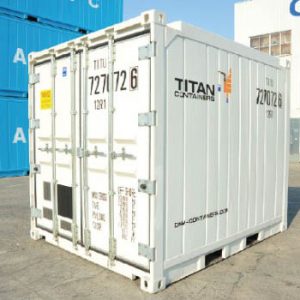
An offshore container is a specially engineered shipping container designed for transportation and storage in marine environments. Unlike standard ISO containers, offshore containers:
They are constructed to endure repeated lifting and movement by cranes, often in areas without port infrastructure.
Withstand exposure to high winds, heavy waves, and corrosive saltwater.
Protect valuable equipment, tools, and supplies from environmental hazards such as water intrusion and dust.
Offshore containers carry heavy equipment, essential materials, and tools for special tasks. They can become offices, labs, or places to stay on offshore platforms. CIMC TLC|RYC|XLC and other top makers offer many offshore container choices such as cargo boxes, work areas, baskets, cold storage units, and homes. A lot of these containers can be changed to fit the needs of the project.
CIMC TLC|RYC|XLC DNV Offshore Container Introduction
CIMC TLC|RYC|XLC offshore containers are certified by major classification societies such as BV (Bureau Veritas), LR (Lloyd’s Register), and DNV. Their product lineup includes:
CCUs (Cargo Carrying Units) for general equipment transport.
Workshops and Laboratories for on-site maintenance or research activities.
Baskets and Reefers for specialized cargo.
Accommodation Units for temporary living or office space offshore.
Many of these containers are equipped with sling sets to allow safe lifting and handling in offshore operations. Modular designs enable multiple containers to be combined or stacked, maximizing operational efficiency on limited deck space. These features are particularly critical for transporting equipment between fixed or floating platforms and ships.
Key Features of DNV Offshore Containers
Durable and Sturdy Construction
Constructed with heavy-duty steel and reinforced corner posts to withstand extreme offshore conditions.
Built according to ISO standards, enabling transport on standard container ships and safe lifting by cranes.
Resistant to corrosion, high winds, waves, and mechanical impacts.
Waterproof and Dustproof
Equipped with weatherproof door seals to prevent moisture, dust, and other environmental elements from entering.
Ensures protection for sensitive tools, electronics, and equipment even in rough seas.
Customizable Options
Modular shelving, ventilation systems, lighting, and insulation can be installed according to project needs.
Containers can be adapted as mobile workshops, laboratories, or accommodation units.
Enhanced Security Features
Reinforced doors and heavy-duty locks protect contents from theft and damage.
Security features ensure that valuable equipment remains intact during transport and offshore operations.
Advantages of Using Offshore Containers
Versatility: Suitable for transporting cargo or serving as storage, workshops, or temporary accommodation units.
Cost-effectiveness: Long lifespan and minimal maintenance requirements reduce the total cost of ownership.
Safety and Reliability: Heavy-duty construction and compliance with DNV standards ensure protection against accidents and equipment damage.
Ease of Use: Compatible with standard container ships and cranes, while customization allows adaptation to specific offshore requirements.
Classification of Offshore Containers
Offshore containers are classified based on their primary function:
Transportation Containers: These include general containers, open-top containers, tanks, bulk containers, and hanging baskets. Designed to meet higher standards in materials, welding, and inspection, they require certification by DNV, BV, or LR. The manufacturing process often includes advanced welding techniques, reinforced structures, and corrosion-resistant coatings.
Service Containers: Used as workshops, laboratories, accommodation units, or temporary operational spaces, these containers must comply with additional safety requirements. Fireproof materials, electrical safety certification, and DNV 2.7-2 compliance are essential for service containers. They are designed to support specific operational needs while maintaining personnel safety in offshore environments.
Design Considerations
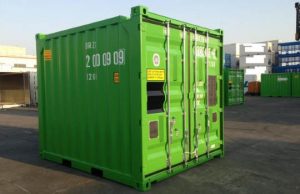
The design of offshore containers emphasizes safety, strength, and functionality. Key considerations include:
Structural resistance to tipping or dumping under extreme sea conditions.
Low-temperature performance for operations in polar or cold-water regions.
Top and corner protection for safe lifting and stacking.
Electrical and fire safety for service containers used as laboratories or accommodation units.
Most of these containers have sets of slings for a safe lift and handling operation offshore. Modular designs mean that several containers can be combined or stacked together to achieve the highest possible operational efficiency with limited deck space available. These features become very important when it comes to the transportation of equipment by ship between fixed or floating platforms.
Manufacturing and Processing Standards
High-quality welding is essential for container integrity. Manufacturing involves:
Certified welding personnel with strict operational training.
Validation of welding processes and continuous monitoring during production.
Non-destructive testing (NDT) to ensure welds meet safety and structural standards.
Advanced production techniques ensure that DNV containers withstand repeated lifting, transportation, and exposure to marine environments without structural compromise.
Inspection and Testing
DNV containers undergo rigorous inspection and testing to ensure compliance and safety:
Welding Inspection: Continuous assessment of weld integrity using non-destructive testing methods.
Lifting Tests: Two-point and four-point lifting tests evaluate deformation resistance and load-bearing capacity.
Drop Tests: Simulate impact during lifting and placement to confirm the container can withstand shocks without permanent damage.
Typical Offshore Container Tests
| Test Type | Purpose | Key Points |
|---|---|---|
| Welding Inspection | Detect defects | Non-destructive, throughout production |
| Two-point Lifting Test | Structural deformation resistance | Simulate extreme lifting stress |
| Four-point Lifting Test | Bearing capacity | Ensure safe handling during crane operations |
| Drop Test | Impact resistance | Verify container integrity under collisions |
Applications of DNV Offshore Containers
DNV offshore containers are widely used in various offshore operations:
Oil and Gas Exploration and Production: Transport machinery, tools, and essential supplies to remote rigs and platforms.
Offshore Wind Farms: Move turbines, construction materials, and maintenance equipment efficiently.
Marine Research: Protect and transport sensitive scientific instruments to offshore research stations.
Industrial Offshore Projects: Serve as temporary workshops, laboratories, or accommodation units for personnel working on offshore construction and maintenance projects.
Their versatility and robust construction make DNV containers indispensable for modern offshore logistics, where operational safety and efficiency are critical.
DNV containers are applications built for the harsh offshore environment. Made under DNV standards to ensure toughness, safety, and flexibility in carrying equipment, tools, and supplies, from oil and gas platforms through offshore wind farms to marine research projects. Such features as applications that may need waterproofing, dustproofing, interior fit-outs, and security enhancement all provide a secure but economical means of support in complicated maritime operations. Buying a certified DNV box means compliance with the relevant international safety standard rules that protect both people and goods during offshore operations.
CIMC TLC|RYC|XLC is a leading manufacturer of DNV containers and various other standard and special logistics equipment. With years of experience in the industry, it focuses on the design, production, and distribution of high-quality innovative products that meet the specific needs of customers.
If you need high-quality and innovative logistics equipment, including refrigerated containers, cold chain equipment, containerized equipment integration, modular buildings, etc., CIMC TLC|RYC|XLC is your best choice. We welcome inquiries from customers all over the world and look forward to the opportunity to cooperate with you.