



 EN
EN  RU
RU 
The fast development of new energy vehicles (NEVs) has led to great opportunities and challenges for the global transport and energy sectors. As electric vehicles (EVs) continue displacing traditional fuel mobility systems, the issue of energy replenishment remains an important aspect at the core of industry development. How to recharge batteries quickly, safely, and efficiently.
CIMC TLC | RYC | XLC Battery Swapping Station unveiled a disruptive solution, initiated as a challenger with the revolutionary containerized design, automation function, and digitalized connectivity. It diversified what infrastructure is by adding charging, battery storage, vehicle positioning, and smart communications in one modular system.
This station makes possible fully automatic battery replacement within three minutes, comparable to the time taken to refill a gasoline vehicle, to ensure seamless energy replenishment for fleets, taxis, logistics vehicles, and private EV users.
Concept and System Overview
The Battery Swapping Station forms part of a modular, containerized energy unit that brings about charging and quick replacement of EV power batteries. While the normal charging stations take time equivalent to the waiting period, it is an entirely automated, fast as well and safe energy exchange process provided by the battery swapping system.
Several container modules make up each station. The modules are for various vehicle models and battery systems. The module parts include battery storage, intelligent charging cabinets, robotic palletizing systems, plus rail-based trolleys, and a cloud communication interface.
Core Design and Structure
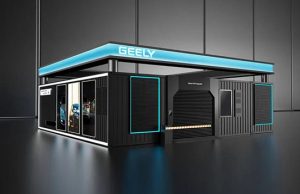
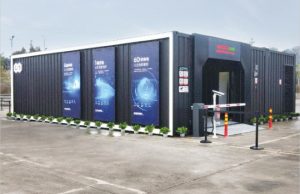
Every aspect of the Battery Swapping Station has been designed with mobility, flexibility, and scalability in mind. Prefabrication and pre-testing make possible delivery as a true plug-and-play unit because it adopts a containerized design.
The external construction applies SPA-H high-strength steel sheets together with rock wool sandwich insulation. The floor plate is made out of 4.5mmĀSPA-H steel, which has very good load-bearing for heavy battery modules and trolleys.
Key specifications include:
External Dimensions: 10840mm × 9056mm × 3230mm
Tare Weight: Approx. 8000 kg
Roof/Sidewall/End Wall: T1.6mm SPA-H + T50mm rock wool sandwich
Floor: T4.5mm SPA-H
Door Options: Single steel door or rolling door
This robust design ensures long-term durability, easy maintenance, and adaptability to a wide range of environments—from urban centers to remote logistics bases.
Technology Integration and Operating Principle
The CIMC TLC | RYC | XLC Battery Swapping Station operates on a fully automated workflow, coordinated by intelligent sensors, robotic control systems, and cloud-based data management.
The swapping process involves four major stages:
Vehicle Positioning and Battery Identification
The electric vehicle enters the swapping bay and is automatically positioned through a rail-guided system. Advanced tire slot alignment and laser sensors ensure accurate calibration of the vehicle’s position. The system then establishes data communication with the vehicle, verifying battery type, charge status, and compatibility.
Battery Removal
An electric pan trolley is activated to reach under the vehicle chassis. It detaches the depleted battery pack and securely transports it to the charging storage module within the station.
Battery Charging and Storage
Once the depleted battery reaches the charging cabinet, the system automatically assigns it to an available charging slot. Charging parameters such as voltage, current, and temperature are monitored in real time. Simultaneously, a fully charged battery is selected from storage.
Battery Installation
The robotic trolley returns with a fully charged pack and positions it precisely beneath the EV chassis. The locking mechanism automatically secures the battery, verifies electrical connectivity, and completes the swap—all within approximately three minutes.
This high-speed, fully automated workflow eliminates the need for manual intervention, reducing safety risks and labor costs while maximizing uptime for electric vehicle fleets.
Key Advantages of Battery Swapping Stations
The CIMC TLC | RYC | XLC system stands out not only for its automation but also for its operational efficiency, scalability, and sustainability.
Enhanced User Experience
The entire swapping process takes just minutes, providing an experience as convenient as traditional fuel refueling. Drivers no longer need to wait for battery charging; instead, they can continue their journey immediately.
Low Infrastructure Requirements
Each Battery Swapping Station occupies only 55 square meters, significantly less than a typical fast-charging facility. It can be assembled or disassembled within two hours, allowing rapid deployment across urban and rural environments.
Superior Energy Management
The integrated smart control system optimizes charging schedules, balancing grid load and reducing energy losses. Battery packs are maintained under ideal conditions, extending their service life and ensuring stable energy delivery.
Sustainability and Environmental Protection
Unlike fossil fuel stations, the Battery Swapping Station operates with zero emissions and low noise, contributing to a greener and more sustainable energy ecosystem.
Application Fields and Use Scenarios
Battery swapping technology has rapidly expanded from small-scale pilot projects to large-scale commercial applications.
CIMC TLC | RYC | XLC stations serve multiple industries and vehicle categories:
Urban transportation: Taxi fleets, ride-hailing services, and shared mobility vehicles benefit from fast battery exchange and minimal downtime.
Public logistics: Delivery vans and postal vehicles can operate continuously, ensuring efficiency for last-mile logistics.
Long-haul freight: Heavy-duty electric trucks can swap large battery modules in minutes, reducing charging bottlenecks and improving logistics turnover.
Municipal operations: Cleaning vehicles, buses, and maintenance fleets use standardized batteries, simplifying management.
Rural or temporary sites: Because the system is containerized, it can be deployed in temporary mining zones, construction sites, or energy-scarce regions without civil construction.
This adaptability ensures that Battery Swapping Stations become the backbone of new energy infrastructure across diverse transportation ecosystems.
System Intelligence and Digital Connectivity
The CIMC TLC | RYC | XLC Battery Swapping Station is technologically advanced because it integrates with the Internet of Things (IoT) and cloud-based energy management platforms.
Every battery. Every vehicle. Every station is digitally connected. Data, including charging cycles, temperature, current, and usage history, is uploaded in real-time to the cloud. Artificial intelligence algorithms then use this information to optimize energy distribution as well as predict battery health and schedule maintenance proactively.
By easily joining with phone apps or group control plans, workers can monitor car health, power use, and place work from far away.
Also, the plan helps team play between many electric car makes and battery types, showing it as a very open and coming-soon system.
Manufacturing Process and Quality Assurance
CIMC TLC | RYC | XLC uphold strict standards in design, production, and testing to guarantee consistent product quality. All stations are assembled, debugged, and tested in the factory before shipment to minimize on-site installation time and ensure plug-and-play readiness.
Key stages of production include:
Structural steel cutting and welding
Electrical and hydraulic system integration
Robotic and sensor calibration
Software debugging and cloud connectivity verification
Full functional test under simulated field conditions
Multi-stage inspection at each station includes mechanical accuracy, electrical safety, temperature control, and communication reliability.
Eliminates the factory-complete approach, drastically reduces the complexity of field installation by ensuring that every Battery Swapping Station is safe, efficient, and reliable from day one.
Economic Benefits and Market Impact
Battery swapping represents a paradigm shift in the EV industry. Its advantages go far beyond convenience; it fundamentally redefines energy economics.
Operators benefit from:
Reduced downtime: Vehicles can continue operating almost continuously, maximizing fleet utilization.
Lower operating costs: Shared battery pools reduce per-vehicle investment and enable efficient asset circulation.
Predictable maintenance: Centralized charging and monitoring extend battery life and minimize unpredictable failures.
Faster return on investment (ROI): Containerized stations require less civil work, leading to faster deployment and quicker payback.
From a broader perspective, battery swapping promotes resource sharing and supports government initiatives for carbon reduction and sustainable mobility.
Global Service and Customization
CIMC TLC | RYC | XLC provides comprehensive service coverage before, during, and after installation.
Pre-Sales Support:
Professional consultation and technical evaluation help customers determine the most suitable configuration based on fleet size, vehicle types, and site conditions.
Customization and Engineering:
Stations can be tailored to accommodate specific battery sizes, charging protocols, or regional standards, ensuring full compatibility with the client’s operational ecosystem.
After-Sales and Warranty:
Customers receive long-term maintenance, software updates, and spare parts support. Structural components carry a 1-year warranty, paint systems 3 years, and decals 5 years.
Through this integrated service chain, CIMC TLC | RYC | XLC ensures every partner benefits from long-term reliability, performance, and sustainability.
Environmental and Social Impact
Battery Swapping Stations not only fast-track electric mobility but also play a major role in sustainable city growth. By supplanting the fossil-fuel infrastructure with clean electric energy hubs, cities are able to reduce not only their CO₂ emissions but noise pollution as well while enhancing energy efficiency. What’s more, the modular and recyclable container structure fits perfectly into circular economy principles—materials can be reused, relocated, and upgraded, creating very little waste.
The tech inspires resource sharing and makes energy access by the people, creating new opportunities in moving things, making stuff, and fixing areas.
Future Outlook
With the growing global shift to electric mobility, Battery Swapping Stations are going to play a very strategic role.
This vision mirrors the organization’s main goal:
The CIMC TLC | RYC | XLC Battery Swapping Station is a breakthrough in worldwide new energy infrastructure. With its containerized, intelligent, and efficient concept, it serves as the missing link between convenience and sustainability in addressing the needs of the fast-growing electric mobility market.
Great engineering capability, plus a commitment to green development, put together with international manufacturing standards, make the transportation future possible by just changing one battery at a time.