



 EN
EN  RU
RU 
One of the most transformative revolutions in modern logistics is containerization. Ever since the standard 20-foot and 40-foot containers were introduced, nothing less than unprecedented levels of efficiency, reliability, and scalability have been brought into play in global trade. These standard containers—and the evolution of solutions such as the Combined Container—have become the very backbone of shipping, intermodal transport, and warehousing systems.
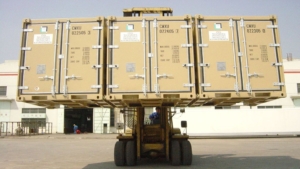
The combined container concept came up as a means of filling this gap. A combined container is not a single large unit but several smaller units that may be interlocked or separated depending on mission needs. When joined together, they assume the footprint and lifting positions of a standard ISO 20-foot container, hence still compatible with regular transport systems. When separated, they become small containers that can be handled individually by members, deployed on the ground, or used for special logistics tasks.
This modular approach marks the adjustment of transport philosophy—allowing logistics operators to dynamically change their cargo units, improve the utilization of spaces, and adjust smoothly to an unpredictable environment.
What Is a Combined Container?
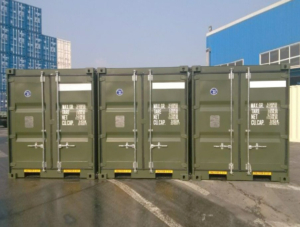
A combined container shall mean a modular logistics solution consisting of several small steel containers-mostly three units-joined by mechanical locks or twist connectors to create one single ISO-equivalent structure. The design concept fills the gap between compact mobility and standardized freight handling. Each module may work separately or be part of a 20-foot equivalent unit (TEU), thus embracing the world’s transport networks.
When taken apart, the pieces can be put one by one onto small trucks, moved over uneven ground, or used in field work without the need for big cranes or special stackers. When put together, the joined box keeps the same spots for lifting, piling, and locking as any normal box, which means easy use in ship, train, or truck work.
It puts together strength, adaptability, and accurate work. Every corner piece, frame link, and panel is made with high standards to make sure they can be swapped and keep the structure whole when used together.
Structural and Engineering Principles
The combined container results from the engineering design that merges compactness with full ISO performance. The steel structure is fabricated out of high-tensile cold-formed structural members. Shallow corrugation of the panels maintains rigidity while maximizing internal space. Units have forklift pockets and cross grooves, so that handling units may be approached from more than one direction.
Key construction characteristics include:
| Structural Feature | Description |
|---|---|
| Frame Material | Cold-formed steel sections, continuously welded |
| Wall Panels | Vertically corrugated steel, shallow depth for extra capacity |
| Base Frame | Reinforced cross-member grid with forklift access |
| Coupling System | Mechanical twist-lock connectors for rapid assembly |
| Stacking Capacity | Designed for 7-layer empty stacking |
| Surface Treatment | Anti-corrosive primer + marine-grade topcoat |
| Sealing System | Chloroprene and butyl sealants for water and dust protection |
At the heart of the combined container’s ease is the COUPLER SYSTEM. Each connector secures into the corner castings of neighboring modules by means of a simple handle rotation, which can be done by operators in minutes with no special tools required to connect or disconnect units.
When joined together, it acts like one solid mass that may be lifted, stacked, and moved as if it were a single 20-foot unit.
Advantages of Combined Container Systems
The combined container introduces a new layer of efficiency in the logistics chain by combining modular flexibility with ISO compatibility. Its advantages extend beyond transport capacity—they redefine operational efficiency, field mobility, and cost-effectiveness.
Main advantages include:
Operational Flexibility – Units can be joined or separated according to mission needs, allowing a single shipment to adapt to various destinations.
Rapid Loading and Unloading – Each module can open its doors independently, enabling partial unloading without dismantling the entire unit.
Improved Space Utilization – During distribution, operators can handle smaller modules (1/3 of a TEU), reducing idle space and optimizing vehicle load.
Reduced Infrastructure Dependency – Individual units can be manually or forklift-handled in areas without cranes.
Enhanced Concealment and Safety – For sensitive materials, modular configurations can disguise cargo and enhance operational security.
Combined Containers in Challenging Environments
The combined container concept was born out of real-world logistics challenges—remote deployments, disaster response, bad roads, weak power infrastructure, and scarcity of heavy equipment. Under such conditions, modularity is a decisive advantage.
Each small container may be moved separately by a light utility vehicle, pallet to aircraft, or local truck. At the place where they are going, they may join as one 20-foot container put together for neat keeping or sending back as a shipment.
In field bases or temporary camps, combined containers serve as flexible infrastructure modules:
Warehousing and supply depots
Mobile field kitchens
Ammunition and equipment storage
Command post or medical unit shells
This adaptability makes them invaluable in peacekeeping, humanitarian aid, and remote engineering projects, where agility often determines success.
Use Cases Across Industries
Although initially designed for governmental logistics, combined containers have found wide applications across multiple sectors. Their modular nature fits perfectly into industries that value transport versatility and quick deployment.
| Industry | Typical Applications | Key Benefits |
|---|---|---|
| Security | Material transport, field storage, mobile systems | Flexibility, concealment, secure structure |
| Humanitarian Relief | Food and medical supply distribution | Deployable in rough terrain, easy handling |
| Construction & Engineering | On-site storage, tool containers, and modular offices | Rapid setup, forklift mobility |
| Energy & Mining | Equipment housing, remote operation bases | Durable under extreme conditions |
| Civil Logistics | Distribution hubs, temporary warehousing | Space optimization, reusable design |
The versatility of the combined container allows it to replace multiple types of traditional storage or transport equipment, reducing fleet complexity while improving adaptability.
Combined Containers vs. Standard Containers
To better understand the technological shift, the table below compares combined containers with standard ISO containers in key performance aspects.
| Feature | Combined Container | Standard Container |
|---|---|---|
| Size Adaptability | Modular, can be split into smaller units | Fixed 20ft or 40ft sizes |
| Loading Options | Independent doors per module | Single rear doors |
| Transport Flexibility | Can be split and carried on smaller vehicles | Requires standard container handling |
| Infrastructure Requirement | Low (forklift or manual handling possible) | High (crane, stacker needed) |
| Stacking Capability | Up to 7 layers (empty) | Typically up to 9 layers |
| Operational Scenarios | Multi-environment: aid, logistics | Standardised global freight |
| Cost Efficiency | High over long-term due to reusability | Lower initial cost, less flexible |
Combined containers clearly demonstrate a superior adaptability advantage while maintaining robust ISO compatibility.
From Tricon to Modern Combined Containers
The first known version of combined container systems was the Tricon, a triptych combo of three mini containers making one 20-foot unit. Each single piece was about six feet long and could work alone or be joined with others. The idea of the Tricon led to today’s mixed container setups that take its modular plan into wide business and aid users.
Modern designs transcend simple steel and locking mechanisms. They embrace digital features, including RFID traceability, IoT monitoring, as well as modular power or climate options. Composite materials from certain manufacturers and advanced coatings further drop the weight even more while increasing the already high level of corrosion resistance.
Logistics is moving to automation, so combined containers can be equipped with sensors reporting not only real-time location but also internal temperature and vibration. This information will ensure the safety of the cargo as well as predictive maintenance in multi-stage transportation.
Manufacturing and Quality Standards
To perform reliably under diverse conditions, combined containers adhere to rigorous international standards. Every component—from the steel corner fittings to the floorboards—is manufactured under certified quality systems and undergoes multiple layers of inspection.
Material and Construction
High-tensile cold-formed steel for primary framing
Continuous CO₂ welding to ensure airtight joints
Galvanized or zinc-coated fasteners to prevent corrosion
Marine-grade epoxy primer and polyurethane topcoat
Quality Tests and Certifications
Before delivery, each combined container typically undergoes:
Stacking Test – Verifies load-bearing performance under vertical compression.
Lifting Test – Ensures safe handling at full load using top corner fittings.
Racking Test – Measures structural deflection under side loads.
Waterproof Test – Confirms complete sealing integrity.
Dimensional Inspection – Validates ISO corner positions and interface tolerances.
These manufacturing standards make combined containers suitable for both civil procurement requirements, where reliability is non-negotiable.
Combined Containers in the Future Supply Chain
The future of global logistics lies in flexibility and digital integration. Combined container systems align perfectly with these trends, merging physical modularity with intelligent operation.
Emerging innovations include:
Smart tracking via IoT and satellite communication
Integration with automated stacking cranes and unmanned vehicles
Use of lightweight alloys or composite panels for fuel efficiency
Plug-in power systems for refrigerated or powered modules
Recyclable materials to meet carbon reduction goals
In humanitarian applications, the ability to quickly mobilize modular units that can fit various transport modes—trucks, aircraft, or sea containers—will be a defining logistical advantage. Combined containers may also evolve into hybrid models that double as deployable shelters or command centers.
The Future Belongs to Flexible Logistics
In the world’s complex environment, there are climate challenges, geopolitical swings, and rapid deployment needs; hence, the combined container marks a new age of efficiency characterized by adaptability in logistics. Its modular setup combines the scalability of standard containers with the flexibility of mobile modular systems, sharing easier operations, leading to more responsive actions and quick deployment across different industries.
As digital intelligence continues to stay within the logistics domain, combined container systems will eventually go past simple cargo transport, becoming core parts of smart, reactive, and green supply chains. Here, modularity is equal to mobility, and mobility is what defines success.
Driving this revolution is CIMC TLC | RYC | XLC. The firm, top in the production of combined containers and specific logistic tools, pledges to new ideas, high standards, and plans that put buyers first. Be it cool boxes or chill link chains to join plans with containers or shape houses, CIMC TLC | RYC | XLC gives total answers that boost up-to-date logistics.
For high-quality, customizable, future-ready logistics equipment, see your trusted global partner in CIMC TLC | RYC | XLC. The company warmly welcomes worldwide customers to inquire about cooperation with them to build partnerships that move industries forward.