



 EN
EN  RU
RU 
When working far from land, whether in offshore construction, oil and gas exploration, or scientific research, one challenge is universal: where will the crew live, eat, and rest? Offshore projects often require weeks or even months at sea, in environments that can be harsh, unpredictable, and physically demanding. In such conditions, the quality of accommodation is not just a matter of comfort—it is directly linked to productivity, safety, and crew morale.
This is where the Offshore Living Quarter comes in. Also known as a modular living quarter, offshore accommodation module, or marine accommodation cabin, it is a specially engineered structure designed to house workers in offshore environments. Built to meet stringent safety and durability standards, it provides all the essentials of daily life—sleeping areas, sanitary facilities, kitchen and dining spaces, storage, and even meeting rooms—within a compact, robust, and transportable unit.
Why Offshore Living Quarters Are Essential
Offshore projects present a unique set of living challenges. Space is limited, the weather can be extreme, and safety requirements are strict. Workers often spend long shifts in physically demanding conditions, making quality rest and living facilities a necessity rather than a luxury.
In the past, makeshift living spaces on vessels were common, but they often lacked comfort, adequate insulation, or privacy. Modern Offshore Living Quarters have transformed this picture, offering climate control, fire safety, secure storage, and even smart energy solutions such as solar power and freshwater recycling.
For companies, this investment is strategic: comfortable, well-equipped living conditions help retain skilled personnel, reduce fatigue-related accidents, and maintain high productivity over extended offshore deployments.
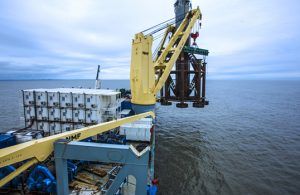
CIMC TLC|RYC|XLC Offshore Living Quarter
The CIMC TLC|RYC|XLC Offshore Living Quarter is engineered to meet the dual demands of safety and comfort. Built in compliance with DNV 2.7-1 structural standards and A60 fire-proof requirements certified by ABS, it is designed to withstand the rigors of offshore environments while keeping occupants safe from fire hazards and environmental exposure.
Key highlights include:
Capacity: Configurations available for 2, 4, or 8 individuals.
Standards Compliance: Meets ILO accommodation requirements, ensuring adequate space, ventilation, lighting, and sanitary facilities.
Plug-and-Play Installation: Units are pre-fabricated and can be quickly deployed with minimal on-site assembly.
Safety First: Equipped with lifting pad eyes, certified slings and shackles, and safe area classification.
Climate Adaptability: Designed for temperatures from -20°C to +50°C, with dedicated AC systems in each bedroom.
Optional Green Features: Freshwater recycling systems, rainwater treatment units, and solar power integration.
Inside the Offshore Living Quarter – Layout and Facilities
Walking into a well-designed offshore living quarter, you might be surprised at how much comfort can be packed into a modular unit. Every square meter is planned for maximum functionality.
- Sleeping Areas
Cabins are arranged for privacy and rest, often with bunk beds, individual storage lockers, reading lights, and sound insulation to reduce noise from machinery or waves. - Sanitary Facilities
Each unit comes with A60-rated walls for fire safety, and sanitary spaces include showers, toilets, and sinks designed to minimize water usage while maintaining hygiene standards. - Kitchen and Dining
A small but well-equipped galley allows preparation of fresh meals, while a dining area doubles as a social space where crew members can relax. - Work and Utility Spaces
Meeting rooms, electrical distribution rooms, and changing areas can be incorporated, enabling the living quarters to serve as a full base of operations at sea.
The Build Process – From Steel to Sea-Ready Home
The production of an Offshore Living Quarter is a meticulous process combining marine engineering expertise with precision manufacturing. At CIMC TLC|RYC|XLC, each unit follows a carefully staged build sequence:
Frame Fabrication – The steel frame is cut, assembled, and welded according to DNV 2.7-1 dimensional tolerances. Special jigs and fixtures are used to minimize welding deformation.
Quality Welding – Certified welders perform structural welding, followed by inspections including magnetic particle, ultrasonic, and X-ray testing.
Flooring and Insulation – Marine-grade flooring is installed, and insulation materials are added to ensure thermal stability and soundproofing.
Piping and Duct Installation – Water pipes, ventilation ducts, and cable trays are installed with attention to vibration resistance and safety clearances.
Interior Fit-Out – Decorative wall panels, furniture, and appliances are installed, followed by electrical and plumbing system connections.
Final Inspection – Hydro tests, electrical tests, and fire safety checks are conducted against a detailed acceptance checklist. Only when every item passes is the unit cleared for delivery.

Safety Standards – More Than a Requirement
When living and working offshore, safety cannot be compromised. The CIMC TLC|RYC|XLC Offshore Living Quarter meets the A60 fireproof standard, meaning its bulkheads can withstand 60 minutes of intense fire without structural failure. This gives crews critical time to respond and evacuate in emergencies.
Additional safety features include:
Fire and gas detection systems.
Electro-mechanical fire dampers.
Anti-slip roof coatings.
Lifting systems tested for offshore handling.
Compliance with DNV 2.7-1 and BS EN 12079 ensures structural integrity for offshore lifting, stacking, and transport under harsh marine conditions.
Sustainable and Smart Solutions
CIMC TLC | RYC is committed to reducing the environmental footprint of offshore operations. Offshore Living Quarters can be fitted with:
Freshwater recycling units to reduce water waste.
Rainwater harvesting systems to supplement onboard water supplies.
Solar panels to power auxiliary systems and reduce diesel generator use.
These measures not only lower operational costs but also align with international environmental standards for marine activities.
Life Onboard – Beyond Shelter
A good offshore living quarter is more than just a box at sea. It becomes a home, a refuge, and a workplace for the crew. A comfortable bed after a long shift, a shared meal in the dining area, or a quiet moment in an air-conditioned cabin can make all the difference in maintaining morale.
For project managers, these intangible benefits translate into tangible results—better teamwork, fewer safety incidents, and higher productivity.
Looking Ahead – The Future of Offshore Living
As offshore industries expand into deeper waters and harsher climates, living quarters will need to evolve further. Trends include:
Modular stacking systems for scalable accommodation.
Hybrid energy systems combining solar, wind, and fuel cells.
Smart monitoring of occupancy, energy use, and safety systems.
Wellness-focused design, incorporating natural light simulation, exercise areas, and ergonomic furnishings.
CIMC TLC|RYC|XLC is already developing next-generation offshore living modules that integrate these advancements while maintaining the rugged reliability required at sea.
The Offshore Living Quarter is not just a piece of equipment—it is a lifeline for offshore workers, providing safety, comfort, and essential services in some of the world’s most challenging environments. With the combination of engineering excellence, strict safety compliance, and attention to human needs, products like the CIMC TLC|RYC|XLC Offshore Living Quarter are setting the standard for offshore living in the 21st century.
In a world where offshore projects are pushing boundaries, the right accommodation solution ensures that crews can push their limits—safely, comfortably, and sustainably.