



 EN
EN  RU
RU 
In today’s interconnected world, the movement of perishable goods across continents is a critical part of the global economy. From fresh seafood shipped internationally to vaccines transported under strict temperature control, maintaining precise conditions is no longer optional—it is essential. At the heart of this cold chain infrastructure is the Cold Storage Container, a versatile solution ensuring goods remain at their required temperature, regardless of distance or transit conditions.
Backed by nearly 200 professional engineers, CIMC TLC | RYC | XLC can independently complete entire system design, analysis, calculation, and 3D modeling for multiple categories of cold chain and modular solutions. This includes both standard product design and fully customized cold storage container projects.
As a provincial high-tech enterprise with 286 patents, we maintain ongoing research collaborations with leading universities such as Tongji University and Jiangsu University, guaranteeing continuous innovation and technical excellence. Our design and manufacturing processes adhere strictly to international standards, supported by a complete series of certifications including ISO9001:2015 Quality Management, ISO14001:2015 Environmental Management, ISO45001:2018 Occupational Health and Safety, ISO50001:2018 Energy Management, EN-1090, ISO3834, and CSA W47.1 Welding Certification, as well as factory approvals from ABS and DNV.
What is a Cold Storage Container?
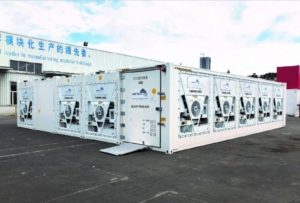
A Cold Storage Container is a temperature-controlled, insulated unit designed to store or transport perishable goods that require specific temperature ranges. Using advanced insulation materials and refrigeration systems, these containers maintain stable internal conditions, typically from -40°C to +25°C.
Core Functions
Temperature Preservation – Ensures perishable items remain fresh during storage or transit.
Mobility – Can be shipped via truck, rail, or sea freight, offering unmatched versatility.
Adaptability – Serves industries ranging from food and pharmaceuticals to chemicals and agriculture.
Unlike fixed cold rooms, Cold Storage Containers can be deployed anywhere, making them ideal for temporary storage or expanding existing cold chain infrastructure.

Types of Cold Storage Containers
Portable Cold Storage Containers
Ideal for short-term storage needs, events, catering businesses, or seasonal demand surges. Typically available in 10ft, 20ft, or 40ft sizes, powered by external electricity or onboard generators.
Key Benefits:
Flexible rental or purchase options
Quick deployment without permanent infrastructure
Suitable for remote or urban locations
Refrigerated Shipping Containers
Standardized ISO containers with integrated refrigeration units, designed for long-haul sea and land transport.
Common Features:
Diesel generator or shore power compatibility
Heavy-duty insulation and stainless steel interiors
GPS and temperature monitoring systems
Blast Freezer Containers
Used for rapid freezing of seafood, meat, and bakery products.
Advantages:
Achieves ultra-low temperatures quickly
Preserves product quality and structure
Minimizes bacterial growth and spoilage
Pharmaceutical Cold Storage Containers
Designed for vaccines and biologics requiring narrow temperature ranges (+2°C to +8°C or -20°C). Features include multi-zone compartments, real-time monitoring, and compliance with GDP and WHO guidelines.
Key Features and Specifications
CIMC’s advanced steel structure production lines and modular building intelligent production lines ensure a flexible, lean, and data-driven manufacturing process, guaranteeing both reliable capacity and stable quality.
| Feature | Importance | Typical Range |
|---|---|---|
| Temperature Range | Determines product suitability | -40°C to +25°C |
| Size & Capacity | Matches storage volume and footprint | 10ft, 20ft, 40ft, custom sizes |
| Refrigeration Type | Impacts energy efficiency and performance | Compressor, absorption, hybrid |
| Power Supply | Ensures operational flexibility | External power, diesel gen-set |
| Insulation Quality | Reduces energy costs and maintains stability | High-density polyurethane |
| Monitoring Systems | Enables tracking and compliance | Digital sensors, IoT-based |
Our factory operations comply with strict quality assurance protocols: project-specific inspection and test plans, traceable documentation, and fully equipped testing facilities for structural and thermal performance. Every Cold Storage Container undergoes rigorous testing to ensure optimal performance in demanding conditions.
Advantages of Cold Storage Containers
Mobility – Easily deployed to multiple locations.
Scalability – Add or remove units to match demand.
Cost-Efficiency – Lower capital investment than permanent cold rooms.
Multi-Industry Application – Supports food, pharmaceuticals, chemicals, and more.
Reliability – Advanced engineering and certification ensure stable, predictable performance.
Common Applications Across Industries
Food and Beverage
Fresh produce, meat, dairy, seafood, and frozen goods
Seasonal storage during harvest peaks
Event catering and temporary pop-up markets
Pharmaceutical & Healthcare
Vaccines, insulin, blood plasma, biologics
Remote and emergency medical deployment
Compliance with international transport standards
Agriculture & Floriculture
Preservation of cut flowers and fresh produce
Extended shelf life via controlled environment
Chemical Industry
Temperature-sensitive industrial chemicals and specialty materials
Choosing the Right Cold Storage Container
Identify Storage/Transport Needs – Temporary or long-haul?
Determine Temperature Range – Match product specifications.
Select Appropriate Size – Consider space and volume.
Rental vs. Purchase – Flexibility vs. long-term cost efficiency.
Supplier Evaluation – Look for robust technical support and certifications.
Comparison Table:
| Container Type | Best For | Power Source | Mobility | Cost Range |
|---|---|---|---|---|
| Portable Cold Storage | Events, catering, seasonal peaks | External power, generator | High | Low-Medium |
| Refrigerated Shipping | Long-haul transport | Diesel, shore power | High | Medium-High |
| Blast Freezer | Rapid freezing of seafood/meat | High-power compressor | Medium | Medium-High |
| Pharmaceutical Storage | Vaccines, biologics | Redundant power systems | Medium | High |
Production, Quality, and Sustainability
CIMC’s production integrates intelligent manufacturing with low-carbon, energy-saving technology. From raw materials to finished products, data-driven monitoring ensures high reliability, controllable costs, and stable quality.
Certifications & Standards Include:
ISO9001, ISO14001, ISO45001, ISO50001
EN1090, ISO3834, CSA W47.1, WPQR
ABS and DNV Factory Approvals
Corporate Responsibility:
Upholds human rights and labor standards
Promotes environmental sustainability
Implements anti-corruption policies
The cold chain market is projected to grow from USD 242B in 2021 to over USD 410B by 2028, fueled by demand in food, pharmaceuticals, and e-commerce. Key trends include:
Sustainable and energy-efficient refrigeration
IoT-enabled monitoring and predictive maintenance
Decentralized cold chain hubs for faster last-mile delivery
Call to Action
Cold Storage Containers are the backbone of modern cold chain logistics. Supported by CIMC TLC | RYC | XLC’s engineering expertise, advanced production capabilities, and global certifications, these containers deliver reliable, scalable, and high-quality solutions for any industry.
Partner with CIMC TLC | RYC | XLC today to secure a customized Cold Storage Container solution that meets your operational, regulatory, and environmental requirements. Our team offers end-to-end support from concept to deployment, ensuring your goods remain safe and your business stays ahead.