



 EN
EN  RU
RU 
In today’s global steel supply chain, the transportation of steel coils poses a persistent challenge. Steel coils, due to their massive weight, cylindrical shape, and substantial size, are far from easy to handle. If not transported with the proper equipment, they can cause severe damage to the cargo itself, the container, and even the transportation system. In addition, inefficient handling often leads to high operational costs and low logistics efficiency.
To address these challenges, the Coil Container was developed as a specialized shipping solution. More than just a heavy-duty box, it is engineered with safety, versatility, and efficiency in mind. With its reinforced open-top design, removable swing door header, and multifunctional collapsible cradles, the Coil Container enables convenient loading, stable transportation, and flexible usage. Its design reflects the modern logistics philosophy: maximize utility, ensure safety, and reduce costs.
What is a Coil Container and Why Does It Matter?
A Coil Container is a special-purpose shipping container designed to carry steel coils and other cylindrical heavy goods. Unlike conventional general-purpose containers, which have flat floors and are better suited for boxed or palletized cargo, Coil Containers are built with dedicated structural reinforcements and adjustable cradles that cradle the coils securely during transit.
Its core functions can be summarized as follows:
Specialized Transport: Accommodates coils ranging from 600 mm to 1850 mm in diameter, offering secure support and preventing dangerous movements during shipping.
Multifunctional Usage: With collapsible cradles, it can be converted into a standard container for carrying steel plates, flat products, or other general cargo on return trips.
This adaptability is the reason why Coil Containers matter. They solve one of the steel industry’s biggest logistical headaches — how to safely and efficiently move extremely heavy cylindrical goods while avoiding costly empty returns.
Design and Technical Highlights of Coil Containers
The Coil Containers manufactured by CIMC TLC|RYC| XLC stand out in the global logistics market due to their carefully engineered design. Several technical highlights define their value:
Sturdy Open-Top Structure and Swing Door Header
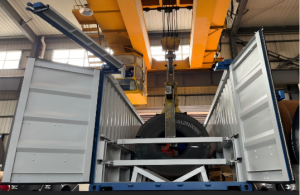
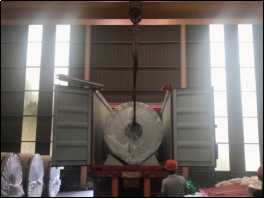
The open-top design makes it easy to load coils directly from above using cranes, while the removable swing door header allows additional access for flexible loading and unloading.Multifunctional Collapsible Cradles
The interior cradles are designed to hold steel coils firmly in place. When not in use, these cradles can be folded down, converting the container into a flat-bottomed space for general cargo.Reinforced Beam Structure
With strengthened crossbars and a heavy-duty base, the Coil Container is engineered to withstand enormous loads, offering both stability and durability.Tested Safety Standards
These containers have successfully passed Russian Railway collision tests, proving their ability to handle the most demanding transport environments.High Payload Capacity
With a maximum gross weight of 36,000 kg and a payload capacity of 31,500 kg, a single container can carry multiple coils or even a single coil weighing up to 28 tons.
These technical highlights distinguish the Coil Container from ordinary shipping containers, positioning it as a purpose-built logistics tool tailored to the steel and heavy industries.
Versatility and Practical Value
Perhaps the greatest advantage of Coil Containers lies in their versatility. Traditional transport methods are often one-dimensional: flatbed wagons may be used exclusively for coils, or general-purpose containers for standard cargo. In either case, return trips usually mean empty containers — a costly waste of logistics resources.
The Coil Container changes this dynamic:
During Coil Transport: The cradles provide secure support, preventing movement, rolling, or shifting that could compromise safety.
During Return or General Cargo Transport: The cradles can be lowered, creating a flat floor that can carry steel sheets, machinery, or other general goods.
This multi-use approach reduces empty backhauls, maximizes container utilization, and delivers tangible cost savings. For logistics companies under pressure to optimize resources, the Coil Container provides a sustainable answer.
Safety and International Certifications
The transport of steel coils involves significant risks. A single misplaced coil weighing over 20 tons can cause catastrophic damage. For this reason, safety is the foremost priority in Coil Container design.
CIMC TLC|RYC|XLC Coil Containers provide superior protection through:
Collision Resistance: Certified after rigorous Russian Railway collision tests, proving their durability in extreme transport conditions.
Structural Reinforcement: Double-layer crossbars and reinforced beams minimize the risk of coil displacement.
CSC Certification: Compliance with the International Convention for Safe Containers, ensuring global acceptance and smooth cross-border shipping.
These measures make Coil Containers not only efficient but also reliable. Their global certification ensures that shipping companies can deploy them seamlessly across different regions, whether by sea, rail, or intermodal transport.
Real-World Applications in the Steel Industry
The steel industry is one of the heaviest users of Coil Containers, and its role spans multiple stages of the supply chain:
Steel Manufacturing Plants: Transporting massive quantities of newly rolled coils from production facilities to ports or processing centers.
Metal Processing Enterprises: Moving coils to factories where they are cut, shaped, or otherwise processed for industrial use.
International Trade and Export: Shipping coils via sea freight to overseas buyers, requiring containers that meet global compliance standards.
Railway Transport: Particularly important for long-distance land routes, such as China-to-Russia and China-to-Europe freight corridors.
By providing a consistent and safe transportation solution, Coil Containers bridges the gap between production and processing, ensuring supply chain stability in a sector where downtime can result in massive financial losses.
Comparing Coil Containers with Traditional Transport Methods
Traditional coil transport has relied on flatbed wagons, open trailers, or modified general-purpose containers. While functional, these approaches fall short in several areas when compared with modern Coil Containers:
Efficiency in Loading and Unloading: Open-top and removable door header design allows faster, safer crane operations.
Stronger Adaptability: Adjustable cradles accommodate coils of varying diameters, eliminating the need for multiple equipment types.
Superior Safety: Purpose-built reinforcements prevent coil movement, reducing accidents and damage.
Cost Effectiveness: Multi-use design minimizes empty returns, reducing overall logistics expenses.
Global Compliance: CSC certification enables seamless integration into international multimodal shipping systems.
The combination of these advantages makes Coil Containers the preferred modern solution for companies seeking both safety and economic value.
Customer Value and Economic Benefits
For companies in steel production, processing, or logistics, adopting Coil Containers generates significant value:
Reduced Transportation Costs: Fewer empty returns and higher utilization rates.
Enhanced Safety Assurance: Lower risk of product damage and associated costs.
Improved Supply Chain Efficiency: Faster loading and unloading translate into shorter transport cycles.
Global Market Competitiveness: CSC-certified equipment ensures compliance with international trade standards.
From a business perspective, Coil Containers are not just a piece of equipment; they are a strategic investment in operational efficiency and competitiveness. They enable companies to modernize their logistics while also cutting costs.
As the steel industry continues to expand globally, the demands on logistics infrastructure grow increasingly complex. The ability to transport heavy, oversized, and irregular cargo safely and efficiently has become an essential factor in global trade competitiveness.
The Coil Container represents a breakthrough in this regard. With its reinforced open-top design, versatile cradles, superior payload capacity, and international safety certifications, it provides a holistic solution for transporting steel coils and other heavy cylindrical goods. More importantly, its multifunctional design transforms it from a single-purpose tool into a flexible logistics asset, reducing costs and improving efficiency across the supply chain.
For steel manufacturers, processing plants, international traders, and logistics providers, investing in Coil Containers is not simply an operational decision — it is a strategic upgrade to meet the challenges of modern industrial logistics. Looking ahead, as industries increasingly emphasize efficiency, safety, and sustainability, the Coil Container will play a pivotal role in shaping the future of heavy cargo transportation worldwide.