



 EN
EN  RU
RU 
| Criteria | 2025 Trends and Stats |
|---|---|
| Size | Smaller containers for labs, mid-range for daily use, and large for big transfers |
| Material | Fiberboard for eco-friendliness, plastics for chemical safety, steel for tough jobs |
| Durability | New tech gives you stronger, smarter containers |
Sustainability and cost matter, too. With packaging making up to 10% of a product’s carbon footprint, picking the right option helps your business and the planet.
Key Takeaways
- Match your bulk container material and size to your product and business needs for safety and efficiency.
- Check industry rules and certifications to stay compliant and avoid fines.
- Choose containers that are durable, easy to handle, stackable, and secure to improve operations.
- Consider eco-friendly options to reduce costs, lower your carbon footprint, and meet customer demands.
- Use a clear checklist and consult suppliers to find the best container that fits your budget and goals.
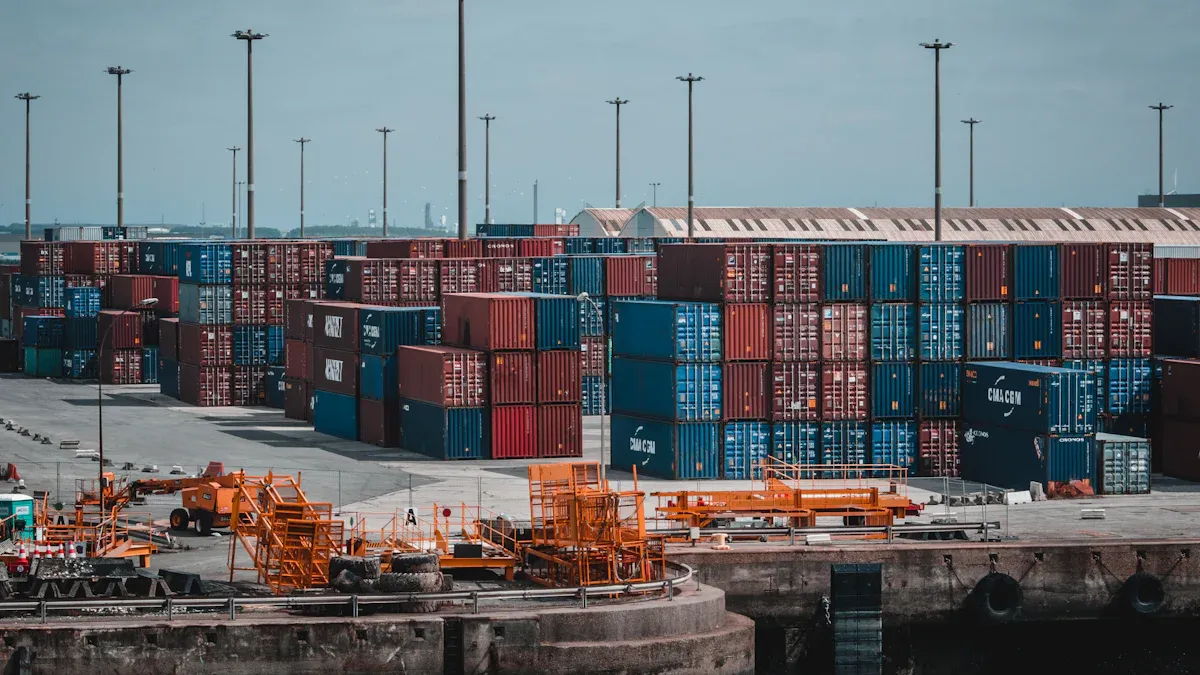
Business Needs
When you start looking for the right bulk container, you need to think about your business’s unique needs. Let’s break it down step by step.
Materials
The material you choose matters a lot. Different industries have different requirements. Here’s a quick look at what’s common:
| Business Sector | Storage & Transport Needs | Best Material Choices | Key Trends & Considerations |
|---|---|---|---|
| Chemicals | Safe, durable for hazardous liquids | Metal IBCs for strength, corrosion | Eco-friendly, reusable packaging, and safety rules |
| Food & Beverage | Hygienic, contamination-free | Food-grade plastic, stainless steel | Food safety, contamination protection |
| Pharmaceuticals | Clean, compliant, safe | Plastic, metal IBCs | Hygiene, regulatory impacts |
| Manufacturing | Bulk, cost-efficient, durable | Plastic IBCs | Reduce waste, enhance safety |
You want to match your container’s material to what you store or ship. For example, if you handle chemicals, metal containers work best. If you’re in food or beverage, go for food-grade plastic or stainless steel.
Volume
Think about how much you need to store or move at once. Here are some common benchmarks:
- Tote tanks (IBCs) hold up to 6,000 liters—great for big jobs.
- Standard steel drums fit about 208 liters—good for smaller batches.
- Larger containers help cut down on handling and shipping costs.
- Always check if your space and equipment can handle the size you pick.
Application
How you use your containers shapes your choice. Do you need something for liquids, powders, or solids? Will you stack them or move them with forklifts? If you use automation or have limited space, look for containers that fit your workflow. Picking the right design keeps your operations smooth and safe.
Compliance
Don’t forget about rules and regulations. Many industries face strict standards, especially for food, chemicals, and pharmaceuticals. Laws like the EU Packaging and Packaging Waste Regulation push companies to use recyclable and eco-friendly materials. You also need to watch for emissions rules and energy-efficient designs. Staying compliant helps you avoid fines and supports your sustainability goals.
Tip: Always check the latest regulations in your region before making a final choice. This keeps your business safe and future-ready.
Container Types
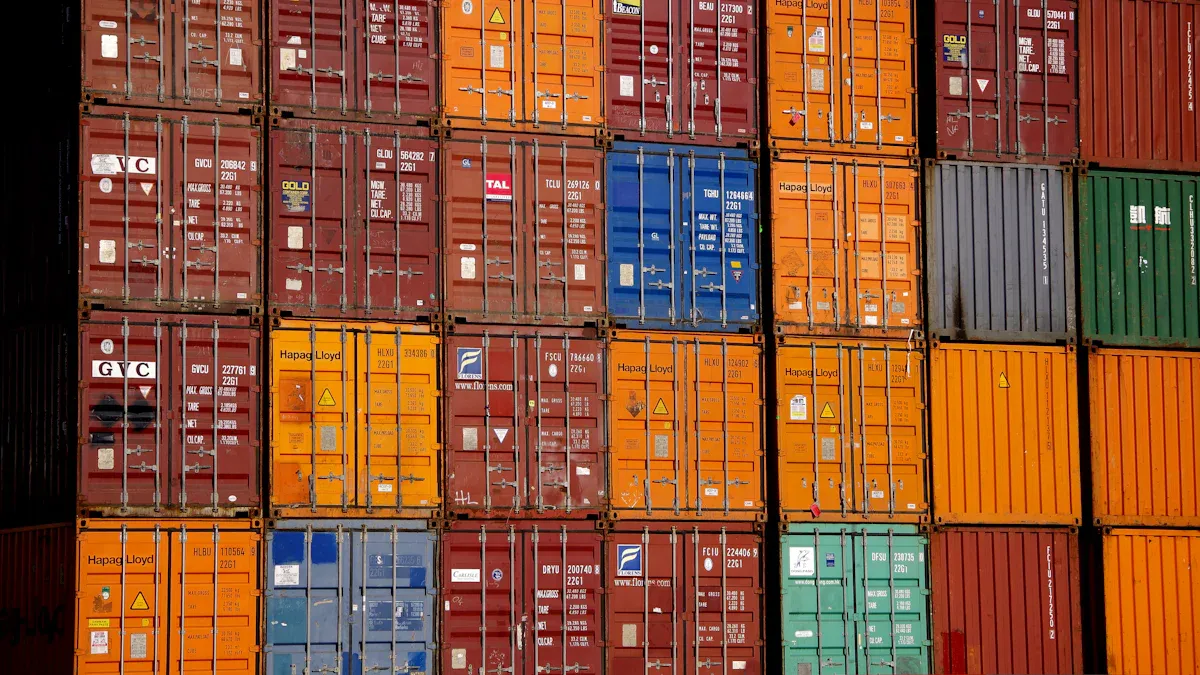
Plastic
Plastic containers work well for many businesses. You can use them for food, chemicals, or even electronics. They are lightweight, strong, and easy to clean. Here’s why many companies pick plastic:
- You can reuse plastic crates many times. If you use them at least 15 times, they become more eco-friendly than cardboard.
- Plastic containers weigh less than glass or metal. This means you spend less on shipping.
- Plastic bottles with recycled content often have a smaller environmental impact than glass, even if you reuse the glass bottles.
Tip: If you want a container that lasts and saves money on transport, plastic is a smart choice.
Metal
Metal containers give you top-notch strength and durability. You see them a lot in heavy industries and for storing chemicals.
- Metal packaging is tough and can last for years. You can recycle it over and over.
- Using recycled metal saves up to 95% of the energy compared to making new metal.
- Metal IBCs (Intermediate Bulk Containers) resist damage and weather. They are easy to clean and stack.
You should pick metal if you need something that can handle rough treatment or if you want to cut down on waste over time.
Cardboard
Cardboard containers are light and easy to recycle. Many businesses use them for shipping and storage.
- Corrugated cardboard has a high recycling rate—about 91% in 2021.
- Cardboard boxes can be very cheap, sometimes less than a dollar each.
- Cardboard helps lower your carbon footprint, but only if you use it for local shipping. Long-distance transport can raise its environmental impact.
Note: Cardboard is great for dry goods and short trips, but it may not hold up well to moisture or heavy loads.
Bulk Bags
Bulk bags, also called FIBCs, are perfect for moving large amounts of dry goods like sand, grain, or chemicals. You can lift and stack them easily, which saves time and space.
Bulk bags help you:
- Move heavy materials quickly and safely.
- Store more in less space because you can stack them.
- Lower transport costs since they are lightweight.
If you need to handle big loads and want to boost efficiency, bulk bags are a solid pick.
Liquid Containers
Liquid containers come in many forms—plastic, metal, cartons, or bag-in-box. Each type fits different needs.
- Studies show that lighter options like aseptic cartons and bag-in-box systems are more sustainable and cost-effective than glass bottles.
- Many industries now use these lighter containers to save energy and reduce waste.
- Consumer surveys say people like packaging that looks eco-friendly and uses recycled materials.
If you ship liquids, look for containers that match your product and your customers’ values.
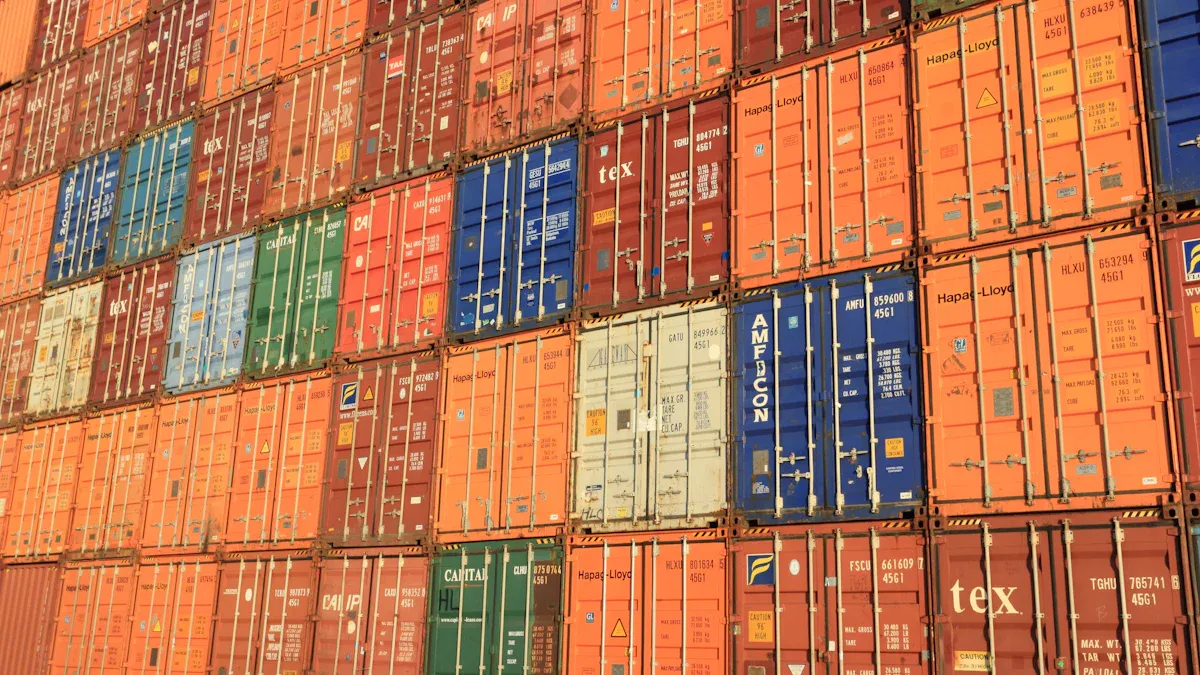
Key Features
Durability
You want your bulk containers to last. Look for containers that meet tough standards from groups like ASTM International and ISO. These organizations set the bar for quality. Containers go through tests for strength, like compression and impact, and for how well they handle heat, cold, and chemicals. If you see ISO 9001 certification, you know the container passed strict quality checks. When you choose containers that meet these standards, you get longer service life, fewer failures, and better performance.
- Mechanical tests: compression, impact, tensile strength
- Environmental tests: temperature cycling, humidity, UV exposure
- Chemical tests: solvent resistance, corrosion testing
Stackability
Stackable containers help you save space and keep your warehouse organized. When you stack containers the right way, you can boost your storage space by up to 36%. That means you can fit more products in the same area and make your workflow smoother. Stackable designs also make it easier to move and count your inventory.
Tip: Always check the weight limits before stacking to keep things safe.
Handling
Easy handling makes your team’s job faster and safer. Features like handles, forklift pockets, and smooth edges help a lot. When you use containers designed for quick handling, you see better pick rates and less downtime. Tools like barcode scanners and automation systems also speed up your workflow and cut down on mistakes.
- Pick rate goes up with better handling features
- Less downtime with easy-to-move containers
- Automation and tech tools boost speed and accuracy
Security
You need to keep your goods safe. Over 90% of security threats in logistics come from container incidents. Secure containers use strong locks, tamper-evident seals, and smart tracking. Following best practices, like regular checks and using guides from NIST, helps you avoid theft and loss. Always make security part of your container plan.
Sustainability
Eco-friendly containers help your business and the planet. Companies now aim for at least a 15% drop in carbon emissions each year and use packaging made from 85% or more recyclable materials. Many businesses see higher customer satisfaction and even save money by switching to green containers.
| Metric | Target/Result |
|---|---|
| Carbon Footprint Reduction | 15-20% annually |
| Recyclable Materials | 85% or higher |
| Customer Satisfaction | 4.0/5 or above |
| Waste Reduction | 20-30% over 12 months |
Choosing sustainable containers shows you care about the future and keeps you ahead of new rules and customer demands.
Bulk Container for Sale: Selection Guide
Checklist
Before you start shopping for a bulk container for sale, you need a clear checklist. This helps you stay focused and avoid missing important details. Here’s a simple list to guide you:
- What will you store or transport? (liquids, powders, solids)
- How much volume do you need?
- Which material fits your product best? (plastic, metal, cardboard, bulk bags)
- Does your industry have special rules or certifications?
- Will you stack, move, or automate these containers?
- What is your budget for each container?
- Do you need eco-friendly or reusable options?
- How will you keep your goods secure?
Tip: Surveys and buyer feedback reports can help you check container condition and suitability. These reports lower your risk and give you real-world insights.
You can also look at market trends. For example, the Intermediate Bulk Container (IBC) market is growing fast. It was worth $25.7 billion in 2024 and could reach $46.3 billion by 2035. Food, beverage, and chemical industries drive this growth. Companies now want containers that are safe, easy to clean, and good for the planet.
Shortlist Options
Once you have your checklist, it’s time to narrow down your choices. Here’s how you can do it:
- Use market intelligence tools to compare suppliers and products. These tools analyze shipping invoices and help you spot the best options.
- Filter your choices by growth rates, supplier quality, price, and packaging needs.
- Check price ranges. Look for the lowest, highest, and most common prices. This helps you set a fair budget.
- Focus on what matters most to you—quality, price, or special features.
- Compare product quality by looking at import prices and demand.
- Choose suppliers who offer good prices, reliable shipping, and steady supply.
- If possible, pick suppliers close to your location. This saves on shipping and speeds up delivery.
- Take advantage of trade agreements to cut down on import duties.
- Reach out to decision-makers directly. This can speed up your buying process.
| Aspect | Evidence Summary |
|---|---|
| Market Trends | Demand is rising for processed food and beverage containers. Companies want hygiene and contamination-free transport. Eco-friendly packaging and collapsible containers are popular. Flexible bulk containers are in demand for powders and granules. |
| Flexitank Sales | Flexitank sales hit $2.4 billion in 2024, driven by food-grade liquids and chemicals. |
| IBC Market Projection | The IBC market could reach $27.7 billion by 2034, thanks to industrial and farm demand. |
| Bulk Container Liner Growth | Liners are growing at over 7.4% per year, driven by food and beverage needs and new rules. |
| End-Use Industry Shares | Food & Beverage (18.9%), Chemicals ($11.1 billion by 2034), Oil & Gas (21%), Pharmaceuticals (6.4% growth), Paints, Ink & Dyes (10.8%). |
| Material Trends | Plastics lead the market for being light and tough. Metals are growing for heavy-duty needs. |
| Regional Sales Data | North America leads with a 28.2% share. The U.S. market is over $5 billion. Canada and Europe are also growing. |
This table shows why it’s smart to look at trends and sales data when you shortlist your bulk container for sale options.
Supplier Consultation
Talking to suppliers is a key step. You want to make sure you pick the right partner for your business. Here’s what you should do:
- Ask about delivery times, order accuracy, and product quality.
- Check if the supplier follows safety and environmental rules.
- Review their risk management and how they handle problems.
- Use spend analysis to find cost-saving deals and volume discounts.
- Look for suppliers who use technology like ERP systems. This makes ordering smoother and more accurate.
- Request regular audits and performance reviews. This keeps quality high.
- Build a long-term relationship. Good suppliers help you plan better and avoid surprises.
- Consider just-in-time delivery if you want to keep inventory low.
| KPI Category | Examples of Metrics and Outcomes |
|---|---|
| Supplier Performance | Spend per supplier, order fill rate, lead times, delivery accuracy, defect rate, compliance, audits |
| Supplier Risk | Number of single-source suppliers, changes in suppliers |
| Operational KPIs | Procurement ROI, cycle time, time to award tender, time to negotiate contract, number of approved suppliers |
| Employee-related KPIs | Cost savings per employee, spend under management per employee, suppliers managed per employee, and sourcing projects |
| Sustainability KPIs | Compliance with Code of Conduct, environmental standards, supplier self-assessment questionnaires, CO2 reduction |
Note: Market surveys and buyer feedback can give you extra confidence in your supplier choice. These reports show real-world performance and help you avoid costly mistakes.
Final Decision
Now you’re ready to make your final choice. Use a simple decision-making framework to compare your top picks:
- Check the material and durability. Think about strength, cost, and how easy it is to maintain.
- Look at handling and how easy it is to move containers in your space.
- Make sure the containers stack well and save space.
- Review security features like tamper-evident lids.
- Compare costs and think about how long the container will last.
- Use software or spreadsheets to estimate how many products fit in each container. This helps you lower costs and avoid waste.
- Consider repair and reuse. If a container can be fixed for less than its value, keep using it. If not, look for ways to recycle or repurpose it.
| Final Decision Case | Criteria/Parameters Used | Performance Statistics / Supporting Data | Notes on Regulatory and Efficiency Criteria |
|---|---|---|---|
| Repair and Continue Use | Expected yields from further use > projected repair costs | Utilization rates, repair costs, lifespan, and depreciation | Ensures economic feasibility and efficiency |
| Repair and Sell Promptly | Expected sales price of repaired container > projected repair costs | Sales price grades, market offers | Supports economic efficiency; regulatory compliance is implicit |
| Do Not Repair; Consider Secondary Use | Yields insufficient to cover repair costs; consider alternative uses (e.g., office, sanitary, residential containers) | Market prices for secondary use containers (e.g., €6,500 – €10,000) | Promotes sustainability and practical feasibility |
Callout: Always check that your bulk container for sale meets all safety and regulatory standards. This protects your business and keeps your supply chain running smoothly.
When you follow these steps, you can feel confident that you’ve picked the best bulk container for sale for your needs. You’ll save money, boost efficiency, and stay ahead of market trends.
Choosing the right bulk container starts with knowing your needs, checking compliance, and tracking new trends. The IBC market grew from $1,088 million to $1,352.9 million in four years, driven by smart tech like IoT and AI.
With CIMC TLC | RYC | XLC, you get reliable, forward-thinking container solutions. Use your checklist, talk with trusted suppliers, and take the next step. Your best-fit container is waiting—start your selection today!