


 EN
EN  RU
RU 
Quick Answer: A modular data center is a scalable, factory-integrated, prefabricated solution that can be rapidly deployed by assembling standardised modules. In contrast, a traditional data centre is typically constructed on-site through a lengthy process involving separate infrastructure, power, cooling and IT installations. According to the Uptime Institute and the Telecommunications Infrastructure Standard (TIA-942), modular data centres significantly reduce deployment time, improve scalability and enhance energy efficiency compared to conventional facilities.
Research from the International Data Corporation (IDC) and the American Society of Heating, Refrigerating and Air-Conditioning Engineers (ASHRAE) also suggests that modular building can reduce the risk of capital expenditure while enabling a quicker transition to cloud computing, edge computing, and AI workloads.
Introduction
The rapid growth of artificial intelligence, cloud computing, hyperscale infrastructure, edge computing and digital transformation has led to a dramatic increase in the demand for data centre capacity worldwide.
When expanding IT infrastructure, organisations today face a critical decision:
Should they build a traditional data centre or adopt a modular data centre solution?
This decision affects:
- Capital investment
- Deployment speed
- Energy efficiency
- Scalability
- Operational flexibility
- Long-term business strategy
For decades, traditional data centres dominated enterprise IT environments. However, modern digital infrastructure increasingly favours modular data centre designs due to their faster deployment cycles and predictable performance.
Data centre operators, cloud providers, telecoms companies, government agencies and enterprise IT managers need to understand the differences between these two approaches.
What Is a Traditional Data Center?
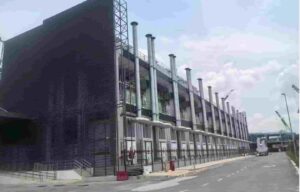
A traditional data centre is a permanent facility that is constructed at a specific location using conventional building methods.
The project usually includes the following stages:
- Site acquisition
- Civil engineering
- Building construction
- Electrical systems installation
- Mechanical systems installation
- Cooling infrastructure deployment
- IT equipment installation
- Testing and commissioning
The entire process can take months or even years, depending on the complexity of the project.
Traditional facilities are often designed as large, centralised infrastructures intended to support long-term operational requirements.
Characteristics of traditional data centres:
- Fixed building structures
- Large-scale mechanical rooms
- Dedicated electrical substations
- Centralised cooling plants
- Permanent expansion layouts
- Long design and construction cycles
These facilities are commonly used by:
- Fixed building structures
- Large-scale mechanical rooms
- Dedicated electrical substations
- Centralised cooling plants
- Permanent expansion layouts
- Long design and construction cycles
These facilities are commonly used by:
- Banks
- Government institutions
- Telecommunications operators
- Large enterprises
- Hyperscale cloud providers
What Is a Modular Data Center?
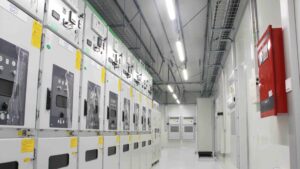
A modular data centre is a prefabricated facility in which critical infrastructure components are manufactured, integrated and tested in a factory before being delivered to the deployment site.
Rather than constructing every component on-site, modular solutions combine the following:
IT modules, power modules, cooling modules, battery systems, monitoring systems and fire protection systems into standardised units.
These units can be transported and rapidly assembled on location.
Many modern modular solutions offered by industry suppliers such as CIMC TLC, RYC and XLC utilise containerised or prefabricated designs that significantly reduce deployment timescales while maintaining enterprise-grade reliability.
Traditional Data Center vs Modular Data Center: Quick Comparison
Feature | Traditional Data Center | Modular Data Center |
Construction Method | On-site construction | Factory prefabrication |
Deployment Time | 12–36 months | 3–9 months |
Scalability | Difficult | Highly scalable |
Initial Investment | High | Flexible |
Expansion Capability | Limited | Modular growth |
| Quality Control | Site dependent | Factory controlled |
| Mobility | Fixed | Semi-portable |
| Energy Efficiency | Variable | Optimized |
| Maintenance | Complex | Simplified |
| Risk During Construction | Higher | Lower |
Architecture Differences
Traditional architecture
Traditional facilities usually have a centralised design.
Infrastructure components are built separately.
- Building shell
- Cooling plant
- UPS rooms
- Generator rooms
- Data halls
Each subsystem is engineered and installed individually.
While this provides flexibility for customisation, it often increases project complexity.
Challenges include:
- Construction delays
- Coordination issues
- Cost overruns
- Longer commissioning periods
Modular architecture
Modular data centres use standardised building blocks.
Each module may contain:
- Server racks
- UPS systems
- Precision cooling
- Monitoring systems
- Fire suppression systems
Because the modules are factory-integrated, most of the engineering and testing occurs before shipment.
This approach dramatically reduces on-site installation work.
The result is a more predictable deployment process.
Deployment Speed Comparison
One of the most important advantages of modular infrastructure is speed.
Traditional Data Center Timeline
Typical timeline:
Phase | Duration |
Design | 3–6 Months |
Permitting | 2–6 Months |
| Construction | 8–18 Months |
| Equipment Installation | 2–4 Months |
| Commissioning | 1–3 Months |
Total: 12–36 Months
Modular Data Center Timeline
Typical timeline:
Phase | Duration |
Design | 1–2 Months |
Factory Manufacturing | 2–4 Months |
| Transportation | 1–2 Weeks |
| On-Site Installation | 2–8 Weeks |
| Commissioning | 1–2 Weeks |
Total: 3–9 Months
This speed advantage is particularly valuable for:
- AI infrastructure deployment
- Edge computing expansion
- Telecom network rollouts
- Disaster recovery facilities
Scalability and Future Expansion
Modular infrastructure often outperforms traditional facilities in terms of scalability.
Traditional expansion challenges
Expanding a conventional facility may require:
- Additional construction permits;
- Structural modifications;
- Cooling redesign;
- Electrical upgrades.
These projects can be expensive and disruptive.
Modular expansion advantages
Modular facilities can be scaled up incrementally.
Organisations can deploy:
- One module today;
- Additional modules next year;
- Additional capacity as demand grows.
- This ‘pay-as-you-grow’ strategy improves capital efficiency.
Energy Efficiency Comparison
Energy efficiency has become a critical KPI for data centre operators.
Traditional facilities
Older traditional facilities often experience:
- Higher cooling losses
- Lower rack density optimisation
- Inefficient airflow management
Resulting PUE values frequently range between:
1.5–2.0.
Modular facilities
Modern modular data centres are designed with:
- Hot aisle containment
- Intelligent cooling
- Integrated airflow design
- High-efficiency UPS systems
Typical PUE ranges:
1.15–1.4
This translates into significant energy savings over the facility’s lifetime.
Cost Analysis
Capital expenditure (CAPEX)
Traditional facilities require a significant initial investment because they are often designed to accommodate future growth.
Modular systems, however, allow for phased deployment, reducing initial spending.
Operational expenditure (OPEX)
Modular facilities typically benefit from lower energy consumption, reduced maintenance requirements, faster troubleshooting and standardised spare parts, which can significantly reduce operating costs over time.
Reliability and Availability
In mission-critical infrastructure, reliability and availability are among the most important performance metrics when comparing traditional and modular data center architectures. Organizations operating in sectors such as finance, healthcare, telecommunications, and cloud computing require continuous uptime and minimal service disruption.
Availability Standards
Both traditional data centers and modular data centers can be designed to meet industry-recognized availability levels established by Uptime Institute.
Tier III Facilities
Characteristics:
Concurrently maintainable infrastructure
Planned maintenance can be performed without shutting down critical IT systems
Multiple power and cooling distribution paths
Typical Availability:
- Approximately 99.982% uptime
- Tier IV Facilities
Characteristics:
- Fault-tolerant architecture
- Redundant capacity components throughout critical systems
- Continuous operation despite equipment failures
Typical Availability:
Approximately 99.995% uptime
Reliability in Traditional Data Centers
Traditional facilities can achieve extremely high reliability when properly designed and maintained.
Strengths
- Fully customized infrastructure
- Proven long-term operational performance
- Extensive redundancy options
Challenges
- Complex on-site construction process
- Greater variability in installation quality
- Longer commissioning periods
- Increased risk of integration issues between multiple vendors
Reliability in modular data centres
Modular data centres are engineered using standardised, pre-integrated systems.
One of the most significant benefits of factory-built systems is that components are tested before deployment.
Components commonly tested include:
- Power distribution systems
- UPS infrastructure
- Cooling systems
- Monitoring and control platforms
- Network integration
Benefits of factory validation:
- Reduced installation errors
- Lower commissioning risk
- Faster deployment schedules
- More predictable operational performance
Because major subsystems are assembled and verified in a controlled manufacturing environment, potential defects can often be identified and corrected before shipment.
Reduced commissioning risk
A common challenge in traditional projects is that system integration largely occurs on-site.
Modular facilities reduce this risk through:
- Pre-engineered designs
- Factory acceptance testing (FAT)
- Standardised manufacturing procedures
- Repeatable deployment models
As a result, organisations often experience:
- Faster start-up times
- Fewer commissioning issues
- Improved early-life reliability
Operational Availability Comparison
Factor | Traditional Data Center | Modular Data Center |
Tier III Capability | Yes | Yes |
Tier IV Capability | Yes | Yes |
Factory Testing | Limited | Extensive |
| Commissioning Risk | Higher | Lower |
| Deployment Consistency | Variable | Highly standardized |
| Scalability | Large-scale custom expansion | Incremental modular expansion |
Ideal Use Cases for Modular Data Centers
Modular data centres are particularly suitable for:
AI computing infrastructure: AI clusters often require rapid deployment and high-density cooling.
Edge computing: edge nodes need localised infrastructure close to users.
Telecommunications: 5G networks demand distributed computing capacity.
Remote locations
Mining operations, oil fields and military installations often lack traditional infrastructure.
Disaster recovery: rapid deployment supports business continuity planning.
Frequently Asked Questions (FAQ)
- What is a modular data center?
A modular data center is a prefabricated IT facility built from standardized modules containing power, cooling, networking, and server infrastructure.
- Are modular data centers cheaper than traditional data centers?
In many cases, yes. Modular systems reduce upfront capital expenditure and enable phased investment.
- How long does it take to deploy a modular data center?
Most modular facilities can be deployed within 3–9 months, significantly faster than traditional projects.
- Are modular data centers reliable?
Yes. Many modular solutions meet Tier III and Tier IV reliability requirements and undergo factory testing before deployment.
- What industries use modular data centers?
Cloud computing, telecommunications, government, healthcare, finance, manufacturing, and AI infrastructure sectors commonly deploy modular facilities.
- What companies provide modular data center solutions?
Suppliers such as CIMC TLC, RYC, and XLC provide prefabricated modular data center solutions for enterprise, telecom, cloud, and edge computing applications.
Conclusion
The differences between traditional and modular data centres extend far beyond construction methods. While traditional facilities offer customisation and long-term permanence, modular solutions provide faster deployment, lower risk, improved scalability and greater energy efficiency.
As AI computing, edge infrastructure and digital transformation continue to accelerate, modular data centres are becoming the preferred choice for organisations seeking to expand their capacity rapidly and predictably. Their factory-built approach, standardised quality control and flexible scalability make them particularly attractive for modern IT environments, where speed, efficiency and adaptability are strategic priorities.
For organisations planning future-ready infrastructure, modular data centres are not just an alternative to traditional construction; they are a fundamentally different model for deploying and scaling digital infrastructure in the AI era.