



 EN
 RU

Quick Answer: Yes, open-top shipping containers can be stacked, provided they are structurally compliant, properly loaded, and handled according to international container safety standards. According to ISO 1496-1 (Series 1 Freight Containers—Specification and Testing) and the International Convention for Safe Containers (CSC), an Open Top Container is designed with reinforced corner posts and corner castings that enable stacking loads to be transferred through the container frame rather than the removable roof covering. However, stacking safety depends on cargo distribution, container condition, and operational procedures.
Introduction to Open-Top Shipping Containers
The Shipping Container has become the foundation of modern global logistics, allowing goods to be transported efficiently by sea, rail, and road. While standard dry containers remain the most commonly used type, specialized equipment such as the Open Top Container provides greater flexibility for transporting oversized, heavy, or irregularly shaped cargo that cannot be loaded through conventional container doors.
A common question among shippers, freight forwarders, and project cargo managers is whether open-top containers can be stacked safely during storage or transportation. Since these containers have removable roof bows and tarpaulin covers instead of a permanent steel roof, many people assume they cannot support stacking loads.
In reality, a properly certified open-top container is engineered to be stackable under normal operating conditions. Its structural strength is primarily carried by the corner posts, side rails, and corner castings rather than the roof itself. Nevertheless, stacking an open-top container requires careful consideration of cargo weight, load distribution, container integrity, and compliance with international safety regulations.
This article explains how open-top shipping containers are designed, whether they can be stacked, what factors influence stacking safety, and the best practices for preventing structural damage during transport and storage.
What Is an Open Top Container?
An Open Top Container is a specialized type of Shipping Container designed for cargo that cannot be easily loaded through standard container doors.
Instead of a fixed steel roof, an open-top container features:
- A removable tarpaulin cover
- Detachable roof bows
- Reinforced upper side rails
- Standard corner posts
- ISO corner castings
This design allows cargo to be loaded vertically using cranes, forklifts, or other lifting equipment.
Open-top containers are widely used for transporting:
- Industrial machinery
- Construction equipment
- Steel structures
- Timber
- Large pipes
- Generators
- Wind turbine components
- Project cargo
After loading, the removable roof system protects the cargo from weather while allowing items that exceed normal door dimensions to be transported safely.
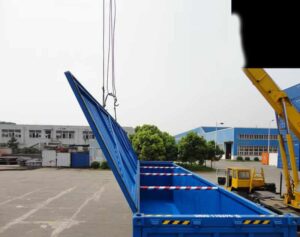
Can Open-Top Shipping Containers Be Stacked?
The short answer is yes, but only under appropriate operating conditions.
An ISO-certified open-top container is designed to carry stacking loads through its structural frame. Unlike what many people assume, the removable tarpaulin does not support the weight of containers stacked above.
Instead, the stacking load travels through:
- Corner castings
- Corner posts
- Bottom side rails
- Base structure
These structural members are specifically engineered to withstand vertical compression forces during transportation and storage.
When an open-top container is empty or properly loaded within its rated capacity, it can generally be stacked in the same manner as a standard dry container.
However, stacking becomes more complex when cargo extends above the top side rails or when the roof bows have been removed for oversized shipments.
In these situations, stacking may no longer be permitted because the cargo itself could interfere with load transfer or become damaged by additional weight.
Therefore, the answer depends not only on the container itself but also on how the cargo is loaded.
How Does an Open-Top Container Support Stacking Loads?
Understanding the structural design of an open-top container helps explain why stacking is possible.
Unlike buildings, where roofs often carry significant loads, ISO shipping containers transfer most vertical forces through four reinforced corner posts.
When containers are stacked:
- The upper container rests on the corner castings.
- Vertical compression travels down the corner posts.
- Forces transfer into the bottom corner fittings.
- The load continues into the container below.
Because the roof covering is not part of the primary load path, removing the steel roof panel does not eliminate the container’s stacking capability.
However, this assumes:
- The container frame is undamaged.
- Corner posts remain structurally sound.
- Cargo does not interfere with the load path.
- The container remains within its certified gross weight.
- Any structural deformation can reduce stacking strength.
Factors That Determine Whether Open-Top Containers Can Be Stacked
Several engineering and operational factors determine whether stacking is safe.
- Container Structural Condition
The structural integrity of the container is the first consideration.
Before stacking, inspectors should check:
- Corner post condition
- Corner castings
- Side rails
- Floor structure
- Weld integrity
- Signs of corrosion
- Previous repair quality
A damaged frame may not safely transfer vertical loads.
- Cargo Height
One of the biggest limitations involves cargo height.
If cargo extends above the top side rails, stacking another container on top is generally not possible because:
The cargo may become crushed.
The upper container cannot rest on the corner castings properly.
Load transfer becomes unsafe.
Oversized project cargo often requires non-stackable transport arrangements.
- Cargo Weight Distribution
Proper weight distribution is essential.
Uneven loading creates localized stress that may affect:
- Container stability
- Corner post loading
- Floor strength
- Crane handling
Heavy cargo should always be evenly distributed across the floor whenever possible.
- Gross Weight Compliance
Every shipping container has a maximum gross weight specified by ISO certification.
Exceeding this limit may:
- Reduce structural safety
- Increase deformation risk
- Violate shipping regulations
Operators should verify both cargo weight and stacking limitations before transportation.
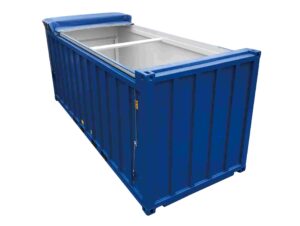
Open Top Container vs Standard Shipping Container
Feature | Open Top Container | Standard Shipping Container |
Roof Design | Removable tarpaulin and roof bows | Fixed steel roof |
Loading Method | Top loading and rear loading | Rear loading only |
| Oversized Cargo | Excellent | Limited |
| Stackability | Yes, under approved conditions | Yes |
| Typical Applications | Heavy machinery, industrial equipment, project cargo | General cargo, palletized goods, consumer products |
How Cargo Loading Affects Stacking Safety?
Even when the container itself is structurally capable of stacking, improper cargo loading can compromise safety.
Cargo should always be secured using appropriate lashing systems, blocking, and bracing techniques to prevent movement during transport. Dynamic forces generated by vessel motion, rail vibration, or road transportation can shift poorly secured cargo, creating uneven loads that affect container stability.
For oversized machinery or steel structures, engineers often prepare cargo loading plans that specify lifting points, weight distribution, and securing methods. These plans help ensure that structural loads remain within the container’s design limits.
Another important consideration is the position of the cargo’s center of gravity. A high or uneven center of gravity increases the risk of instability during stacking, lifting, and transportation. Proper cargo planning not only protects the goods but also helps maintain the structural performance of the Shipping Container throughout the logistics process.
Best Practices for Stacking Open-Top Shipping Containers
Although an Open Top Container is designed to withstand stacking loads under normal operating conditions, safe stacking requires more than simply placing one container on top of another. Logistics companies, port operators, and cargo owners should follow established handling procedures to minimize structural stress and reduce operational risks.
The first priority is to verify that the container has a valid CSC Safety Approval Plate and has passed all required inspections. Containers showing excessive corrosion, damaged corner posts, twisted frames, or significant weld defects should never be included in a stacked storage system until they have been repaired and recertified.
Cargo planning is equally important. Heavy items should be positioned directly over the strongest structural areas of the floor whenever possible, while the load should remain evenly distributed from front to rear and side to side. Concentrated loads in one section of the container may increase localized stress and reduce overall stability during lifting or transport.
When multiple containers are stacked in a storage yard, operators should also consider environmental conditions. Strong winds, uneven ground, or unstable foundations can increase the risk of shifting or settlement. Proper ground preparation and routine inspections are essential for maintaining stack safety over extended storage periods.
For containers transporting oversized cargo that extends above the top rails, stacking should generally be avoided unless a specialized engineering assessment confirms that adequate clearance and structural support can be maintained.
Common Mistakes That Reduce Stacking Safety
Many stacking accidents are caused not by the container itself but by poor handling practices. Avoiding common mistakes can significantly improve operational safety and protect valuable cargo.
One frequent error is assuming that every open-top container has the same structural condition. Containers may appear similar externally, but previous impacts, corrosion, or improper repairs can reduce their actual load-bearing capacity.
Another mistake is failing to account for cargo dimensions. Oversized machinery that protrudes above the container frame may prevent proper contact between corner castings, causing loads to transfer through the cargo rather than the container structure.
Improper weight distribution is another major issue. If heavy cargo is positioned near one end or along one side, the container may experience uneven compression during stacking and lifting.
Operators should also avoid removing structural components unnecessarily. Roof bows should remain installed whenever practical because they contribute to lateral rigidity and help support the tarpaulin during transport, even though they are not the primary load-bearing members for stacking.
Finally, exceeding the maximum gross weight or stacking containers beyond the limits specified by the shipping line or terminal operator can significantly increase operational risk.
Open Top Container Stacking Safety Checklist
Inspection Item | Recommended Practice | Purpose |
CSC Certification | Verify validity before use | Confirms international safety compliance |
Corner Posts | Inspect for deformation or cracks | Ensures proper load transfer |
Corner Castings | Check for damage and alignment | Maintains stacking integrity |
| Cargo Height | Keep below top rail unless specially approved | Prevents interference with upper containers |
| Weight Distribution | Balance cargo evenly across the floor | Improves stability and reduces structural stress |
| Gross Weight | Do not exceed rated capacity | Maintains design safety margins |
| Ground Surface | Stack only on stable, level foundations | Prevents settlement and tilting |
International Standards Governing Container Stacking
The global shipping industry relies on internationally recognized standards to ensure that containers can be transported and stacked safely regardless of manufacturer or operating location.
- ISO 1496-1
ISO 1496-1 specifies the testing and structural performance requirements for Series 1 freight containers, including stacking strength, lifting capability, floor performance, and overall structural integrity.
Manufacturers must demonstrate that containers can withstand prescribed stacking loads before certification.
- ISO 668
ISO 668 establishes standardized external dimensions, ratings, and classifications for freight containers.
Because containers built to ISO standards share common dimensions and corner fitting locations, they can be safely stacked using standardized handling equipment throughout the global supply chain.
- International Convention for Safe Containers (CSC)
The CSC Convention, administered by the International Maritime Organization (IMO), requires freight containers used in international transport to undergo safety approval and periodic inspections.
The CSC plate attached to each approved container provides essential information, including identification, manufacturing details, and maximum allowable operating parameters.
- Port and Shipping Line Requirements
In addition to international standards, shipping companies and terminal operators often establish their own operational procedures covering:
- Maximum stacking height
- Yard storage practices
- Oversized cargo handling
- Crane lifting operations
- Weather restrictions
Compliance with these procedures helps ensure safe handling throughout the logistics chain.
Frequently Asked Questions (FAQ)
- Can open-top shipping containers be stacked?
Yes. An ISO-certified Open Top Container can generally be stacked because the vertical loads are transferred through reinforced corner posts and corner castings rather than the removable roof. Safe stacking depends on proper loading, container condition, and compliance with applicable standards.
- How many open-top containers can be stacked?
The allowable stacking height depends on container certification, cargo weight, terminal regulations, and environmental conditions. Operators should always follow the manufacturer’s specifications and port operating procedures rather than relying on a fixed number.
- Can containers with oversized cargo be stacked?
In most cases, no. If the cargo extends above the container’s top side rails, stacking is generally not permitted because the upper container cannot rest correctly on the corner castings.
- Is an open-top container as strong as a standard shipping container?
Structurally, an ISO-certified open-top container is designed to achieve similar stacking performance through its reinforced frame. However, its removable roof system makes proper cargo loading and handling even more important.
- What cargo is best suited for an open-top container?
Open-top containers are ideal for heavy or oversized cargo such as industrial machinery, construction equipment, steel structures, timber, large pipes, generators, and project cargo that cannot be loaded through standard container doors.
- How can you improve stacking safety?
Stacking safety can be improved by inspecting the container before use, evenly distributing cargo weight, securing the load properly, maintaining valid CSC certification, and following ISO standards together with terminal operating procedures.
Conclusion
The question “Can open-top shipping containers be stacked?” can be answered with confidence: yes, under the right conditions. Although an Open Top Container does not have a permanent steel roof, its structural design allows stacking loads to be transferred through reinforced corner posts and corner castings, enabling it to achieve stacking performance comparable to a standard Shipping Container when operated within its certified limits.
Safe stacking depends on more than the container itself. Proper cargo height, balanced weight distribution, structural integrity, routine inspections, and compliance with international standards such as ISO 1496, ISO 668, and the CSC Convention all contribute to safe handling throughout transportation and storage. Oversized cargo extending above the top rails or containers with structural damage should always undergo a professional engineering assessment before stacking.
For businesses involved in project logistics, heavy equipment transportation, or international shipping, selecting containers from experienced manufacturers is equally important. Companies such as CIMC TLC | RYC | XLC provide ISO-compliant container solutions engineered to meet demanding global transportation requirements, helping operators improve cargo safety, operational efficiency, and long-term reliability.
Ultimately, understanding how an Open Top Container is designed, loaded, and handled enables shippers to make informed decisions, minimize operational risks, and maximize the efficiency of containerized logistics across ports, rail networks, and road transportation systems.