



 EN
EN  RU
RU 
From the blazing deserts to the frozen tundras, the human race has consistently been confronted by nature’s greatest extremes. Whether it’s the constant heat waves of the Middle East, Canada’s biting cold, or Southeast Asia’s heavy monsoons, traditional buildings often have a hard time providing emergency shelters in these harsh environments.
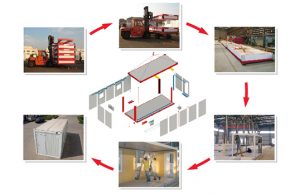
Recently, flatpack containers have become popular as a form of modular construction. Designed to be deployed quickly, transported easily, and used over a long period of time, they have become a significant component of modern temporary housing, emergency shelters, and remote construction camps. However, an important question is still remains: can flatpack containers guarantee a long-term commitment to extreme temperatures?
Structural Advantages of Flatpack Containers
At their core, flatpack containers are built on a galvanized steel frame—a material known for its high strength-to-weight ratio and superior corrosion resistance. Unlike ordinary site cabins or wooden shelters, these modular units are designed for repeated assembly and disassembly without compromising integrity.
- Steel Framing and Protection
The components of the frame are typically galvanized or epoxyed to prevent corrosion from humidity, salt, and temperature changes. This shielding is crucial to the long life of coastal or tropical creatures. - Sandwich Panel Insulation
The walls and roofs are made of sandwich panels, which are typically composed of rock wool or polyurethane (PU) cores sandwiched between steel sheets. These substances offer both thermal insulation and structural support; they also minimize the transfer of heat while maintaining airtightness. - Sealing modules and precise design.
Every component of a flat-packed container— corner joints, floor connections, wall panels, and roofs—is designed to have a tight seal. More advanced rubber compounds and interlocking patterns increase the windproof and waterproof capabilities.
This degree of exactness benefits flatpack containers by providing a structural advantage that enables them to be highly versatile in climates that have a conventional material that grows, develops, or thrives.
Performance in High-Temperature Regions
In hot climates such as deserts or tropical zones, heat reflection and ventilation are crucial. Poorly insulated structures can quickly become uninhabitable under direct sunlight. Flatpack containers, however, integrate multiple design features that mitigate this risk.
Reflective Coatings and Insulation Layers
The exterior of the steel is often covered with a heat-reducing paint or coating that reflects heat into the steel to reduce the absorption of solar energy. Combined with rock wool or insulating layers that are thermally conducive (thermal conductivity between 0.020-0.035 W/m·K), internal temperatures can be significantly lower even when the outside temperature is above 45°C.
Natural ventilation and air circulation
Ventilation systems, such as roof ventilators, louvered sheets, and skylight openings, are incorporated into the structure to promote air flow. Some models have a “chimney effect” design that naturally conveys warm air to the atmosphere while collecting cool air from below.
Field Sample
In the Middle East and Western Australia, container camps that are flat-packed have demonstrated to be habitable through the combination of insulation, reflective materials, and efficient HVAC systems. These configurations demonstrate the effectiveness of modular buildings in continuous heat exposure with no structural change or interior overheating.
Adaptability in Freezing and Polar Conditions
Cold regions present the opposite challenge: maintaining heat and preventing freezing. In these environments, thermal bridging and condensation become the primary concerns.
High-performance insulation systems
Rock wool and PU panels that are used in flatpack containers have a high insulation capacity, with a U-value of 0.24 W/m²·K. This greatly diminishes the loss of heat through the walls and ceilings. For the most extreme temperatures, triple-layer insulation systems can be employed; these systems include an internal vapor barrier that prevents condensation.
Doors, Windows, and Floor Designs
To prevent heat escape, dual or triple-glazed windows are employed. Door systems have a magnetic seal; the floor’s design includes layers of frost-resistant insulation that prevent cold from reaching below.
Real-World Examples
In northern Europe, Mongolia, and parts of Canada, modular flatpack accommodations have been employed for remote oil and gas installations. These units can maintain temperatures in the interior of 18-22°C even when the exterior temperature is below -40°C, which demonstrates their potential as cold region modular housing.
Resistance to Wind, Water, and Seismic Forces
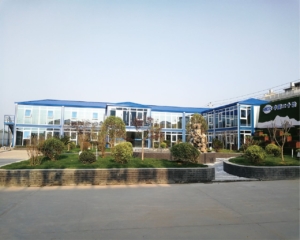
One of the key engineering achievements of flatpack containers lies in their structural resilience. Unlike lightweight cabins or wooden prefabs, they are built to endure harsh natural forces.
Windproof and Typhoon-Resistant Design
The solid steel framework has a maximum capacity for wind resistance of 12-grade typhoons (118 km/h). Structural simulations ensure that the lateral distribution of loads across corner columns and crossbeams is maximized, which minimizes the deformation that occurs under stress.
Waterproof and Drainage Products
Roof structures have a sloped drainage system, and water flows directly into downpipes located in the corner columns. High-quality silicone sealants and overlying roof joints that are textured prevent water from leaking even during heavy precipitation.
anti-Seismic and anti- corrosion properties
By utilizing high-tensile bolts and modular joints that are designed to withstand quakes of up to 8 grades, flatpack containers can be expected to withstand the effects of seismic activity. Corrosion-resistant coatings and stainless steel fasteners have a longer lifespan in coastal or wet areas.
These combined features make them an ideal solution for typhoon-prone islands, mountainous regions, and flood-risk areas.
Environmental Control Systems (HVAC and Power Integration)
Extreme environments require active environmental control beyond passive insulation. Flatpack containers support integrated HVAC, electrical, and renewable energy systems designed to maintain optimal interior comfort.
- Climate-controlled air systems
Air conditioning units and heat pumps can be installed in dedicated service areas. Ducted ventilation, systems for filtration, and pre-programmed thermostats facilitate complete control over the interior climate. - Alternative Energy Ideas
For applications that aren’t dependent on power, solar panels that are mounted on the roof can produce light, air conditioning, and communications. Some systems include small-scale wind generators that are hybrid in nature, which improves the sustainability of the energy production. - Smart Monitoring and Automation
Intelligent temperature and humidity sensors that are connected via the Internet of Things allow remote monitoring of the interior conditions of a building. This is ideal for locations that lack human supervision, such as the deserted areas of drilling or the Antarctic.
Durability and Long-Term Sustainability
The strength of flatpack containers is not only in their adaptability but also in their long-term sustainability and economic value.
Reusability and Relocation
The material’s lifespan
Energy Efficiency and Environmental Impact
Real-World Applications Across Climates
The global deployment of flatpack containers showcases their versatility and performance under diverse environmental conditions.
- Disaster Relief Shelters: Used by international organizations for post-earthquake and flood recovery housing.
- Remote Work Camps: Deployed in deserts, tundras, and mining zones where quick, durable accommodation is needed.
- Scientific Research Stations: Polar research facilities and mountain observation posts rely on modular containers for reliable insulation and structure.
- Tourism and Eco-Resorts: Prefab container lodges in tropical rainforests and coastal zones leverage their mobility and weather resistance.
Each case reinforces the same conclusion: with proper engineering and climate adaptation, flatpack containers deliver consistent, comfortable, and sustainable performance.
Challenges and Future Innovations
Despite their advantages, flatpack containers still face certain limitations in extreme environments.
- Thermal Expansion and Seal Aging: Continuous temperature fluctuations may cause gasket hardening or sealant degradation over the years.
- Condensation in Mixed Climates: Rapid transitions between hot days and cold nights can generate interior moisture buildup.
- Weight and Transport Costs: While flatpack systems reduce volume during shipping, their steel components still add weight compared with lightweight composite alternatives.
However, research and development are advancing quickly. Future innovations include:
- Self-healing coatings that automatically repair micro-corrosion.
- Vacuum-insulated panels (VIPs) for superior thermal efficiency.
- Smart insulation materials that adjust performance based on ambient temperature.
These advancements will further enhance the resilience and energy efficiency of modular container housing.
The Future of Extreme Climate Housing
Flatpack containers have become more than just temporary accommodations. They serve as a technological embodiment of motion, power, and sustainability, which is capable of surviving in the harshest environments on Earth.
Through the use of advanced materials, manufacturing precision, and environmental intelligence, flatpack containers are capable of resisting heat, cold, wind, and water. This provides a level of sustainability and comfort that was previously thought to be impossible for modular buildings.
In a world that is increasingly defined by the uncertainty of climate change, the capacity to deploy weather-resistant housing that is quickly and sustainably practical is not only a convenience, but it’s also necessary. Flatpack containers, with their combination of technological proficiency and environmental sustainability, are expected to have a significant role in the future of extreme climate design.
CIMC TLC|RYC|XLC is a leading manufacturer of flatpack containers and various other standard and special logistics equipment. With years of experience in the industry, it focuses on the design, production, and distribution of high-quality innovative products that meet the specific needs of customers.
If you need high-quality and innovative logistics equipment, including refrigerated containers, cold chain equipment, containerized equipment integration, modular buildings, etc., CIMC TLC|RYC|XLC is your best choice. We welcome inquiries from customers all over the world and look forward to the opportunity to cooperate with you.