



 EN
EN  RU
RU 
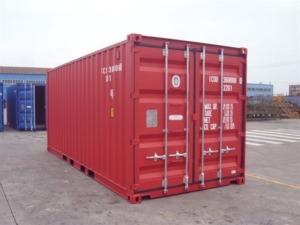
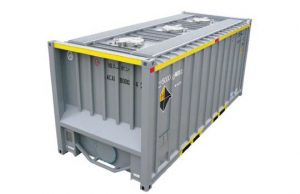
A bulk container, also known as a bulk transport container, bulk shipping container, or bulk storage container, is a special container designed for the efficient transportation of bulk materials. It has 2-3 loading ports on the top and unloading ports on the bottom. This unique design makes it extremely convenient for loading and unloading unpackaged solid, granular, and powdered goods. In addition to the common door, the top-loading port is convenient for quick pouring of goods during loading, and the bottom unloading port can achieve rapid discharge of goods, greatly improving the loading and unloading efficiency.
In actual use, to ensure that the goods can be unloaded from the door smoothly, it is very important to keep the inside of the box clean and smooth. It is suitable for the transportation of a variety of goods. In the field of grain, soybeans, rice, malt, corn, etc. can be safely and efficiently transported through bulk containers; in the feed industry, it is also indispensable for the transportation of various feeds; in terms of building materials, powdered materials such as cement can be transported with the help of bulk containers, which can effectively reduce dust and reduce the impact on the environment; in the chemical industry, various chemicals can also be safely transported to the destination through it. When transporting grain, some bulk containers are equipped with fumigation attachments on the top to meet plant quarantine requirements and ensure the safety and quality of grain during transportation.

Structural highlights of bulk containers
The structural design of bulk containers highlights the consideration of transportation efficiency and cargo safety. The multiple loading ports on the top are a major design highlight. After loading, these loading ports can be completely closed to effectively prevent the cargo from leaking or mixing with impurities during transportation, ensuring the purity and integrity of the cargo. For example, when transporting fine chemical raw materials, tightly closed loading ports can prevent external dust and other pollutants from mixing in, ensuring that the quality of chemical raw materials is not affected.
The inner wall of the container is lined with a whole board of waterproof plywood, which has multiple advantages. Waterproof plywood can effectively resist humid environments and prevent goods from getting damp and deteriorating. For moisture-sensitive goods, such as flour and feed, waterproof performance is essential. At the same time, to facilitate the unloading of goods and cleaning after use, the surface of the plywood is also coated with glass fiber. The presence of fiberglass allows the cargo to slide out of the box more smoothly when unloading, reducing cargo residue. When cleaning, the smooth fiberglass coating makes it difficult for dirt to adhere, reducing the difficulty of cleaning and improving the turnover efficiency of the container.
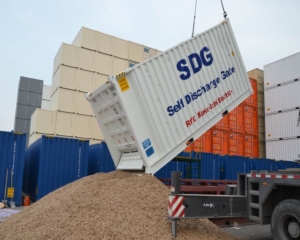
A canvas funnel is usually installed on the inside of the rear door frame. The canvas funnel can guide the cargo to flow smoothly to the unloading port, preventing the cargo from spilling during unloading, and improving the accuracy and efficiency of unloading. Some containers will have a discharge port directly on the rear door according to different box types. When unloading, the container is tilted and lifted with an automatic dump truck, and the cargo can be discharged safely and quickly from the discharge port, greatly shortening the unloading time and improving the efficiency of logistics operations. When transporting construction materials such as cement, this unloading method can quickly unload the cargo to the designated location, meeting the needs of efficient operations on the construction site. When bulk containers are needed to load ordinary groceries, the canvas funnel can be easily removed and folded up, and stored in a fixed position inside the top of the box, without taking up additional space, and conveniently and flexibly switching the type of transported cargo.
Material selection and type advantages
When choosing a bulk container, its manufacturing material and type are key factors. Different materials and types have their own advantages and disadvantages, and they need to be selected according to actual needs. In terms of materials, the three most common ones are aluminum alloy, steel, and fiberglass.
- Aluminum alloy bulk containers have many outstanding advantages. Its relatively lightweight can reduce the load of the transport vehicle during transportation, thereby reducing energy consumption and transportation costs. It is particularly suitable for weight-sensitive transportation scenarios, such as air transportation or long-distance sea transportation with high fuel economy requirements. Moreover, it has a beautiful appearance and excellent corrosion resistance. In a humid sea environment, it can effectively resist the erosion of seawater and sea breeze and extend the service life of the container. Aluminum alloy has good elasticity, is easy to process, and has low processing and repair costs, so the long-term use cost is relatively cost-effective. However, aluminum alloy containers also have the problem of high cost, which makes the initial procurement cost large, and their welding performance is poor, which makes it relatively difficult to carry out some structural repairs or modifications.
- Steel bulk containers are known for their high strength and solid structure. They have high weldability and good watertightness. They can withstand greater pressure and impact, and are suitable for transporting goods with heavy weight and high sealing requirements, such as metal ores, large machinery, and equipment parts etc. Low price is also a major advantage. For companies with limited budgets, it is an economical choice. However, its disadvantages are also obvious. The heavyweight leads to increased energy consumption during transportation. At the same time, it has poor corrosion resistance and is prone to rust in humid environments. Regular anti-corrosion maintenance is required, which increases the cost of use and maintenance workload to a certain extent.
- The advantages of fiberglass bulk containers are high strength, good rigidity, large internal volume, and the ability to provide more spacious internal space for loading more goods. It also has excellent heat insulation, corrosion resistance, and chemical resistance, and has a good protective effect on the transportation of some goods that are sensitive to temperature and humidity and corrosive chemicals. The characteristics of easy cleaning and simple repair also make it more convenient to use. However, its heavy weight increases the difficulty and cost of transportation, and it is easy to age, especially the strength of the bolts will decrease, which may affect the overall structural stability of the container.
Cost considerations
In logistics and transportation, the cost of bulk containers is the focus of enterprises, which is directly related to the operating costs and economic benefits of enterprises. Many factors affect the cost of bulk containers, and materials, size, and configuration are the key factors.
From the material point of view, as mentioned above, aluminum alloy, steel, and fiberglass bulk containers have their characteristics, and their costs are also quite different. Aluminum alloy containers are relatively expensive due to their high raw material costs and processing technology requirements, which makes the procurement cost a major burden for enterprises. However, from the perspective of long-term use costs, its lighter weight can reduce transportation energy consumption and transportation costs, and its good corrosion resistance can extend its service life and reduce the number of repairs and replacements, thus balancing the higher initial procurement costs to a certain extent. In contrast, although steel containers are cheap and have low procurement costs, their heavy weight increases energy consumption during transportation, and their poor corrosion resistance requires frequent anti-corrosion maintenance, such as regular application of anti-rust paint, which will increase costs in long-term use. Fiberglass containers are somewhere in between. Their costs are affected by raw materials and production processes. Although they have some unique performance advantages, their heavy weight and aging problems will also affect their use costs to a certain extent.
The size of the container is also an important factor affecting the cost. Common standard sizes include 20 feet and 40 feet, etc. The larger the size, the higher the manufacturing cost. This is because larger sizes require more raw materials and more manpower, and time costs during the production process. In terms of transportation costs, the freight of a 40-foot container is generally higher than that of a 20-foot container, but if the cargo volume is large enough, using a 40-foot container can make full use of its larger loading capacity, reducing the average freight per unit of cargo. For example, when transporting large quantities of food or building materials, if a 20-foot container is used, multiple boxes may be required to complete the transportation, while a 40-foot container may only require one box. In this way, although the freight for a single container increases, the overall transportation cost may be reduced. In addition, some special-sized bulk containers tend to be more expensive due to their customized design and production.
In terms of configuration, different configurations will cause large fluctuations in the cost of bulk containers. Containers equipped with special functions such as temperature control and humidity regulation are bound to cost more than ordinary containers. The addition of these special configurations requires not only more complex technology and equipment, but also more testing and verification during the production process to ensure the reliability and stability of their functions. For example, containers used to transport temperature-sensitive chemical products need to be equipped with precise temperature control systems, which increases equipment and maintenance costs. In addition, some optional configurations, such as different types of loading and unloading port designs, will also affect costs. Although patented steel rope sliding hatches or self-unloading tailgates can improve loading and unloading efficiency, these advanced designs are often accompanied by higher costs.
To effectively control the cost of bulk containers, enterprises can start from multiple angles. In the procurement process, establishing a long-term cooperative relationship with suppliers is an effective strategy. Through long-term cooperation, enterprises can obtain more favorable prices and better procurement conditions, such as priority supply, price discounts, etc. Centralized procurement and bulk procurement are also good ways to reduce costs. Purchasing a large number of containers at one time can take advantage of economies of scale and reduce unit procurement costs. It is also very important to pay attention to market trends and grasp the timing of procurement. Purchasing when the price of raw materials is low or the market competition is fierce can often help obtain the required containers at a more reasonable price.
During use, optimizing the loading plan is the key to reducing costs. By rationally planning the placement of goods, improving the space utilization of containers, and reducing the empty load rate, the transportation cost per unit of goods can be reduced. Use professional loading software or consult professional logistics personnel to develop the best loading plan to ensure that the goods are firmly placed in the container and maximize the loading capacity. At the same time, reasonably arranging transportation routes to avoid circuitous transportation and unnecessary transit can also reduce transportation costs. Sharing container space or capacity with other companies to achieve resource sharing and collaborative transportation can also reduce transportation costs.
Regular maintenance and upkeep of bulk containers will incur certain maintenance costs, but in the long run, it can extend the service life of the container and reduce replacement costs. Formulate a scientific maintenance plan, regularly check the structure, sealing performance, loading and unloading equipment, etc. of the container, promptly discover and solve potential problems, and ensure that the container is always in good operating condition. For example, repair the damage to the container in time to prevent it from further expansion and avoid greater losses due to small problems.
How to Choose the Right Bulk Container
- Choosing a suitable bulk container is a task that requires comprehensive consideration of many factors, which are related to the safety, efficiency, and cost of cargo transportation. When choosing, the characteristics of the cargo are the primary consideration. Different cargoes have different physical and chemical properties, which determine the special requirements for containers. For goods that are susceptible to moisture, such as grain and flour, it is necessary to choose containers with good moisture-proof performance, and the waterproof lining and sealing performance of the interior are crucial. When transporting chemical raw materials, the corrosiveness of the cargo should be considered, and corrosion-resistant container materials should be selected to prevent the cargo from damaging the container body, and at the same time, avoid cargo leakage due to corrosion of the container body, causing safety accidents and environmental pollution. If the cargo is flammable and explosive dangerous goods, then the container must have special functions such as fireproof and explosion-proof to ensure the absolute safety of the transportation process.
- Transportation demand is also one of the key factors. The length of the transportation distance will affect the choice of containers. Long-distance transportation, especially international shipping, requires containers to have good durability and stability and be able to withstand long-term sea voyages and different climatic conditions. For short-distance transportation, such as domestic road or rail transportation, more economical and affordable containers can be selected according to actual conditions. The frequency of transportation is also very important. If it is frequent transportation, choosing containers with reliable quality and low maintenance costs can reduce long-term operating costs. The geographical environment and climatic conditions on the transportation route should not be ignored. When passing through high-temperature areas, the insulation performance of the container should be considered; when passing through humid areas, moisture-proof performance is more critical.
- Choosing high-quality suppliers is an important part of ensuring that you buy high-quality bulk containers. High-quality suppliers usually have rich industry experience and a good reputation, and can provide standard products and high-quality after-sales service. When choosing a supplier, you can understand its production capacity and product quality by checking its qualifications and certifications, such as relevant production licenses, quality certifications, etc. It is also a good idea to refer to other customers’ comments and reviews. By communicating with companies that have used the supplier’s products, you can get real experience and feedback. Visiting the supplier’s production plant on site to understand its production equipment, process flow, and quality control system can help more intuitively judge whether it can provide high-quality products. Establishing a long-term and stable cooperative relationship with suppliers can not only get more favorable prices and better services, but also get timely and effective solutions when problems arise.
Boost Efficiency with the Best Bulk Container for Sale
If you are worried about the efficiency and cost of logistics transportation, you might as well consider choosing our bulk containers. We provide bulk containers of various materials, sizes, and configurations to meet your different needs. Whether it is the transportation of conventional goods or special goods, we can provide you with suitable solutions. We have high-quality supplier resources to ensure that the containers we provide are of reliable quality and excellent performance. At the same time, we also provide professional consulting services to help you choose the most suitable bulk container for you based on the characteristics of the goods, transportation needs, and budget.
CIMC TLC|RYC|XLC is a leading manufacturer of bulk containers and various other standard and special logistics equipment. With years of experience in the industry, it focuses on the design, production, and distribution of high-quality innovative products that meet the specific needs of customers.
If you need high-quality and innovative logistics equipment, including refrigerated containers, cold chain equipment, containerized equipment integration, modular buildings, etc., CIMC TLC|RYC|XLC is your best choice. We welcome inquiries from customers all over the world and look forward to the opportunity to cooperate with you.