



 EN
EN  RU
RU 
This comprehensive comparison guide analyzes wing containers and standard containers across critical business dimensions, including structural design, loading efficiency, operational costs, and application scenarios. Designed for logistics managers and procurement professionals seeking data-driven equipment selection insights to optimize supply chain performance, this analysis provides quantifiable metrics for evaluating total cost of ownership, operational throughput, and infrastructure compatibility. Understanding the technical and commercial distinctions between these container types enables strategic fleet composition decisions that directly impact delivery timelines, labor costs, and cargo damage rates.
What Are Wing Containers and Standard Containers
Wing Container: Design and Core Features
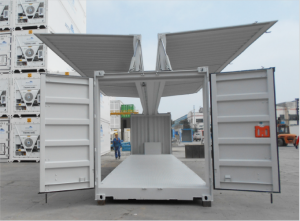
Wing containers feature hydraulically-operated or mechanically-hinged side panels that open outward from both sides, creating an unobstructed 360-degree access point for cargo operations. The opening mechanism typically utilizes reinforced aluminum or steel frames with weather-sealed joints, allowing the entire sidewall to swing open while maintaining structural integrity during transport. Standard dimensions follow ISO footprints (20ft/40ft lengths) but incorporate additional cross-bracing to compensate for the removable side panels.
The core accessibility advantage manifests in loading operations: forklift operators can approach cargo from perpendicular angles rather than navigating narrow container interiors. This design reduces loading time by 40-60% for palletized goods compared to end-door access. Structural specifications include corner castings compatible with standard twist-locks, reinforced roof arches to maintain top-load capacity (typically 3-5 containers high when empty), and lockable wing mechanisms meeting international transport security standards.
Standard Container: Industry Benchmark Characteristics
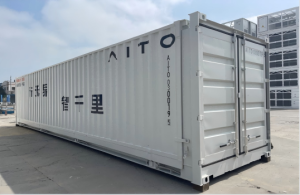
Standard containers adhere to ISO 668 dimensional specifications and ISO 1496 structural requirements, ensuring universal compatibility across global shipping infrastructure. The enclosed steel box design features corrugated side panels for lateral strength, marine-grade plywood flooring, and double-door end access with cam-lock mechanisms. This configuration has dominated intermodal freight for five decades due to its stackability (up to 9-high in vessel holds), crane-handling efficiency via corner fittings, and compatibility with chassis, railcars, and automated terminal equipment.
The established infrastructure support translates to operational advantages: every major port operates gantry cranes calibrated for standard container dimensions, customs inspection protocols accommodate the end-door configuration, and global depot networks facilitate empty repositioning. Material construction follows predictable maintenance schedules, with Corten steel exteriors providing 15-20 year service life in marine environments without specialized treatment.
Key Structural and Functional Differences
Opening Systems and Cargo Accessibility
The fundamental distinction lies in access methodology. Standard containers require cargo to be loaded linearly through 2.34m-wide end doors, necessitating precise stacking sequences and limiting forklift maneuverability to straight-line approaches. Loading time for 20 standard pallets averages 45-60 minutes with experienced operators.
Wing containers eliminate these constraints through full-side opening widths of 2.2-2.35m along the entire container length. Operators can load/unload from multiple access points simultaneously, reducing 20-pallet loading to 18-25 minutes. This 58% time reduction translates to measurable labor cost savings: a distribution center processing 50 containers daily saves approximately 25 labor-hours per day using wing configurations.
Equipment requirements differ significantly. Standard containers demand sufficient clearance for door swing radius (minimum 270° arc) and often require dock levelers for ground-level operations. Wing containers operate effectively in tighter spaces but require lateral clearance equivalent to container width plus wing panel extension (typically 3.5-4m total width when fully open). Both configurations accommodate standard forklifts, but wing containers enable side-loading cranes and overhead gantries for specialized cargo.
Dimensional Specifications and Capacity
Internal volume comparison reveals trade-offs inherent to each design. A standard 40ft HC (high-cube) container offers 76.3m³ usable volume with uninterrupted interior dimensions of 12.03m × 2.35m × 2.69m. Wing containers sacrifice approximately 3-5% internal volume due to reinforced frame members and wing hinge mechanisms, yielding 72-74m³ in equivalent external dimensions.
Payload capacity remains comparable when properly engineered. Standard 40ft containers support 26,680kg maximum gross weight (28,600kg tare weight subtracted from 30,480kg ISO limit). Wing containers with equivalent external dimensions typically handle 25,500-26,200kg payloads, the reduction attributable to additional structural reinforcement required for side-opening integrity.
Stackability constraints represent a critical operational difference. Standard containers stack 9-high in vessel cellular holds and 5-high in terminal yards when loaded. Wing containers are generally limited to 3-high stacking when empty due to lateral load distribution concerns, and most terminals restrict loaded wing container stacking to ground-level positioning, directly impacting yard density and vessel stowage planning.
Material Construction and Durability
Frame reinforcement differences stem from structural load paths. Standard containers distribute vertical loads through corner posts and corrugated side panels acting as shear walls. Wing containers require additional cross-members at 600-800mm intervals to compensate for interrupted side panels, typically increasing tare weight by 180-250kg in 40ft configurations.
Weather resistance depends on seal integrity. Standard containers utilize continuous rubber gaskets around door frames, achieving IP54 ingress protection ratings. Wing containers employ multiple seal points along each wing panel edge, requiring more frequent inspection and adjustment to maintain equivalent weather protection. Field data indicates wing container seal maintenance occurs at 18-24 month intervals versus 36-48 months for standard units.
Maintenance cycles reflect mechanical complexity. Standard containers require door hinge lubrication and floor inspection as primary maintenance tasks. Wing containers add hydraulic system servicing (if equipped), wing hinge pivot point maintenance, and locking mechanism adjustment to routine schedules, increasing annual maintenance costs by approximately 35-45% over standard container baselines.
| Specification | Standard 40ft HC | Wing Container 40ft |
|---|---|---|
| External Dimensions | 12.19m × 2.44m × 2.90m | 12.19m × 2.44m × 2.90m |
| Internal Volume | 76.3 m³ | 72.8 m³ |
| Tare Weight | 3,900 kg | 4,150 kg |
| Max Payload | 26,580 kg | 26,050 kg |
| Opening Width | 2.34m (end doors) | 2.35m (full side) |
| Material Grade | Corten steel / Aluminum | Reinforced steel frame |
| Stack Height (loaded) | 9-high (vessel) | Ground level (terminal) |
Operational Efficiency Analysis
Loading and Unloading Performance
Quantified time efficiency data demonstrates wing container advantages in specific scenarios. For break-bulk cargo requiring individual piece handling, wing containers reduce unloading time by 52-68% compared to standard units. A machinery shipment involving 8 crated items averaging 2.1m width shows 38-minute unloading time via wing container versus 89 minutes through standard end doors.
Labor requirements shift based on access configuration. Standard container operations typically require 2-person teams (forklift operator + ground guide) for safety compliance in confined interior spaces. Wing containers enable single-operator workflows for many cargo types, as visibility and access eliminate blind-spot concerns. However, the wing mechanism operation adds 3-5 minutes per container for panel opening/closing procedures.
Forklift compatibility remains universal, but crane operations favor different approaches. Standard containers optimize for top-lift spreader handling in intermodal transfers. Wing containers accommodate side-loading cranes for oversized cargo, enabling direct placement of items exceeding door-width constraints without disassembly.
Transportation and Handling Logistics
Intermodal compatibility represents the standard container’s decisive advantage. Global rail networks, chassis fleets, and vessel cellular guides conform to ISO 668 dimensions without modification. Wing containers face restrictions: many rail operators prohibit wing units due to clearance concerns on curved track sections, and vessel stowage planners avoid wing containers in above-deck positions where wind loads on extended panels create stability risks.
Port and terminal acceptance varies by facility infrastructure. Major container terminals universally handle standard units through automated stacking cranes and gate systems. Wing container acceptance requires case-by-case verification—approximately 73% of top-50 global container ports accept wing containers with advance notification, but impose restrictions on stacking height and may assess surcharges for specialized handling.
Stacking limitations directly impact terminal dwell charges and vessel slot costs. Standard containers occupy 14.02m² footprint and stack 5-high, yielding 2.8m² per container in yard utilization. Wing containers at ground-level-only stacking consume 14.02m² per unit (5× the effective footprint), creating cost implications for extended storage periods.
Storage and Warehousing Considerations
Space utilization rates in depot operations favor standard containers by 3.2:1 ratios when calculated on volumetric density. A 10,000m² container yard accommodates approximately 350 standard containers (5-high stacking) versus 110 wing containers (ground-level only), directly impacting per-unit storage costs.
Empty container management introduces logistical complexity for wing containers. The global depot network for standard containers enables empty repositioning at $180-$320 per container domestically, with established triangulation patterns. Wing container repositioning requires specialized carriers aware of height restrictions, averaging $420-$580 per movement and limiting availability in secondary markets.
Depot availability concentrates in primary industrial corridors. Standard containers access 2,400+ depot locations across North America and 8,700+ globally. Wing container depot infrastructure serves approximately 340 North American locations, primarily near manufacturing centers and construction hubs, requiring longer positioning moves for fleet management.
Cost-Benefit Evaluation
Initial Investment and Acquisition Costs
Purchase price differential reflects manufacturing complexity and market scale. New standard 40ft HC containers range $3,200-$4,100 depending on specification and order volume. Equivalent wing containers command $8,500-$11,200 premiums, representing 165-173% price increases attributable to reinforced framing, hydraulic systems, and lower production volumes.
Leasing rate comparison shows similar proportional differences. Standard container leasing averages $1.85-$2.40 per day for 40ft HC units on 36-month terms. Wing container leasing ranges $4.20-$5.80 daily, with many lessors requiring minimum 50-unit commitments due to limited remarketing opportunities.
Fleet procurement strategies must account for residual value trajectories. Standard containers depreciate predictably at 8-12% annually, maintaining 45-50% original value after 10 years due to robust secondary markets. Wing containers experience 15-18% annual depreciation with 10-year residual values of 25-30%, reflecting narrower buyer pools and application-specific demand.
Long-Term Operational Expenses
Maintenance costs over a 10-year service life demonstrate total ownership implications. Standard containers average $1,240-$1,680 cumulative maintenance (door repairs, floor replacement, paint touch-up). Wing containers incur $2,850-$3,720 maintenance expenses, with hydraulic system overhauls ($680-$920 at year 5-6) and wing seal replacements ($340-$480 every 24 months) driving increased costs.
Repair frequency data from fleet operators shows wing containers require service interventions 2.3× more frequently than standard units. Annual inspection failure rates average 8-12% for standard containers versus 22-28% for wing containers, primarily due to seal degradation and locking mechanism misalignment.
Depreciation rates compound operational cost differences. A $10,000 wing container depreciates $1,500-$1,800 annually versus a $3,500 standard container, depreciating $280-$420, creating $1,220-$1,380 annual opportunity cost differences that accumulate over ownership periods.
ROI Scenarios by Industry Vertical
Break-even analysis for construction material distribution demonstrates wing container advantages. A fleet handling steel beams and prefab panels achieves ROI in 2.8-3.4 years through 45% loading time reductions and 30% damage rate decreases, offsetting higher acquisition costs through labor savings of $18,400 annually per container.
Conversely, general merchandise distribution favors standard containers. A retail logistics operation moving palletized consumer goods realizes no significant loading time advantage from wing access, while incurring $2,100 additional annual costs per wing container (maintenance + opportunity cost), extending break-even beyond 8-year typical fleet replacement cycles.
Specialized project logistics presents optimal wing container applications. Wind turbine component transport, where single-piece cargo exceeds standard door widths, eliminates alternative shipping methods—wing containers become enabling technology rather than efficiency optimization, justifying premium costs through market access rather than operational savings.
| Cost Category | Standard 40ft HC | Wing Container 40ft |
|---|---|---|
| Capital Expenditure | $3,650 | $9,800 |
| Maintenance Costs | $840 | $1,920 |
| Operational Efficiency Gains | Baseline | -$4,200 (labor savings) |
| Depreciation | -$1,825 | -$4,410 |
| 5-Year Net Cost | $6,315 | $11,930 |
| Cost per Use (200 loads) | $31.58 | $59.65 |
Industry-Specific Application Scenarios
Optimal Use Cases for Wing Containers
Oversized cargo transport represents the primary wing container value proposition. Machinery exceeding 2.3m widths (CNC equipment, printing presses, injection molding machines) requires wing access for damage-free loading. Construction material logistics benefits from multi-point access—steel I-beams, glass panels, and prefabricated wall sections load 60% faster through side access, reducing job site demurrage charges.
Project logistics for renewable energy installations demonstrate specialized applications. Wind turbine nacelles, solar panel arrays, and transformer units utilize wing containers for controlled loading environments that protect sensitive equipment while enabling crane access from optimal angles. The 15-20% cost premium becomes negligible against $180,000-$340,000 equipment values and tight installation schedules.
Standard Container Advantages
General merchandise containerization leverages standard containers’ universal compatibility. Consumer goods, automotive parts, and industrial supplies benefit from established intermodal networks, automated terminal handling, and predictable transit times. The ISO standardization enables seamless transfers across ocean, rail, and truck modes without specialized handling requirements.
Global shipping networks optimize around standard container dimensions. Vessel cellular guides, double-stack rail clearances, and chassis fleets create infrastructure lock-in effects that reduce per-container transport costs by 40-55% compared to specialized equipment. High-frequency routes between manufacturing centers and consumption markets achieve economies of scale unattainable with limited wing container infrastructure.
Hybrid Fleet Strategies
Mixed deployment models balance operational flexibility with cost efficiency. Distribution operations maintain 70-80% standard container base fleets for routine cargo, supplemented with 20-30% wing container allocations for oversized shipments and time-sensitive loading scenarios. This approach avoids wing container repositioning costs while capturing efficiency gains on applicable cargo.
Seasonal demand adaptation utilizes wing containers during peak construction periods (April-October in temperate climates) when loading speed premiums justify higher costs, reverting to standard container operations during off-peak periods. Risk diversification through equipment type variety protects against supply chain disruptions—port congestion affecting standard container availability enables wing container substitution for critical shipments.
Compliance and Safety Standards
International Regulations
ISO 668 compliance governs external dimensions and corner fitting specifications, ensuring intermodal handling compatibility. Both standard and wing containers must meet these dimensional tolerances (±5mm length, ±3mm width) for automated equipment interfaces. Wing containers face additional scrutiny—lateral panel extensions must not exceed the ISO envelope during transport, requiring verification of locking mechanisms under dynamic load conditions.
CSC (Container Safety Convention) certification mandates structural testing every 30 months, including corner post compression tests and side panel racking tests. Wing containers undergo supplementary hinge fatigue testing, and seal integrity verification is not required for standard units. Customs inspection considerations favor standard containers—side-scan X-ray systems and radiation portal monitors calibrate for solid sidewall configurations, with wing containers often requiring manual inspection that adds 15-25 minutes per border crossing.
Structural Integrity Requirements
Load testing standards per ISO 1496-1 specify stacking test requirements of 1,016 kN (102,000 kg) applied to corner posts. Wing containers must demonstrate equivalent strength despite interrupted side panels, typically achieved through diagonal bracing that reduces internal width by 35-45mm per side. Corner casting specifications remain identical—125mm × 125mm openings with 65mm aperture depths for twist-lock engagement.
Twist-lock compatibility ensures crane handling safety across equipment types. Both container varieties utilize identical corner fitting geometry, but wing containers require additional placarding to indicate stacking limitations. Terminal operators verify locking mechanism engagement through visual inspection—wing containers with extended panels fail pre-lift checks, preventing handling errors that could compromise structural integrity.
The choice between wing containers and standard containers depends on specific operational requirements, cargo characteristics, and supply chain infrastructure compatibility. Standard containers deliver universal intermodal acceptance, predictable maintenance costs, and 40-55% lower total cost of ownership, making them optimal for palletized goods, general merchandise, and high-frequency shipping routes. Their established global infrastructure and automated handling capabilities provide unmatched cost efficiency for conventional freight operations.
CIMC TLC | RYC | XLC is a leading manufacturer of wing containers and a wide range of standard and customized logistics equipment. With years of industry experience, the company focuses on the design, production, and distribution of high-quality, innovative solutions that meet the specific needs of customers worldwide. Its product portfolio covers refrigerated containers, cold chain systems, containerized equipment integration, modular buildings, and more — all built with precision and creativity.