

 EN
 RU
Quick Answer: A modular data center essentially provides the same core IT functions as a conventional data center, but uses pre-engineered, factory-integrated modules that can be transported, installed, and expanded more flexibly.
Therefore, the main difference lies not in what the facility does, but in how its infrastructure is designed, manufactured, deployed, and scaled. While traditional data centers generally rely more heavily on site construction and system integration, modular data centers shift more of that work into standardised or customised factory-built modules.
What Is a Data Center?
A data center is a facility designed to house and operate computing, storage, networking, power, cooling, security, and monitoring infrastructure. It provides a controlled environment in which digital workloads can run reliably and continuously, whether the facility supports enterprise applications, cloud services, telecommunications, AI workloads, colocation, or edge computing.
A conventional or ‘traditional’ data center is often housed in a permanent building constructed at a specific location. This building may contain dedicated server and electrical rooms, cooling systems, uninterruptible power supply (UPS) equipment, generators, fire protection systems, physical security systems, network infrastructure, and operational spaces. These systems are typically designed around the site’s specific characteristics and then installed, integrated, tested, and commissioned through a project-based construction process.
However, ‘traditional data center’ does not necessarily mean outdated technology. A modern conventional facility can use highly efficient cooling systems, high-density racks, sophisticated DCIM software, redundant power architectures, liquid cooling, and advanced monitoring systems. The important distinction lies primarily in the construction and deployment model rather than in the age or sophistication of the equipment.
What Is a Modular Data Center?
A modular data center is an architectural design in which one or more of the main infrastructure functions are packaged into engineered modules. Depending on the project, these modules may incorporate IT space, power distribution, uninterruptible power supply (UPS) systems, cooling equipment, fire protection, monitoring, or other infrastructure.
In practice, modular data centers can be manufactured and tested partly or substantially away from the final site. Site preparation can occur simultaneously with factory production, enabling several project activities to proceed in parallel rather than sequentially. This is one reason why modular construction is particularly attractive when operators require additional capacity quickly.
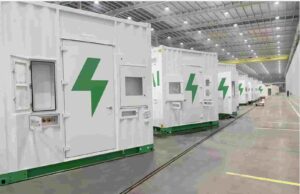
While a modular solution can be containerised, these concepts should not be treated as identical. While a container is one possible physical form of modular deployment, modularity itself describes the architectural and integration approach.
Modular Data Center vs. Traditional Data Center: The Core Difference
The easiest way to understand the distinction is to look at the project lifecycle.
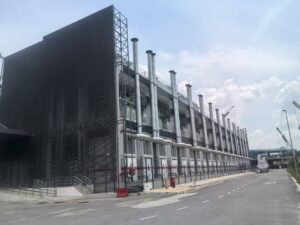
With a conventional data center, the building, utilities, electrical systems, cooling infrastructure, and IT environment are typically coordinated and installed at the project site. Although some components may be prefabricated, a significant amount of integration, construction, testing, and commissioning takes place locally.
With a modular data center, a greater proportion of engineering, assembly, integration, and testing can take place in a controlled factory environment. Modules are then transported to the site, positioned, connected, commissioned, and potentially combined with additional modules as capacity requirements increase.
This changes the economics and project-management equation. Instead of treating the data center as one large construction project, operators can treat capacity as a collection of engineered building blocks.
Factor | Traditional Data Center | Modular Data Center |
Construction model | Primarily site-built | Factory-built modules plus site integration |
Deployment speed | Usually longer | Generally faster |
Expansion | Often requires major construction | Additional modules can be added |
Factory testing | Limited to selected equipment | Greater system-level factory integration/testing |
Site labor | Relatively high | Reduced for many configurations |
| Standardization | Highly site-specific | Repeatable designs are easier |
| Customization | Very high | High, but constrained by module architecture |
| Mobility | Usually permanent | Some designs can be relocated |
| Best fit | Large, permanent facilities | Rapid, scalable or distributed capacity |
The difference is therefore best summarized as construction strategy rather than computing capability. A modular facility can provide enterprise-grade availability, redundancy, security, and computing performance just as a conventional facility can, provided its engineering and operational requirements are properly designed.
How Is a Modular Data Center Built?
A typical modular data center project begins with a capacity and performance specification rather than with construction of the complete facility. Operators determine requirements such as IT load, rack density, power availability, cooling method, redundancy, environmental conditions, physical security, expansion requirements, and expected operating life.
- Engineering and Module Definition
Engineers then divide the infrastructure into logical modules. One project might use separate power, cooling, and IT modules, while another may integrate several functions into a single enclosure.
The modular architecture should define how electrical connections, mechanical systems, networking, controls, fire protection, and other interfaces connect between modules. Proper interface design is critical because modularity only creates real value when the individual units can work together predictably.
- Factory Manufacturing and Testing
The modules are manufactured or assembled in a controlled environment. Depending on the supplier and architecture, equipment can be integrated, wired, configured, inspected, and tested before shipment.
This factory-based approach can reduce some of the uncertainties associated with coordinating numerous subcontractors at the final site.
- Transportation and Site Installation
Once the modules are ready, they are transported to the deployment location. The site must already have suitable foundations, utility connections, access routes, and other infrastructure required for installation.
The modules are then positioned and interconnected. Although this stage can be considerably faster than constructing every subsystem from scratch, modular does not mean “installation-free.” Lifting, transportation, electrical connection, commissioning, regulatory approval, and site integration remain important parts of the project.
Why Are Modular Data Centers Becoming More Important?
The growth of AI, edge computing, cloud services, telecommunications, and high-density workloads is changing the way organisations approach capacity planning. The Uptime Institute’s analysis for 2026 identifies a strong demand for data center capacity, while also highlighting constraints relating to power availability, costs, supply chains, and staffing.
These pressures make speed and flexibility increasingly valuable. For example, an organisation may recognise the need for a few extra megawatts of capacity, but not want to wait for a new conventional building to be designed and constructed.
A modular data center can solve this problem by enabling capacity to be deployed in stages. Rather than constructing the ultimate facility from the outset, an operator can establish an initial capacity level and add modules as demand becomes more predictable.
This approach is particularly relevant for distributed computing. Edge deployments, remote industrial locations, telecommunications sites, temporary capacity requirements, and geographically dispersed workloads may not justify a large, permanent building. Schneider Electric specifically highlights modular solutions for locations where rapid deployment and adaptability are important.

Key Advantages of a Modular Data Center
- Faster Deployment
Speed is one of the strongest arguments for modular construction. Factory production and site preparation can proceed simultaneously, shortening the overall project schedule. Vertiv reports that some prefabricated approaches can achieve significant schedule reductions compared with conventional new-build projects, although actual savings depend heavily on project scope, site conditions, permitting, and module configuration.
The important point is not to assume a fixed percentage of time savings. A better evaluation compares the complete project schedule, including design, procurement, manufacturing, transportation, site work, installation, testing, and commissioning.
- Easier Capacity Expansion
Traditional expansion can require substantial civil construction and disruption to an operating facility. A modular architecture can make expansion more predictable because additional capacity is planned around established interfaces.
This is particularly useful when future demand is uncertain. Instead of overbuilding the facility initially, operators can align investment more closely with actual workload growth.
- More Predictable Factory Quality
Factory integration provides a controlled environment for assembly and testing. Schneider Electric identifies factory-built quality and repeatable performance as important characteristics of modular data center solutions.
That does not automatically mean every modular facility is more reliable than every conventional facility. Reliability still depends on engineering quality, redundancy, equipment selection, commissioning, maintenance, operating procedures, and the competence of the project team.
- Reduced On-Site Complexity
Moving more assembly work into the factory can reduce the amount of installation and coordination required at the final location. This can be valuable where skilled labor is scarce or where construction conditions are difficult.
Our experience when evaluating logistics-related infrastructure is that transportation itself must also be considered as part of the design. For projects involving containerized or modular equipment, solutions such as those offered by our CIMC TLC|RYC|XLC can become relevant to the broader equipment-handling and logistics planning, rather than being treated as an afterthought.
What Are the Limitations of Modular Data Centers?
Modular data centers are not automatically cheaper, faster, or better in every situation. Their value depends on whether the project characteristics match the strengths of modular deployment.
Transportation can become a significant consideration for large or heavy modules. Oversized loads may require special routes, lifting equipment, permits, and careful logistical planning. Site access can therefore influence module dimensions and configuration from the earliest design stage.
Customization is another consideration. Highly unusual building layouts, very large campus-scale requirements, or extensive site-specific infrastructure may reduce the advantages of standardized modules. A conventional facility can sometimes provide greater architectural freedom when the project has unusual requirements.
There is also a misconception that modular means low reliability. In reality, reliability is an architectural and engineering outcome.
Evaluation Area | When Modular Has an Advantage | When Traditional May Be Better |
Deployment schedule | Urgent capacity required | Long planning horizon |
Capacity growth | Demand expected to increase in stages | Capacity is known from the beginning |
Location | Remote, constrained or distributed sites | Large permanent campus |
Site construction | Limited labor or difficult conditions | Conventional construction readily available |
| Design | Repeatable architecture | Highly customized architecture |
| Transportation | Modules can be efficiently delivered | Very large modules create logistics challenges |
| Expansion | Frequent phased growth | Little expected future expansion |
| Investment | Prefer staged capital deployment | Large upfront project is acceptable |
How Should Businesses Choose Between Modular and Traditional Data Centers?
Rather than assuming that one construction method is inherently superior, the decision should be based on workload and business requirements.
First, determine the required IT capacity for the present day and for the next three to ten years. If the forecast is highly uncertain or growth is expected to occur in discrete stages, modular architecture becomes a more attractive option because capacity can be added incrementally.
Secondly, examine the physical site. Factors such as available power, water, climate, access roads, foundation requirements, environmental regulations, security, and network connectivity can influence the practicality of modular deployment.
Thirdly, calculate the total cost of ownership rather than focusing solely on the construction price. This should include engineering, construction, transportation, installation, commissioning, energy consumption, maintenance, expansion, downtime risk, staffing, and eventual decommissioning costs.
Finally, evaluate the supplier’s ability to provide repeatable modules and long-term support. Modular architecture is most valuable when original modules and future additions can operate as a coherent system, rather than becoming incompatible generations.
Is a Modular Data Center the Future of Data Center Construction?
Modular construction is likely to become an increasingly important part of data center development, but it is unlikely to completely replace conventional facilities. Recent research notes that prefabricated modular approaches have expanded from relatively small deployments toward larger and more complex applications, while also observing that fully prefabricated end-to-end data centers have not yet become the dominant model.
The more realistic future is a hybrid one. Large campuses may use conventional buildings while adopting modular power, cooling, electrical, or IT blocks within those facilities; meanwhile, edge and distributed deployments may rely much more heavily on fully integrated modular systems.
This distinction matters because “modular data center” should not be treated as a single standardized product category. Modularity exists on a spectrum, from modular UPS and cooling systems to complete containerized IT environments and multi-module data center campuses.
FAQ: Modular Data Center
- What is a modular data center?
A modular data center uses pre-engineered modules to provide computing, power, cooling, and other data center infrastructure. These modules can be manufactured, tested, transported, and assembled with greater flexibility than many conventional site-built approaches.
- What is the difference between a modular data center and a traditional data center?
The primary difference is the construction and deployment method rather than the computing function. Modular data centers rely more heavily on factory-built and integrated components, while traditional facilities generally involve more site-based construction and installation.
- Are modular data centers cheaper than traditional data centers?
They can reduce certain construction, labor, and schedule-related costs, but a modular data center is not automatically cheaper. Transportation, site preparation, customization, equipment selection, energy consumption, and lifecycle maintenance must all be included in the cost comparison.
- How quickly can a modular data center be deployed?
A modular data center can often be deployed faster because factory manufacturing and site preparation can occur simultaneously. The actual schedule depends on design complexity, permitting, transportation, utilities, site conditions, and commissioning requirements.
- Are modular data centers reliable?
Yes, modular data centers can be designed to meet demanding availability and redundancy requirements. Reliability depends on the architecture, equipment, redundancy strategy, testing, commissioning, maintenance, and operational practices rather than simply on whether the facility is modular.
- Where are modular data centers commonly used?
Modular data centers are useful for edge computing, telecommunications, remote industrial operations, temporary capacity, rapidly growing businesses, and locations where conventional construction is difficult or slow. They can also be incorporated into larger enterprise, colocation, and hyperscale data center strategies.
Modular Data Center vs. Data Center: Final Takeaway
The main difference between a modular and a traditional data center is how capacity is delivered, rather than what the data center does. Traditional facilities tend to rely more heavily on permanent, on-site construction and integration, whereas modular data centers incorporate more engineering, assembly, and testing into repeatable, factory-built modules.
Modular data centers can offer substantial advantages for organisations that need rapid deployment, phased capacity growth, distributed infrastructure, or greater construction predictability. However, for very large permanent facilities with highly customised requirements and long planning horizons, conventional construction may remain the more practical approach.
Therefore, the best decision is not simply “modular versus traditional”. Rather, it is a comparison of capacity requirements, deployment schedule, site conditions, power availability, expansion strategy, logistics, reliability targets, lifecycle cost, and operational risk — the factors that determine whether modularity creates measurable business value.