



 RU
RU  EN
EN 
Abstract
Although not an official engineering term, the term ‘energetic container’ is increasingly being used in industrial and logistics discussions to describe high-performance or multifunctional shipping containers designed for advanced applications such as energy storage, modular infrastructure, transport logistics, and smart industrial systems.
According to studies on global containerisation and intermodal transport, modern shipping containers have evolved far beyond cargo transport to now serve as modular platforms for energy systems, mobile facilities, industrial storage and smart infrastructure projects.
Further research from the international logistics and container manufacturing sectors shows that containerised solutions improve scalability, transportation efficiency, deployment speed and operational flexibility across multiple industries.
Understanding the Modern Meaning of an Energetic Container
Although the term ‘energetic container’ may sound unusual in the context of traditional logistics, it reflects the rapidly evolving role of the modern shipping container in the global industrial infrastructure. Historically, shipping containers were developed primarily for the transportation of standardised cargo. Today, however, they have evolved into multifunctional industrial platforms that are used for energy storage, modular construction, telecommunications, disaster relief, military operations, data centres, smart manufacturing and mobile commercial infrastructure.
This transformation is why terms such as ‘energetic container’ occasionally appear in industrial conversations. In many contexts, the term refers informally to highly integrated container systems that support energy-intensive, technology-driven or multifunctional operations. Rather than merely carrying cargo, modern containers now function as intelligent, modular environments capable of housing electrical systems, batteries, cooling technologies, communication equipment, and industrial automation infrastructure.
The rise of renewable energy and digital industrialisation has dramatically accelerated this evolution. A modern shipping container can now operate as:
- A battery energy storage station
- A mobile data centre
- A modular office
- A prefabricated housing unit
- A telecom base station
- A hydrogen storage module
- A portable industrial workshop
- A disaster-response facility
- A smart logistics hub
As global supply chains increasingly prioritise modularity, scalability and rapid deployment, the shipping container has become one of the most versatile structures in modern industrial engineering.
Large-scale suppliers and industrial groups such as CIMC TLC, RYC, and XLC have played important roles in expanding container applications beyond maritime logistics into broader infrastructure ecosystems.
The Evolution of the Shipping Container Industry
To fully understand the concept of an ‘energetic container’, it is important to consider how the shipping container industry has evolved.
The modern shipping container revolution began in the mid-20th century, when standardised intermodal containers transformed international trade. Before containerisation, cargo handling was labour-intensive, slow, and highly inefficient. Standardised steel containers dramatically improved loading speed, transportation efficiency, cargo protection, and global logistics integration.
Over time, shipping containers evolved to become much more than just transport boxes. Their structural strength, modular dimensions, mobility, and stackability make them ideal for secondary industrial applications.
Today, modern shipping containers are engineered using advanced materials, structural reinforcements, corrosion-resistant coatings, insulation systems, and smart monitoring technologies.
The following table outlines the evolution of container applications:
Era | Primary Container Function | Industry Characteristics |
1950s–1970s | Cargo transportation | Standardized logistics |
1980s–1990s | Global intermodal expansion | International trade growth |
| 2000s | Modular industrial applications | Infrastructure diversification |
| 2010s | Smart container systems | IoT and automation integration |
| 2020s+ | Energy & digital infrastructure | Renewable and smart-grid applications |
This transformation has turned the shipping container into a modular engineering platform.
Modern container manufacturing companies are increasingly focusing not only on transportation containers, but also on specialised industrial systems, including:
- Контейнеры для хранения энергии;
- Refrigerated smart containers;
- Military-grade modular units;
- Offshore engineering modules;
- Mobile healthcare facilities;
- AI-enabled logistics containers.
This diversification has fundamentally reshaped the global container manufacturing sector.

What Makes a Modern Shipping Container “Energetic”?
The concept of an ‘energetic container’ becomes clearer when we consider how modern containers actively support industrial systems, rather than merely storing goods.
Today’s advanced containers are often equipped with the following features:
- Electrical systems;
- Climate control technology;
- Battery integration;
- Smart sensors;
- Remote monitoring;
- Energy management systems;
- Fire suppression infrastructure;
- Intelligent ventilation systems.
These features transform passive storage units into active operational environments.
For instance, energy storage systems housed in shipping containers now support renewable energy infrastructure around the globe. In these applications, containers integrate batteries, inverters, cooling systems, and intelligent software platforms to create transportable, modular units.
Similarly, modern refrigerated shipping containers use highly sophisticated thermal regulation technologies capable of maintaining precise environmental conditions for pharmaceuticals, food products, and high-value industrial materials.
The rise of Industry 4.0 has further accelerated smart container innovation. Intelligent containers increasingly incorporate:
Smart Container Technology | Назначение |
GPS-слежение | Real-time location monitoring |
IoT Sensors | Condition monitoring |
AI Analytics | Predictive logistics optimization |
| Remote Diagnostics | Maintenance efficiency |
| Thermal Control Systems | Temperature stability |
| Digital Locking Systems | Cargo security |
| Cloud Connectivity | Fleet management integration |
These technologies explain why containers today are often viewed as dynamic operational infrastructure rather than simple metal boxes.
Modern container factory operations increasingly resemble advanced manufacturing ecosystems integrating automation, robotics, AI inspection systems, and digital production management.
Shipping Containers in Renewable Energy Infrastructure
One of the fastest-growing applications of modern shipping containers is in renewable energy infrastructure.
Containerised energy systems have become critical components of:
- Solar farms
- Wind power stations
- EV charging networks
- Industrial microgrids
- Telecom backup systems
- Utility-scale battery projects
In these projects, shipping containers function as integrated technical platforms housing sophisticated electrical infrastructure.
Energy storage containers typically contain:
- Lithium-ion battery systems
- Power conversion systems
- Thermal management systems
- Системы пожаротушения
- EMS software platforms
- Monitoring sensors
The standardised dimensions of shipping containers make them ideal for global transportation and rapid infrastructure deployment.
Industrial groups such as CIMC TLC, RYC and XLC are increasingly supporting this sector by manufacturing specialised, energy-compatible container systems that are engineered for safety, thermal performance and long-term outdoor operation.
As the deployment of renewable energy accelerates worldwide, the demand for high-performance container systems continues to rise rapidly.
This is one reason why searches in industrial procurement markets related to container factories in China, energy storage containers, modular battery containers, and intelligent container systems have increased significantly.
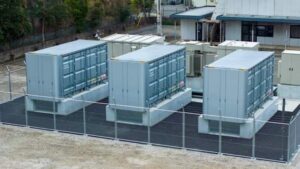
Why Does China Dominate Global Container Manufacturing?
The phrase ‘container factory China’ has become highly significant in the global logistics and infrastructure industries, as China remains the dominant manufacturing centre for modern shipping containers.
Several factors explain this dominant position:
Large-scale manufacturing capacity:
Chinese factories operate some of the world’s largest container production facilities.
Integrated supply chains:
Steel production, coating systems, structural fabrication, and logistics infrastructure are closely interconnected.
Export infrastructure
China’s ports and shipping networks support the efficient global distribution of goods.
Manufacturing specialisation
Chinese container manufacturing companies are increasingly specialising in advanced industrial applications beyond traditional freight containers.
Engineering innovation
Modern Chinese factories integrate automation, robotics, and digital production systems.
The global expansion of renewable energy infrastructure has further strengthened demand for Chinese container manufacturing expertise, as modular container systems offer the advantage of scalable deployment.
Leading suppliers such as CIMC TLC are continuing to expand their advanced manufacturing capabilities for energy infrastructure, modular construction, and intelligent logistics systems.
Key Types of Modern Shipping Containers
Modern shipping containers are available in many specialized designs depending on industrial requirements.
Тип контейнера | Main Application |
Standard Dry Container | General cargo transport |
Рефрижераторный контейнер | Temperature-sensitive cargo |
Open-Top Container | Oversized equipment |
Flat Rack Container | Heavy industrial cargo |
| Контейнер-цистерна | Liquid transport |
| Контейнер для хранения энергии | Battery infrastructure |
| Modular Building Container | Portable construction |
| Smart IoT Container | Intelligent logistics systems |
This diversification shows that container engineering has expanded far beyond traditional maritime logistics.
The rise of modular infrastructure means that shipping containers are increasingly being used for:
- Smart cities
- Mobile healthcare
- Temporary housing
- Industrial automation
- Renewable energy deployment
- Edge computing facilities
As industrial digitisation expands, container systems are expected to become even more technologically advanced.
How to Choose the Right Container Manufacturer?
Selecting the right container manufacturer has become increasingly important because container systems now serve highly specialized industrial functions.
Organizations evaluating suppliers should consider:
Evaluation Factor | Важность |
Structural Engineering Quality | Long-term durability |
Устойчивость к коррозии | Outdoor performance |
Thermal Management Capability | Energy infrastructure compatibility |
| Manufacturing Certifications | Соблюдение нормативных требований |
| Smart Technology Integration | Operational efficiency |
| Export Experience | International logistics reliability |
| Custom Engineering Support | Project flexibility |
Modern buyers searching for a reliable container factory increasingly prioritise suppliers capable of advanced customisation over those focused solely on standardised commodity production.
Industrial sectors such as energy storage, telecommunications infrastructure, and modular construction often require highly engineered solutions incorporating electronics, insulation systems, and digital monitoring platforms.
Suppliers such as CIMC TLC, RYC, and XLC are continuing to expand their container engineering capabilities in order to support these emerging infrastructure demands.
Future Trends in Shipping Container Technology
Several major technological and industrial trends will likely shape the future of the shipping container industry.
- Smart containers
AI-powered logistics tracking and predictive analytics will become increasingly common.
- Sustainable manufacturing
Factories will adopt lower-carbon steel production and recyclable materials.
- Autonomous logistics
Containers may integrate directly with autonomous transport systems.
- Energy integration
Containers will increasingly function as mobile energy infrastructure platforms.
- Digital twin technology
Advanced simulation systems will optimise lifecycle monitoring and predictive maintenance.
- Hybrid infrastructure modules
Future containers may combine energy storage, communications, computing, and logistics functions into unified, modular platforms.
These developments will further strengthen the role of shipping containers in global infrastructure systems.
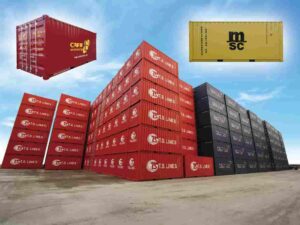
FAQ About Shipping Containers and Energetic Containers
- Что такое энергетический контейнер?
An “energetic container” is an informal term often used to describe advanced shipping containers used in energy systems, smart infrastructure, or multifunctional industrial applications.
- What is a shipping container used for today?
Modern shipping containers are used not only for cargo transport but also for energy storage, modular buildings, telecom systems, data centers, and industrial infrastructure.
- Why are shipping containers used in energy projects?
Containers provide modularity, transportation efficiency, rapid deployment capability, and standardized engineering platforms.
- Why is China important in container manufacturing?
China dominates global container production due to large-scale manufacturing capacity, integrated supply chains, export infrastructure, and advanced engineering expertise.
- What should companies look for in a container manufacturer?
Important factors include structural quality, corrosion resistance, engineering capability, certifications, smart technology integration, and customization support.
- Are smart containers becoming more common?
Yes. Modern containers increasingly integrate IoT sensors, GPS systems, AI analytics, and remote monitoring technologies.
Заключение
The modern shipping container has evolved far beyond its original purpose of transporting cargo. Nowadays, they function as modular infrastructure platforms that support energy systems, industrial automation, telecommunications, smart logistics, modular construction, and the deployment of renewable energy.
While the term ‘energetic container’ is informal, it accurately reflects the fact that modern containers have become active technological systems rather than passive storage units. Intelligent engineering, digital monitoring, energy integration, and modular scalability are transforming the global container industry into one of the most important sectors for future infrastructure development.
As the global demand for advanced modular systems continues to grow, organisations are increasingly searching for reliable partners in the container manufacturing sector, particularly in China, who can deliver highly engineered solutions for modern industrial applications. Suppliers such as CIMC TLC, RYC, and XLC are contributing to this transformation by providing advanced container engineering and innovative infrastructure solutions.
Over the next decade, shipping containers are expected to play an even larger role in renewable energy, smart cities, AI-driven logistics and decentralised infrastructure systems worldwide.