



 RU
RU  EN
EN 
Abstract
Сайт контейнер для хранения энергии is a battery energy storage system (BESS) in a modular way inside a standardized shipping container equipped with batteries, a battery management system (BMS), a power conversion system (PCS), thermal management, fire extinguishing, and a control system.
It is mainly used for saving the electricity generated from renewable energy sources such as solar power and wind power, for stabilizing power grids, for providing backup power, and for optimizing industrial energy consumption.
In recent studies of energy storage for the stationary grid and large-scale energy storage technologies, it was pointed out that containerized ESS technologies have become an important part of the basic infrastructure of low-carbon energy in terms of easy scaling up, quick deployment, and easy operational aspects.
Understanding the Energy Storage Container
The move toward renewable energy has increased the demand for energy storage. Sunlight provides electricity at solar farms; wind farms depend on weather conditions, and industries require electricity in unpredictable amounts. This requires energy storage capable of storing and delivering electricity when it is needed. Thus, the energy storage container has become indispensable.
Energy storage container (ABS), also known as a containerized battery energy storage system (BESS), is a fully integrated energy solution packed into an ISO shipping container (10′, 20′, or 40′). It is not just a small battery cabinet, but a powerful power management center with batteries, power electronics, temperature controls, monitoring systems, fire suppression systems, communication devices, and software controlling the charging and discharging of the battery in real time.
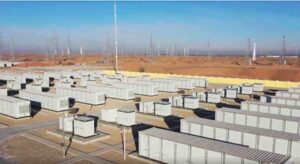
As separate energy infrastructure assets, modern energy storage containers can be used alongside solar power plants, wind farms, charging stations for EVs, industrial buildings, data centers, mining sites, commercial buildings, microgrids, and utility substations. Their modular design allows connections between units, which produce systems of up to a few hundred kilowatt-hours to a multi-gigawatt-hour installation. Some of the world’s leading infrastructure and power infrastructure companies, such as CIMC TLC|RYC|XLC, are participating in the development of advanced containerized ESS platforms for both commercial and grid applications.
Energy storage containers are able to operate far more independently of static battery rooms and thus become much more easily deployed. They can be assembled and tested at the factory, minimizing construction time, labor costs, and cost. Installation via plug-and-play is one of the major reasons why energy storage containers now dominate the large-scale ESS market.
Main Components Inside an Energy Storage Container
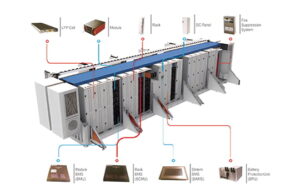
To understand how an energy storage container works, it is important to examine the core technologies integrated inside the enclosure. A modern containerized ESS combines multiple subsystems into one coordinated platform.
Component | Main Function | Важность |
Модули аккумуляторов | Store electrical energy | Core energy storage medium |
Battery Management System (BMS) | Monitors voltage, temperature, and battery health | Ensures safety and battery lifespan |
Power Conversion System (PCS) | Converts AC/DC electricity | Enables grid interaction |
| Energy Management System (EMS) | Controls charging/discharging strategies | Optimizes energy efficiency |
| HVAC Cooling System | Maintains temperature stability | Prevents thermal runaway |
| Fire Suppression System | Detects and suppresses fires | Critical safety protection |
| Monitoring & Communication System | Remote diagnostics and operation | Enables smart grid integration |
Most modern energy storage containers use lithium iron phosphate (LFP) battery chemistry. LFP batteries have become the industry standard due to their superior thermal stability, longer cycle life, and reduced fire risk compared to earlier lithium-ion chemistries. Depending on application requirements, some systems may also utilise sodium-ion batteries, vanadium flow batteries, or hybrid energy storage technologies.
The BMS is one of the most critical components in the system. It continuously monitors every battery cell to prevent overcharging, overdischarging, overheating, or voltage imbalance. Without a sophisticated BMS, large-scale energy storage would be unsafe and unreliable.
Another essential subsystem is the PCS, which converts the direct current (DC) stored in the batteries into the alternating current (AC) used by electrical grids and industrial equipment. The PCS also manages bidirectional energy flow, enabling the container to absorb electricity during charging and release it during discharging.
Meanwhile, the EMS acts as the system’s operational ‘brain’. Advanced EMS software uses algorithms and real-time analytics to optimise energy flow based on electricity prices, peak demand, renewable generation forecasts and grid conditions. It is this intelligent control that transforms an energy storage container from a simple battery bank into a smart energy infrastructure platform.
What Is an Energy Storage Container Used For?
The range of applications for energy storage containers has grown rapidly in recent years, driven by the accelerating transition towards renewable energy and decentralised power systems by governments, utilities and businesses.
One of the most common applications is the integration of renewable energy. Solar and wind energy are intermittent by nature. Solar panels only generate electricity during daylight hours, and wind turbines depend on wind conditions. Energy storage containers solve this problem by storing surplus electricity during periods of high generation and releasing it when generation declines. This stabilises renewable energy output and improves grid reliability.
Another major application is peak shaving and reducing demand charges. Industrial and commercial facilities often incur high electricity costs during periods of peak demand. Energy storage containers can discharge stored electricity during these expensive periods, helping businesses to reduce their operational energy costs.
Grid stabilisation and frequency regulation represent another critical use case. Modern electrical grids must maintain precise frequency and voltage stability. Since battery storage systems respond almost instantly, they can provide ancillary grid services much faster than traditional fossil fuel power stations. According to research on battery energy storage systems (BESS), modern installations can react within milliseconds to grid fluctuations.
Backup power and emergency resilience are also driving the rapid adoption of ESS. Data centres, hospitals, airports, ports, military bases and manufacturing plants are increasingly using energy storage containers to ensure an uninterrupted electricity supply during outages or grid instability. Compared with diesel generators, battery storage systems produce no local emissions, operate quietly, and require less maintenance.
In remote regions and island microgrids, containerised energy storage system (ESS) platforms are transforming electrification projects. Rather than relying solely on the transportation of diesel fuel, remote communities can now combine solar panels, wind turbines, and battery containers to establish stable hybrid power systems. Research into island energy systems shows that high rates of renewable energy penetration become much more achievable when energy storage is integrated into isolated grids.
The rapid expansion of electric vehicle infrastructure is another important growth driver. High-power EV charging stations can put significant strain on local electrical networks. Energy storage containers help to stabilise electricity demand by storing energy during periods of low demand and supplying power during periods of high demand, such as fast charging events.
Advantages of Containerized Energy Storage Systems
Energy storage containers have gained widespread adoption because they offer multiple operational and economic advantages compared with traditional energy infrastructure solutions.
Преимущество | Описание | Влияние на промышленность |
Модульная конструкция | Easy expansion through additional containers | Scalable projects |
Быстрое развертывание | Factory-built and pre-tested systems | Shorter construction time |
Мобильность | Easy transportation and relocation | Flexible infrastructure |
| Intelligent Control | Real-time EMS optimization | Improved efficiency |
| Renewable Integration | Supports solar and wind stability | Accelerates decarbonization |
| Снижение эксплуатационных расходов | Peak shaving and energy arbitrage | Lower electricity expenses |
| Enhanced Safety | Integrated fire suppression and monitoring | Higher operational reliability |
One of the most important advantages is scalability. Organisations can start with a relatively small energy storage system (ESS) deployment and expand capacity as electricity demand increases. This flexibility is particularly valuable for industrial parks, utility operators, and renewable energy developers.
Another key benefit is standardisation. Since energy storage containers are built using internationally recognised container dimensions, logistics and transportation are significantly simpler. Systems can be transported by truck, rail, or ship with minimal customisation.
Containerised systems also offer operational flexibility, setting them apart from traditional infrastructure. The same energy storage system (ESS) container can support renewable integration, peak shaving, emergency backup power, and grid frequency regulation simultaneously. Advanced EMS software can dynamically allocate battery resources across multiple functions, depending on market conditions and operational priorities.
Another major advancement in modern ESS technology is safety improvements. Contemporary energy storage containers incorporate smoke detection, gas monitoring, fire suppression systems, thermal insulation, emergency shutdown controls, and intelligent diagnostics. Suppliers, including CIMC TLC, RYC and XLC, are increasingly emphasising integrated fire safety engineering and thermal management optimisation in next-generation containerised storage platforms.
From a sustainability perspective, energy storage containers play a central role in reducing dependency on fossil fuels. By enabling greater penetration of renewable energy and improving grid flexibility, these systems contribute directly to carbon reduction goals and global energy transition strategies.
Challenges and Technical Considerations of Energy Storage Containers
Despite their advantages, energy storage containers present several engineering and operational challenges that must be carefully managed.
The first of these is thermal management. Batteries generate heat during charging and discharging cycles. If temperature control systems fail, overheating may occur, which could lead to thermal runaway events. For this reason, modern energy storage system (ESS) containers rely heavily on heating, ventilation, and air conditioning (HVAC) systems, liquid cooling technologies, and intelligent temperature monitoring.
Fire safety is another major concern in the industry. While lithium iron phosphate (LFP) chemistry is considered safer than other lithium-ion technologies, large-scale battery installations still require advanced suppression systems and compliance with strict safety standards such as UL9540A, NFPA 855, and IEC regulations.
Battery degradation is another important factor. Over time, battery capacity gradually decreases due to repeated charge and discharge cycles. The lifespan of an energy storage container depends on operating conditions, depth of discharge, environmental temperature, and battery chemistry. Most modern systems are designed for operational lifespans of 10–15 years.
Grid integration complexity also poses a significant challenge. Utility-scale storage projects must comply with regional electrical codes, grid interconnection requirements, communication protocols, and power quality regulations. Coordinating the integration of multiple energy assets, including renewables, generators, EV chargers and storage systems, requires a sophisticated EMS.
Economic considerations are equally important. Although battery costs have declined dramatically over the past decade, large-scale energy storage system (ESS) projects still require substantial initial investment. However, falling battery prices, growing electricity price volatility, and government incentives continue to improve project economics worldwide.
Another emerging issue is battery recycling and sustainability. As the number of deployed ESS containers increases globally, industries must establish efficient recycling systems for lithium, nickel, cobalt, copper, and other battery materials. Future energy storage strategies will likely emphasize circular economy principles and second-life battery applications.
Future Trends in Energy Storage Containers
The future of energy storage containers is closely linked to global electrification, the expansion of renewable energy, and the modernisation of smart grids. Analysts expect the energy storage system (ESS) industry to experience significant growth over the next decade, as countries invest in decarbonisation infrastructure and energy security.
One of the most significant trends is the shift towards higher-density battery chemistries. Although lithium iron phosphate (LFP) batteries currently dominate the stationary storage sector, sodium-ion and solid-state technologies are attracting increasing attention due to their safety, lower raw material costs, and potential to diversify the supply chain.
Artificial intelligence and predictive analytics are also transforming energy management systems. Future EMS platforms will increasingly use machine learning algorithms to forecast electricity demand, optimise arbitrage opportunities, predict battery degradation and automate grid participation strategies.
Hybrid energy systems are emerging as another significant trend. Rather than operating independently, future energy storage containers will be integrated into multi-energy ecosystems that combine solar power, wind generation, hydrogen systems, EV charging infrastructure, and microgrid networks.
Liquid cooling technology is expected to become more prevalent in large-scale ESS deployments as it improves thermal uniformity and energy density while reducing operational risks. Meanwhile, enhanced fire suppression technologies and gas detection systems will continue to evolve alongside increasingly strict regulatory requirements.
Another important trend is the development of ultra-large, utility-scale battery parks. Some next-generation projects already exceed several gigawatt-hours of storage capacity and function as strategic infrastructure assets for national power grids.
Container manufacturers and infrastructure integrators such as CIMC TLC, RYC, and XLC are likely to play an increasingly important role as the market demands stronger structural engineering, advanced thermal control, offshore-ready ESS containers, and integrated smart energy platforms tailored for utility-scale deployment.
As energy systems become more decentralized and digitalized, the energy storage container is evolving from a supporting technology into a foundational pillar of modern electricity infrastructure.
FAQ About Energy Storage Containers
- What is the difference between an energy storage container and a traditional battery room?
An energy storage container is a fully integrated modular ESS platform built inside a transportable ISO container, while a traditional battery room is a fixed on-site installation. Containerized systems offer faster deployment, easier expansion, standardized engineering, and simplified transportation.
- How long does an energy storage container last?
Most modern lithium iron phosphate (LFP) energy storage containers are designed for operational lifespans of 10–15 years, depending on cycle frequency, temperature conditions, and maintenance quality.
- What batteries are used in energy storage containers?
The most common battery chemistry is lithium iron phosphate (LFP), although some systems use sodium-ion batteries, lead-acid batteries, or vanadium flow batteries for specific applications.
- Are energy storage containers safe?
Yes, modern ESS containers integrate multiple safety layers including BMS monitoring, HVAC cooling, smoke detection, gas monitoring, fire suppression systems, emergency shutdown controls, and intelligent diagnostics to minimize operational risks.
- Can energy storage containers work with solar panels?
Absolutely. One of the primary uses of energy storage containers is storing excess solar energy during daytime generation and releasing it during nighttime or peak electricity demand periods.
- What industries use energy storage containers?
Energy storage containers are widely used in utilities, renewable energy projects, industrial manufacturing, data centers, EV charging stations, mining operations, hospitals, ports, airports, and remote microgrid applications.
Заключение
An energy storage container is much more than just a shipping container filled with batteries. It is a sophisticated, intelligent, modular energy infrastructure system designed to efficiently store, manage, and distribute electricity across modern power networks. As the adoption of renewable energy accelerates worldwide, containerised energy storage system (ESS) technology is becoming indispensable for grid stability, industrial energy optimisation, backup power resilience and sustainable electrification.
The advantages of containerised ESS technology — including scalability, mobility, rapid deployment, intelligent management and renewable integration capability — make it one of the most important technologies driving the global energy transition. While challenges such as thermal management, fire safety, battery degradation and recycling still require ongoing innovation, advancements in battery chemistry, EMS software and safety engineering are continuously improving system performance.
As governments, utilities, and industries continue to invest in cleaner and more flexible energy systems, the role of energy storage containers will only grow. Companies such as CIMC TLC, RYC, and XLC are helping to shape this rapidly evolving sector by delivering increasingly sophisticated containerised energy storage solutions that can support the next generation of smart, resilient, low-carbon energy infrastructure.