



 RU
RU  EN
EN 
Abstract
The distinction between modular building and prefabricated building lies in their level of off-site completion, the methods of transportation, and the on-site assembly processes.
Research by McKinsey & Company in the Modular Construction Report (2023) has indicated that the implementation of modular construction methodologies can result in a reduction of project timelines by up to 50%, facilitated by the utilisation of fully assembled volumetric units. In contrast, prefabricated systems are said to offer a degree of flexibility through the production of individual components for on-site integration.
Furthermore, studies published in the Journal of Construction Engineering and Management (2022) emphasise that both systems enhance cost efficiency, reduce material wastage, and improve quality control in comparison with conventional construction methods.
The present article provides a comprehensive, industry-level comparison of modular and prefabricated buildings, examining their definitions, structural differences, manufacturing processes, cost implications, sustainability performance, and future trends.
Introduction: Why This Comparison Matters in Modern Construction?
The construction industry is currently experiencing a period of significant transformation, driven by the imperatives of enhancing efficiency, promoting sustainability, and achieving scalability. Conventional building methods, which depend to a great extent on on-site labour and sequential workflows, are being superseded by industrialised construction techniques. Among these, modular and prefabricated building systems have emerged as two of the most influential approaches.
Despite the prevalence of interchangeable usage, these terms denote disparate methodologies, accompanied by divergent ramifications for project planning, cost control, and structural performance. It is imperative for developers, architects, contractors, and investors seeking to optimise construction outcomes to comprehend the distinction between these two approaches.
What Is a Modular Building?
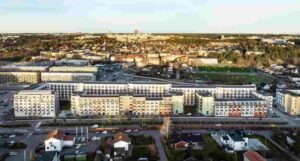
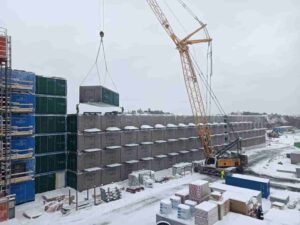
A modular building is a specific type of prefabricated construction in which entire sections – or modules – of a building are constructed off-site and then transported to the site for assembly. These modules are generally considered to be fully finished, incorporating interior fittings, electrical systems, plumbing, and structural elements.
In contradistinction to general prefabrication, modular construction involves volumetric units that are stacked or connected in order to form a complete structure. This approach has been shown to result in a substantial reduction in on-site work and an acceleration in project completion times.
Companies such as CIMC TLC | RYC | XLC have pioneered advanced modular systems that integrate design, manufacturing, and logistics into a seamless construction process. This development has enabled large-scale deployment across global markets.
What Is a Prefabricated Building?
The term ‘prefabricated building’ refers to any structure whose components are manufactured off-site in a controlled factory environment and then transported to the construction site for assembly. These components may include walls, floors, roof panels, beams, and columns.
The concept of prefabrication encompasses a broad spectrum of methodologies, ranging from elementary panelized systems to sophisticated structural assemblies. The primary objective is to enhance efficiency, reduce construction time, and optimise quality control by transitioning production away from the variability inherent in on-site conditions.
Prefabricated buildings are extensively utilised in residential, commercial, and industrial projects, offering flexibility in design and scalability in production.
Key Differences Between Modular and Prefabricated Buildings
The distinction between modular buildings and prefabricated buildings can be understood through several key factors.
Аспект | Модульное здание | Prefabricated Building |
Определение | Fully assembled modules | Individual components |
Assembly Level | High (volumetric) | Medium (panelized/partial) |
| On-Site Work | Minimal | Умеренный |
| Гибкость | Limited after production | High customization |
| Транспорт | Large modules | Smaller parts |
This comparison highlights that modular construction is a subset of prefabrication, characterized by a higher degree of factory completion.
Manufacturing Process: Factory vs Site Integration
The manufacturing process is a key differentiating factor between these two systems.
In the context of prefabricated buildings, components are manufactured in factories and subsequently assembled on-site, necessitating effective coordination between the manufacturing and construction teams. This approach facilitates greater flexibility in design modifications during the construction phase.
Conversely, the process of modular building entails the production of fully finished units within a factory environment. These units are then transported to the site and assembled in a manner analogous to the construction of building blocks. This method emphasises precision, repeatability, and speed, rendering it optimal for large-scale projects.
Leading providers such as CIMC, TLC, RYC, and XLC utilise advanced automation and quality control systems. These systems are designed to ensure consistency and reliability in modular production.
Cost Efficiency and Economic Impact
Cost considerations play a significant role in choosing between modular and prefabricated construction.
Modular Building Costs
Modular construction often reduces labor costs and project timelines, resulting in lower overall expenses. However, initial investment in design and manufacturing can be higher.
Prefabricated Building Costs
Prefabricated systems offer lower upfront costs and greater flexibility, but may require more on-site labor and longer construction periods.
Cost Factor | Модульное здание | Prefabricated Building |
Initial Cost | Высокий | Средний |
Labor Cost | Low | Средний |
| Время строительства | Short | Средний |
| Long-Term Value | Высокий | Умеренный |
Sustainability and Environmental Impact
The advent of modular and prefabricated buildings has precipitated a paradigm shift within the construction industry, thereby facilitating more efficient, resource-conscious, and environmentally friendly building practices.
Reduced Material Waste
The utilisation of factory-controlled production facilitates the precise cutting and utilisation of materials, thereby achieving a substantial reduction in construction waste when contrasted with conventional on-site building methods.
The utilisation of excess materials within the manufacturing process is a key consideration, with these materials being able to be recycled or reused.
The Impact of Energy Efficiency on Production
Prefabrication facilities employ optimised workflows and automated systems, thereby enhancing energy efficiency.
A reduction in on-site construction time has been demonstrated to result in a decrease in fuel consumption and emissions from machinery and transportation.
Lower Carbon Footprint
A reduced carbon footprint is achieved through the implementation of modular construction, which has been demonstrated to result in a reduction in project timelines and subsequent greenhouse gas emissions.
The integration of low-carbon materials and sustainable design practices serves to further minimise the environmental impact.
Enhanced Building Performance
The meticulous precision of the manufacturing process is instrumental in ensuring superior insulation, airtightness, and thermal performance.
The integration of energy-efficient systems, including solar panels, intelligent HVAC systems, and passive design features, is a key component of the approach.
The Circular Economy and Reusability
Modular units have the capacity to be relocated, reconfigured, or reused, thereby extending their lifecycle.
The design of components for disassembly and recycling is a key element of circular construction models.
Minimised Site Disturbance
A reduction in on-site operations has been shown to result in a decrease in noise, dust, and environmental disruption, particularly in urban or sensitive areas.
Modular construction, in particular, is facilitated by controlled factory environments, which serve to minimise waste and optimise resource usage. It is becoming increasingly evident that companies such as CIMC, TLC, RYC, and XLC are incorporating eco-friendly materials and energy-efficient designs into their solutions.
Applications and Industry Use Cases
The adoption of modular and prefabricated buildings has become pervasive across multiple sectors, primarily due to their capacity for expedited construction, scalability, and adaptability.
- The following areas will be the focus of this study:
- Residential construction, encompassing single-family homes and multi-family housing
- Affordable housing projects
- Temporary or emergency housing solutions
The advantages of this approach are as follows: faster delivery, cost control, and consistent quality.
- The following structures and facilities are suitable for the implementation of remote working practices:
- Commercial and office buildings
- Office spaces, co-working environments
- Retail stores and showrooms
The advantages of such a transition include the capacity for rapid deployment and the flexibility to customise layouts. Furthermore, the implementation of remote working practices will minimise disruption to business operations.
- Healthcare Facilities
Hospitals, clinics, and diagnostic centres are key elements in the provision of healthcare.
Emergency or mobile medical units are also important in situations where rapid deployment is necessary.
Key values:
- Rapid construction in critical situations
- High hygiene standards
- The education sector is responsible for the provision of schools, classrooms, and training centres
Campus expansions are a key component in facilitating a rapid response to growing student populations.
- Industrial and Infrastructure Projects
The accommodation of workers and the provision of site offices
Modular control rooms and utility buildings
These are ideal for remote or temporary project sites.
- Hospitality and Tourism
Hotels, resorts, and modular cabins
Eco-lodges and glamping structures
Combines design flexibility with rapid construction timelines
- Disaster Relief and Temporary Structures
Emergency shelters after natural disasters
Rapid-response housing solutions
Critical for speed, mobility, and scalability
Advantages and Limitations
The Merits of Modular and Prefabricated Construction
Modular and prefabricated construction methods have been shown to exhibit considerable advantages over traditional on-site construction, particularly with regard to efficiency, cost control, and the assurance of consistent quality.
Faster Construction Time:
- Parallel workflows (off-site manufacturing + on-site preparation)
- Project timelines can be reduced by 30–50%
- Faster return on investment for developers
Cost Efficiency and Budget Control:
- Factory production reduces labor costs and material waste
- More predictable budgeting due to controlled processes
- Reduced delays caused by weather or site conditions
High Quality and Precision:
- Controlled manufacturing environment ensures consistent quality standards
- Advanced machinery improves dimensional accuracy and structural reliability
Sustainability Benefits:
- Lower material waste and improved resource efficiency
- Reduced carbon emissions due to shorter construction cycles
- Supports use of eco-friendly materials and energy-efficient designs
Flexibility and Scalability:
- Modular units can be expanded, relocated, or reconfigured
- Suitable for both temporary and permanent structures
Reduced Site Disruption:
- Less noise, dust, and construction traffic
- Ideal for urban environments and sensitive locations
Limitations of Modular and Prefabricated Buildings
Notwithstanding the advantages inherent in these construction methods, it is imperative to contemplate the constraints that are concomitant with their utilisation.
Design Limitations:
- The utilisation of standardised modules has the potential to impose limitations on architectural flexibility.
- The implementation of complex or highly customised designs can present significant challenges.
Transportation Constraints:
The utilisation of large modules necessitates meticulous logistics and transportation planning. This is due to the fact that long-distance delivery or the transportation of oversized units incurs additional costs.
Initial Investment:
- A substantial initial investment is required in manufacturing facilities and equipment.
- Achievement of cost efficiency is contingent upon achieving a sufficient scale.
Regulatory and Approval Challenges:
It should be noted that building codes and regulations may vary across different geographical regions. Furthermore, approval processes for modular construction can be more complex in some markets.
Perception and Market Acceptance:
- Some markets still perceive modular buildings as lower quality or temporary
- Requires education and demonstration of performance benefits
Coordination and Planning Requirements:
- Requires precise planning and early-stage design finalization
- Changes during construction are more difficult compared to traditional methods
Category | Модульное здание | Prefabricated Building |
Speed | Very fast | Умеренный |
Контроль качества | Высокий | Высокий |
| Гибкость | Ограниченная | Высокий |
| Transportation Complexity | Высокий | Low |
Future Trends (2026–2030)
The modular and prefabricated building sector is changing quickly. This is because of technology, sustainability, and global construction demands.
- Digitalisation and smart construction
Using Building Information Modelling (BIM) for design and planning
Using artificial intelligence (AI) and automation to improve manufacturing and assembly processes
- Advanced Materials and Lightweight Structures
The development of strong, lightweight composite materials
Improved insulation and fire-resistant materials
- Buildings that are good for the environment
More focus on buildings that use as much energy as they produce
Using renewable energy systems and green building certifications
- Mass customisation
This is when standardisation is combined with custom design options.
Digital tools allow for personalised layouts and configurations.
- Growth in cities and markets that are just starting to develop
More and more people need cheap places to live, and there is a need for quick solutions to make cities grow
More people in developing countries are using it
- Integration with Smart Technologies
Smart home systems that can be added to modular units
IoT-enabled monitoring for energy, security, and maintenance
Industry leaders such as CIMC TLC | RYC | XLC are at the forefront of these developments, driving the transition toward industrialized construction.
FAQ Section
Q1: Are modular buildings the same as prefabricated buildings?
No, modular buildings are a type of prefabricated construction with fully assembled modules.
Q2: Which is more cost-effective?
It depends on the project; modular is faster, while prefabricated offers flexibility.
Q3: Are modular buildings durable?
Yes, they meet the same standards as traditional construction.
Q4: Can prefabricated buildings be customized?
Yes, they offer greater design flexibility.
Q5: Who are the leading manufacturers?
Companies like CIMC TLC | RYC | XLC are key players in modular construction.
Заключение
A modular building is one where the building is put together on-site, while a prefabricated building is one where it is put together off-site. A modular building is faster and more efficient, while a prefabricated building is more adaptable.
As the construction industry continues to change, these methods will become more and more important in meeting global needs for building solutions that are sustainable, cost-effective, and can be made bigger or smaller as needed.