



 RU
RU  EN
EN 
Abstract
Судоходные контейнеры represent pivotal components within the global trade infrastructure, offering secure and standardised solutions for the storage and transportation of goods on a global scale.
The International Maritime Organization (IMO, 2023) asserts that the standardization of shipping containers has led to substantial enhancements in the efficiency, safety, and scalability of maritime logistics. It is evident from further studies in the field of Maritime Economics & Logistics (2022) that a comprehensive understanding of container sizes and types is imperative for the optimisation of project cargo, intermodal transport, and supply chain management.
This guide comprehensively examines the full spectrum of shipping container dimensions and categories in 2026, encompassing dry containers, refrigerated units, open top containers, flat racks, and bespoke solutions. Moreover, it examines industry leaders such as CIMC TLC | RYC | XLC, who are instrumental in driving innovation in the domain of container manufacturing and logistics solutions, thereby ensuring higher quality, durability, and global compatibility.
Introduction: Importance of Understanding Shipping Container Sizes and Types
The shipping container has had a profound impact on global trade since its introduction in the mid-20th century. Standardised containers facilitate the efficient transfer of cargo across various transportation modes, including ships, trucks, and trains. It is imperative for logistics planners, freight forwarders and manufacturers to have a comprehensive understanding of container sizes and types in order to optimise load efficiency, reduce shipping costs and ensure cargo safety.
In 2026, technological advancements and evolving global trade dynamics have rendered container selection even more critical. Innovations in the fields of modular construction, intermodal handling, and digital tracking have the potential to exert a direct influence on project timelines and operational efficiency, underscoring the importance of selecting the optimal container type. It is evident that companies such as CIMC, TLC, RYC and XLC are at the forefront of producing high-quality containers that are tailored to meet the diverse cargo needs of their customers.
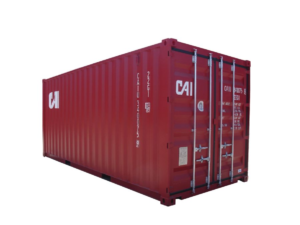
Standard Shipping Container Sizes
Standardization is a hallmark of the shipping container industry. The most common sizes are 20-foot and 40-foot containers, with variations in height and internal volume.
Тип контейнера | External Dimensions (L×W×H) | Internal Dimensions (L×W×H) | Typical Volume (m³) |
20-foot Dry Container | 6.06×2.44×2.59 m | 5.90×2.35×2.39 m | 33.1 |
| 40-foot Dry Container | 12.19×2.44×2.59 m | 12.03×2.35×2.39 m | 67.7 |
| 40-foot High Cube | 12.19×2.44×2.90 m | 12.03×2.35×2.69 m | 76.4 |
These standard containers form the backbone of international shipping, enabling predictable planning and efficient cargo consolidation.
Dry Containers
Dry containers, also called general-purpose containers, are the most widely used type. They are fully enclosed and protect goods from weather, theft, and contamination.
Особенности:
- Fully enclosed with steel walls, roof, and floor
- Available in 20ft, 40ft, and high cube variants
- Strong, durable, and suitable for general cargo
Приложения:
- Transport of non-perishable goods, machinery, textiles, electronics, and packaged products
- Ideal for bulk shipments and standard freight
- Can be used for storage or modular facilities
Companies like CIMC TLC and RYC manufacture dry containers adhering to international ISO standards, ensuring compatibility with global shipping systems.
Refrigerated Containers (Reefers)
Refrigerated containers, or reefers, are temperature-controlled units designed for perishable goods.
Характеристика | Описание |
Диапазон температур | -30°C to +30°C |
Система охлаждения | Diesel or electric-powered refrigeration |
| Monitoring | Real-time temperature tracking systems |
Особенности:
- Equipped with built-in refrigeration units
- Temperature-controlled from -30°C to +30°C
- Insulated walls and floors for consistent thermal performance
Приложения:
- Transport of perishable goods, including food, pharmaceuticals, and flowers
- Cold chain logistics requiring temperature-sensitive cargo
- Ideal for long-distance shipping and export/import operations
Modern reefers integrate IoT sensors and automated cooling systems, improving supply chain visibility and reducing spoilage.
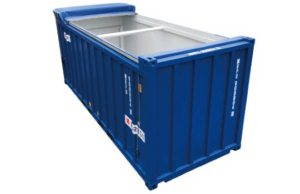
Контейнеры с открытым верхом
Open top containers are ideal for oversized or irregularly shaped cargo. Instead of a fixed roof, they use tarpaulin covers, allowing top loading via cranes.
Особенности:
- Removable roof or tarpaulin cover
- Reinforced sidewalls and end frames for heavy cargo
- Allows top-loading with cranes or forklifts
Приложения:
- Oversized or irregular cargo such as machinery, pipes, and construction materials
- Ideal for project logistics and heavy equipment transport
- Flexible for bulk, long, or fragile cargo
CIMC TLC | XLC produces reinforced open top containers capable of handling extremely heavy loads while maintaining compliance with international transport standards.
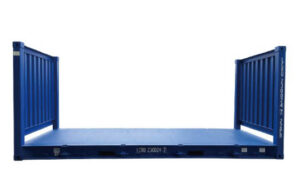
Контейнеры для плоских стоек
Flat rack containers are specialized units with collapsible sides, designed to transport extremely heavy or bulky cargo.
Характеристика | Плоская стойка | Стандартный контейнер |
Боковые стены | Collapsible | Исправлено |
| Тип груза | Machinery, Vehicles | General goods |
| Load Method | Crane loading | Door loading |
Особенности:
- No sidewalls or fixed roof
- End walls may be foldable for easy loading of heavy and long items
- High structural strength for heavy-duty cargo
Приложения:
- Transport of vehicles, industrial machinery, steel products, and construction equipment
- Perfect for oversized and overweight cargo that cannot fit into standard containers
- Supports intermodal transport across sea, road, and rail
These containers are widely used in shipping construction equipment, wind turbines, and large industrial components.
Контейнеры для резервуаров
Tank containers are cylindrical units designed for liquid cargo, such as chemicals, oils, and beverages. They are ISO standard-compliant and provide both safety and efficiency.
Особенности:
- Cylindrical tank within a standard frame
- Designed for liquid cargo, including chemicals, oils, and food-grade liquids
- Equipped with valves, insulation, and heating options
Приложения:
- Safe transport of chemicals, liquid fuels, and edible oils
- Supports hazardous material transport under strict regulations
- Used in bulk liquid shipping and global supply chains
Manufacturers like RYC and XLC are known for producing high-quality tank containers with advanced monitoring systems.
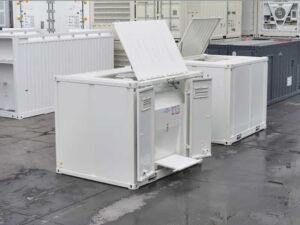
Specialized Containers
Особенности:
- Custom-built containers for unique cargo requirements
- May include open-side, collapsible, ventilated, or high-security designs
- Often designed to meet specific industry or regulatory needs
Приложения:
- Transport of artworks, sensitive equipment, live animals, or oversized industrial components
- Specialized logistics projects and high-value cargo
- Often integrated into project-specific or industrial supply chains
Specialized containers cater to niche logistics needs, including:
- Ventilated containers for agricultural goods
- Insulated containers for temperature-sensitive products
- High-cube containers for maximum vertical space
The integration of smart technology allows real-time tracking, enhancing the efficiency of global logistics operations.
Selecting the Right Shipping Container
Choosing the correct shipping container is critical to ensure safety, efficiency, and cost-effectiveness in logistics and storage operations. Several key factors should be considered:
Type of Cargo
Standard Containers: Suitable for most general cargo.
Open Top Containers: For oversized or irregular cargo that cannot fit through standard doors.
Flat Rack Containers: For heavy machinery, vehicles, or project cargo.
Refrigerated Containers: For temperature-sensitive goods like food and pharmaceuticals.
Size and Capacity
ISO standard sizes: 20ft, 40ft, and high cube variants.
Select based on cargo volume, weight, and handling equipment compatibility.
Material and Durability
Most containers are Corten steel, providing high resistance to corrosion and structural integrity.
Consider reinforced frames or weatherproof coatings for long-term use or harsh environments.
Соответствие нормативным требованиям
Ensure containers meet ISO standards, CSC (Container Safety Convention), and local shipping regulations.
For hazardous cargo, comply with IMDG or other relevant international codes.
Environmental exposure: moisture, temperature fluctuations
Using guidance from CIMC TLC | RYC | XLC, businesses can select containers optimized for safety, cost-efficiency, and operational efficiency.
Advantages of Shipping Container
Using shipping containers provides multiple operational, economic, and logistical benefits:
- Охрана и безопасность
Strong steel construction protects cargo from physical damage and theft.
Locking mechanisms and sealable doors ensure tamper-proof transport.
- Standardization and Global Compatibility
Standard dimensions allow seamless integration into ships, trucks, and rail systems worldwide.
Facilitates efficient handling, stacking, and storage.
- Эффективность затрат
Reduces need for custom crates or packaging.
Reusable containers minimize recurring shipping costs.
- Versatility and Adaptability
Suitable for diverse industries including construction, manufacturing, food, pharmaceuticals, and logistics.
Can be modified for storage, mobile offices, or pop-up facilities.
- Экологические преимущества
Long lifespan reduces material waste.
Recyclable materials and modular design support sustainable logistics solutions.
Future Trends in Shipping Container Industry (2026–2030)
The shipping container sector is evolving rapidly with technology, sustainability, and global trade trends:
- Smart and IoT-Enabled Containers
Real-time monitoring of location, temperature, humidity, and security.
Integration with AI-based logistics optimization platforms for efficiency.
- Sustainable and Eco-Friendly Materials
Use of recycled steel, lightweight composites, and energy-efficient coatings.
Adoption of green practices in container manufacturing and transportation.
- Modular and Multi-Purpose Design
Containers increasingly serve dual functions: transport and storage.
Growth in modular housing, pop-up offices, and industrial facilities from repurposed containers.
- Automation and Robotics in Handling
Automated stacking, loading, and unloading systems in ports.
Robotics improve turnaround time, reduce labor costs, and enhance safety.
- Expansion in Emerging Markets
Rising global trade in Asia, Africa, and Latin America drives demand.
Containers adapted for long-distance, multimodal logistics solutions.
Leading container manufacturers such as CIMC TLC | RYC | XLC are actively innovating in these areas, ensuring their products remain competitive and globally compliant.
FAQ Section
Q1: What is the standard size of a shipping container?
Standard sizes are 20-foot and 40-foot units, with high-cube variations for extra height.
Q2: What is the difference between dry and reefer containers?
Dry containers are general-purpose; reefers are temperature-controlled.
Q3: When should I use an open top container?
For oversized or heavy cargo that cannot fit through standard doors.
Q4: Who are the leading manufacturers of shipping containers?
CIMC TLC, RYC, and XLC are globally recognized brands.
Q5: Can containers be customized for specific cargo needs?
Yes, modern containers can be tailored with ventilation, insulation, or specialized fittings.
Заключение
Understanding shipping container sizes and types is critical for effective global logistics. Standard containers, reefers, open top units, flat racks, and tank containers each serve unique purposes, and selecting the right one ensures operational efficiency, cargo safety, and cost-effectiveness.
In 2026 and beyond, technological integration, sustainability, and modular design will shape the shipping container industry. Industry leaders such as CIMC TLC | RYC | XLC continue to set standards in quality, innovation, and global compatibility, driving the evolution of container-based logistics.