



 RU
RU  EN
EN 
Abstract
The best контейнер для аккумуляторов for storing lithium-ion and industrial batteries is a purpose-built, fire-resistant, climate-controlled enclosure. It is designed specifically to ensure the safety of energy storage, manage thermal issues, provide structural durability, and mitigate hazardous risks.
Modern battery safety standards such as UL 9540A and UL 1487 stipulate that advanced battery containment systems must address issues such as thermal runaway propagation, gas venting, fire suppression, environmental protection, and long-term operational reliability in stationary energy storage systems and industrial battery storage applications.
Furthermore, research and industry testing demonstrate that integrated battery containers with thermal management systems, intelligent monitoring and reinforced steel structures offer significantly greater safety and operational efficiency than conventional storage enclosures.
Why Battery Storage Containers Have Become Critical in Modern Energy Infrastructure?
The rapid growth in the use of electrification, renewable energy systems, electric vehicles, grid-scale energy storage, telecommunications infrastructure, and industrial backup power has fundamentally altered the global demand for advanced battery storage solutions. Lithium-ion batteries now power a wide range of applications, including utility-scale renewable energy plants, commercial microgrids, data centres, marine systems, mining equipment, electric transportation fleets, and residential backup systems. As battery capacity and deployment continue to increase worldwide, ensuring the safe and reliable containment of batteries has become one of the most important engineering challenges in modern energy infrastructure.
Traditional storage methods are no longer sufficient for high-density battery systems. Standard shipping enclosures, generic warehouses, and poorly ventilated storage rooms cannot adequately address the complex risks associated with lithium battery storage, particularly those related to thermal runaway, gas release, moisture exposure, fire propagation, overheating, and structural containment. Modern energy systems, therefore, require highly engineered battery container solutions that are specifically designed to support battery safety, environmental protection, operational reliability, and regulatory compliance.
The growing significance of battery containers is closely linked to the rapid expansion of Battery Energy Storage Systems (BESS). Grid operators, renewable energy developers, industrial facilities, and commercial infrastructure providers are increasingly relying on containerised battery systems because they offer modular deployment, scalable capacity, faster installation, improved transportation efficiency, and centralised system integration. These containers are sophisticated engineered environments that integrate the following:
- Терморегуляция
- HVAC systems
- Пожаротушение
- Battery management systems
- Gas detection
- Ventilation control
- Structural reinforcement
- Electrical integration
- Intelligent monitoring
- Emergency shutdown systems
The growing focus on battery safety has also accelerated the development of international safety standards. Modern battery containment solutions are now heavily influenced by the following standards:
UL 9540A, NFPA 855, UL 1487, IEC energy storage standards, and fire protection regulations. These standards emphasise the importance of thermal runaway mitigation, fire containment, explosion prevention, and environmental control within battery storage environments.
Our company, CIMC TLC, RYC, and XLC, is increasingly developing specialised battery container systems designed for modern energy storage applications, where safety, reliability, modularity, and long-term durability are essential.
As global battery deployment accelerates, selecting the right battery container has become a critical operational, safety, and financial decision. It is now a critical factor influencing operational safety, insurance compliance, infrastructure reliability, investment protection, and long-term energy system performance.
What Is a Battery Container?
A battery container is a specially engineered enclosure designed for the safe storage, operation, transport, and management of battery systems, particularly lithium-ion battery packs and energy storage modules. Based on ISO container structures, these containers are heavily modified to incorporate integrated safety, thermal, electrical, and environmental systems specifically designed for battery applications.
Unlike standard shipping containers, battery containers are designed to mitigate the specific operational risks posed by electrochemical energy storage systems. Their role extends far beyond providing simple physical protection.
Modern battery containers typically integrate the following features:
- Fire-resistant structures
- Thermal insulation
- HVAC cooling systems
- Gas detection sensors
- Smoke monitoring
- Explosion venting
- Системы пожаротушения
- Intelligent battery monitoring
- Electrical isolation systems
- Emergency shutdown controls
The primary objective is to create a controlled operating environment that can maintain battery stability and reduce the risk of overheating, thermal runaway, moisture damage, gas accumulation, electrical failure, and fire propagation.
Battery containers are widely used in renewable energy storage, solar farms, wind energy systems, utility-scale BESS projects, industrial backup systems, telecom infrastructure, EV charging stations, mining operations, marine power systems, microgrids, and more.
The growing sophistication of battery containers reflects the increasing complexity of modern battery technologies.
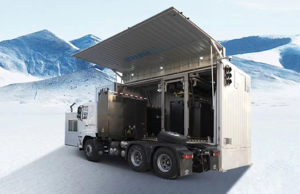
Why Ordinary Containers Are Not Suitable for Battery Storage?
Many people assume that standard steel shipping containers are sufficient for storing industrial batteries. While they may provide basic physical enclosure, ordinary containers lack the specialised systems required for modern battery safety and operational stability.
Lithium-ion batteries are highly sensitive to temperature fluctuations, moisture, mechanical damage, poor ventilation, electrical faults, and thermal stress. Without proper environmental control and protection systems, batteries may degrade rapidly or become dangerous.
One of the greatest concerns in battery storage is thermal runaway. This is a self-accelerating chain reaction in which battery cells generate excessive heat that spreads to adjacent cells, potentially leading to a fire or explosion.
Modern safety standards such as UL 9540A specifically evaluate thermal runaway propagation, fire behaviour, explosion hazards, vent gas risks, and system-level fire containment. These tests are now considered essential for modern battery energy storage safety certification.
Standard containers generally lack the following features:
- Терморегуляция
- Gas venting
- Active suppression
- Monitoring systems
- Insulation design
- Fire separation capability
As battery energy density continues to increase, the absence of these features is becoming unacceptable for commercial and industrial deployment.
This is why purpose-built battery containers have become the industry standard for modern energy storage infrastructure.
Key Features of the Best Battery Containers
The most effective battery containers integrate structural engineering, fire protection, thermal management, and intelligent monitoring.
Thermal management systems
Temperature stability is one of the most important requirements for battery storage.
Advanced battery containers integrate:
- HVAC cooling
- Liquid cooling systems
- Airflow balancing
- Temperature zoning
- Thermal insulation
Stable operating temperatures improve:
- Battery lifespan
- Эффективность
- Charging stability
- Безопасность
Overheating is one of the leading triggers of battery failure and thermal runaway events.
Fire Suppression Systems
Modern battery containers must include highly specialised fire protection systems.
These systems may include:
- Aerosol suppression
- Clean agent suppression
- Water mist systems
- Gas suppression
- Thermal barriers
According to UL fire safety guidance, thermal runaway propagation remains one of the primary safety challenges in battery energy storage systems.
The best containers are designed to prevent the spread of fire while minimising structural damage.
Gas Detection and Ventilation
Battery failures may release hydrogen, carbon monoxide, flammable electrolyte gases, and toxic vapours. Modern battery containers therefore integrate gas sensors, pressure relief systems, explosion venting, and forced ventilation to help reduce the risk of deflagration.
Structural reinforcement
Battery systems are extremely heavy and require reinforced structures that can support vibration loads, transportation stress, seismic activity, and environmental exposure. The best battery containers use reinforced steel frames and corrosion-resistant construction materials.
Intelligent monitoring systems
Modern battery containers increasingly integrate:
- IoT sensors
- Remote diagnostics
- Predictive analytics
- AI-assisted monitoring
- Real-time thermal analysis
These systems improve operational visibility and reduce maintenance risk.
Types of Battery Containers Used in Industry
The requirements of different industries mean that battery storage applications can vary significantly.
Containerised BESS systems
These are the most advanced battery containers currently used in utility-scale energy storage.
They integrate the following:
- battery racks
- PCS systems
- cooling systems
- transformers
- EMS controls
- fire protection
Containerised BESS systems are widely used for the following:
- Renewable energy integration
- Peak shaving
- Grid balancing
- Backup power
Manufacturers such as CIMC TLC increasingly provide modular BESS container solutions for utility-scale projects.
Battery storage containers for transportation
Transportation battery containers are designed for shipping safety, impact resistance, and hazardous material compliance. These systems prioritise containment during logistics operations.
Industrial Battery Rooms and Enclosures
Industrial applications often use customised battery enclosures integrated into telecom stations, factories, data centres, and mining facilities.
Outdoor battery cabinets
Smaller battery installations often use weatherproof outdoor cabinets designed for localised energy systems.
Comparing Different Battery Container Types
Тип контейнера | Main Application | Преимущества | Ограничения |
Standard Shipping Container | Temporary storage | Low cost | Poor safety integration |
Containerized BESS | Utility energy storage | Full system integration | Higher investment |
Outdoor Battery Cabinet | Small systems | Compact footprint | Limited scalability |
| Industrial Battery Room | Facility integration | High customization | Site-dependent |
| Fire-Rated Battery Container | High-risk environments | Superior protection | Higher complexity |
This comparison highlights why specialized battery containers are increasingly preferred over ordinary storage systems.
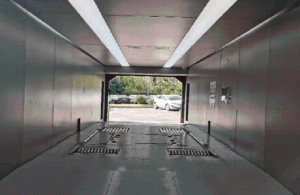
Why Thermal Runaway Protection Is the Most Important Factor?
Of all the considerations relating to battery storage, the mitigation of thermal runaway has become the industry’s top priority.
This occurs when internal battery heat generation exceeds the capability of the battery to dissipate heat, creating a reaction that can spread across modules and battery racks.
Research and safety investigations show that thermal runaway may result from internal short circuits, overcharging, mechanical damage, cooling failure, manufacturing defects, or electrical abuse. Once initiated, thermal runaway can spread rapidly if containment systems are inadequate.
Modern battery containers, therefore focus heavily on:
- Compartmentalisation
- Fire isolation
- Thermal barriers
- Gas evacuation
- Emergency suppression
UL 1487 battery containment standards specifically address containment enclosures intended to mitigate heat and fire hazards, as well as internal deflagration risks associated with lithium-ion battery thermal runaway events.
The most effective battery containers are those specifically designed for thermal runaway containment rather than just physical storage.
Material Selection for Battery Containers
The materials used in the construction of battery containers have a significant impact on fire resistance, thermal insulation, corrosion resistance, and structural durability.
Most industrial battery containers are made from galvanised steel, corten steel, or stainless steel and feature fire-resistant insulation panels.
Advanced thermal insulation systems help stabilise internal temperatures while reducing external heat exposure.
Corrosion resistance is especially important in coastal regions, desert environments, offshore applications, and humid climates.
Container manufacturers are increasingly using advanced coatings and environmental protection systems to improve long-term durability.
Battery Container Safety Standards and Certifications
Battery storage safety is increasingly regulated worldwide.
Important standards include:
Standard | Focus Area |
UL 9540A | Thermal runaway testing |
UL 1487 | Battery containment enclosures |
| NFPA 855 | ESS installation safety |
| IEC 62933 | Electrical energy storage systems |
| NFPA 70 | Electrical code compliance |
These standards influence:
- Fire system design
- Spacing requirements
- Ventilation systems
- Emergency response planning
- Installation procedures
Compliance is becoming essential for:
- Insurance approval
- Project financing
- Grid interconnection
- Regulatory acceptance
How Containerized Battery Systems Support Renewable Energy?
Renewable energy systems increasingly rely on battery containers because renewable power generation is inherently variable.
Battery containers help to:
- Stabilise solar output
- Support wind integration
- Provide backup power
- Improve grid reliability
- Enable peak shifting
Containerised battery energy storage systems (BESS) allow rapid deployment and modular scaling, making them highly attractive to:
- Utility companies
- Renewable energy developers
- Industrial facilities
Companies such as RYC and XLC are increasingly focusing on integrated energy storage container systems designed for renewable energy infrastructure expansion.
Future Trends in Battery Container Technology
Battery container technology is evolving rapidly alongside the global energy transition.
Important future trends include:
- AI-based thermal prediction
- Digital twin monitoring
- Liquid immersion cooling
- Solid-state battery integration
- Modular microgrid systems
- Advanced fire suppression
- Autonomous diagnostics
- Carbon-neutral manufacturing
Artificial intelligence is increasingly being used for:
- Predictive maintenance
- Thermal anomaly detection
- Battery health forecasting
- Operational optimisation
Recent research is also exploring AI-assisted thermal runaway forecasting models, which are capable of improving real-time safety management in large battery systems.
As battery energy density increases, future containers will likely place an even greater emphasis on active thermal isolation, rapid emergency response, intelligent ventilation, and autonomous safety systems.
FAQ About Battery Containers
- What is the best container for storing lithium batteries?
The best option is a purpose-built battery container with fire suppression, thermal management, ventilation, gas detection, and UL-compliant safety systems.
- Can batteries be stored in regular shipping containers?
Regular shipping containers are generally not ideal for lithium battery storage because they lack thermal management and fire protection systems.
- Why is thermal runaway dangerous in battery storage?
Thermal runaway can cause rapid heat generation, gas release, fire propagation, and potential explosion within battery systems.
- What safety standards apply to battery containers?
Important standards include UL 9540A, UL 1487, NFPA 855, IEC 62933, and NFPA 70.
- Do battery containers require cooling systems?
Yes. Most industrial battery containers use HVAC or liquid cooling systems to maintain stable operating temperatures.
- What industries use battery containers?
Battery containers are widely used in renewable energy, telecom, utilities, mining, marine systems, electric vehicle infrastructure, and industrial backup power applications.
Заключение
A modern battery container is much more than just a reinforced storage unit; it is a sophisticated safety and energy management system designed to protect batteries from thermal instability, environmental exposure, electrical hazards, and operational failure. With lithium-ion batteries playing an increasingly central role in renewable energy systems, electric transportation, industrial infrastructure, and utility-scale power networks, battery containers have become a critical component of the global energy infrastructure.
They must address a wide range of engineering challenges, including thermal runaway mitigation, fire suppression, structural reinforcement, intelligent monitoring, gas venting, environmental durability, and regulatory compliance. Ordinary shipping containers cannot provide these protections adequately, which is why purpose-built energy storage containers are rapidly becoming the industry standard.
Manufacturers such as CIMC TLC, RYC, and XLC are advancing containerised battery system technologies by improving thermal management, integrating ESS modules, installing intelligent monitoring systems, and enhancing fire protection engineering. As the deployment of renewable energy, grid modernisation, and electrification continues to accelerate worldwide, advanced battery containers will play an increasingly important role in ensuring the long-term safety, scalability, and reliability of modern energy storage infrastructure.