



 RU
RU  EN
EN 
Quick Answer:
A container data centre (CDC) is a transportable, modular data centre housed within a standard shipping container. It is designed for rapid deployment, scalability, and operational efficiency.
According to Patterson et al. (2019), CDCs offer high-density computing and reduced deployment times compared to traditional brick-and-mortar data centres. They integrate power, cooling, and networking in a single unit, enabling enterprises and cloud providers to quickly increase capacity while maintaining energy efficiency.
Introduction to container data center
The increasing demand for computational resources, driven by cloud computing, AI workloads, and edge applications, presents challenges for traditional data centres in terms of scalability, deployment speed, and energy efficiency. Container data centres (CDCs) have emerged as a flexible alternative, offering modular infrastructure that can be rapidly deployed and relocated. These systems use standardised shipping containers, usually 20–40 feet long, to house servers, networking equipment, and cooling systems in a self-contained environment.
CDCs are particularly advantageous for organisations seeking rapid deployment in remote locations or for temporary events, as well as for expanding existing data centre capacity, as they eliminate the need for the extensive construction time required for conventional facilities. By combining mobility, scalability, and energy efficiency, containerised solutions offer a viable way to meet modern data centre requirements while maintaining operational flexibility and reducing costs.
What is a Container Data Center?
A container data centre is essentially a fully functional data centre housed in a shipping container. This design uses standard container dimensions to ensure ease of transportation and modular integration. A typical CDC includes:
IT equipment:
- Servers
- Storage devices
- Networking hardware
Power infrastructure:
- UPS systems
- Power distribution units (PDUs)
- Backup generators
- Системы охлаждения
Security measures:
- Access control
- Surveillance
- Экологический мониторинг
Unlike conventional data centres, CDCs are prefabricated in factories, tested for operational reliability, and then shipped to deployment sites. This approach drastically reduces deployment time from months to weeks or even days.
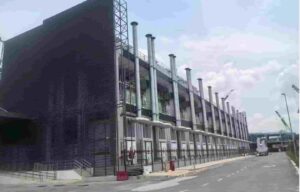
Key attributes of container data centres:
- Портативность
Due to the standardised dimensions of shipping containers, CDCs can be transported by truck, rail, or ship, enabling temporary or emergency deployment.
- Быстрое развертывание
Pre-fabrication enables them to be operational shortly after delivery, bypassing lengthy construction processes.
- Модульность
Multiple containers can be linked together to increase computing or storage capacity horizontally.
- Energy efficiency
Integrated cooling systems and high-density server racks optimise energy consumption and reduce the total cost of ownership.
- Self-contained infrastructure
Each container includes power, cooling, and IT equipment, rendering it independent of external facilities.
These features make CDCs ideal for industries requiring rapid deployment, such as cloud providers, government facilities, and disaster recovery operations.
Advantages of Container Data Centers
Speed of deployment
Traditional data centres often require extensive site preparation, construction, and equipment installation, taking 12–24 months to become operational. Conversely, CDCs can be fully assembled, tested, and shipped in as little as 6–12 weeks. This speed is essential for companies requiring an immediate expansion of their computing resources, such as cloud providers dealing with sudden surges in demand, or research institutions conducting high-performance computing (HPC) projects.
Case study:
A cloud services provider in Asia deployed a 40-foot CDC unit within eight weeks, achieving full operational capacity three months earlier than would have been possible with a conventional data centre expansion (Zhang, 2020).
Flexibility and scalability
Containerised solutions are inherently modular. Organisations can start with a small deployment and gradually add additional containers as demand grows. This approach allows precise alignment with actual computing needs, avoiding over-provisioning and reducing capital expenditure.
Характеристика | Traditional Data Center | Container Data Center |
Deployment Time | 12–24 months | 6–12 weeks |
| Масштабируемость | Vertical (limited) | Horizontal (modular) |
| Transportability | Исправлено | Mobile |
| Энергоэффективность | Standard | Optimized with integrated cooling |
By linking multiple containers, operators can scale computing, storage, and networking capabilities independently. This horizontal scalability also enables geographic dispersion, whereby resources are distributed closer to end users, thereby reducing latency.
Energy efficiency
CDCs are designed for optimised energy performance. Advanced cooling technologies, such as in-row or liquid cooling, reduce heat density and lower power usage effectiveness (PUE). Energy monitoring systems within each container provide real-time insights, enabling operators to adjust power and cooling dynamically.
Patterson et al. (2019) reported that container data centres could achieve PUE values as low as 1.2, compared to typical values of 1.6–2.0 in traditional facilities. This improvement translates into significant operational cost savings over the data centre’s lifecycle.
Reduced footprint
Container data centres offer a compact solution without sacrificing computing capacity. A single 40-foot container can house hundreds of high-performance servers, making it ideal for urban areas or sites with limited space.
Технические характеристики | Single 40-ft Container |
Server Density | 200–400 servers |
Охлаждение | Precision air conditioning or liquid cooling |
| Power | 100–200 kW |
| Deployment Area | ~300–400 sq. ft |
This compact design enables organisations to deploy high-capacity computing resources without requiring large-scale construction or land acquisition.
Enhanced security
Container data centres incorporate multiple layers of physical and digital security. Physical security features include reinforced steel walls, tamper-proof locks, and integrated surveillance cameras. Access control systems ensure that only authorised personnel can enter the facility. Environmental sensors monitor for fire, water leakage, or temperature anomalies, ensuring the early detection of potential threats.
In terms of cybersecurity, CDCs integrate firewalls, intrusion detection systems (IDS), and encrypted networking. As containers are self-contained, external connections are limited and easier to monitor, which reduces the attack surface compared to traditional data centres.
Security Feature | Traditional Data Center | Container Data Center |
Physical Access | Controlled by building security | Reinforced container + access control |
Surveillance | CCTV cameras throughout the facility | Cameras inside and outside the container |
| Мониторинг окружающей среды | Ограниченная | Integrated real-time sensors |
| Cybersecurity | Standard | Pre-configured firewalls, encrypted networking |
CDCs provide a secure, resilient environment suitable for sensitive applications, including financial transactions, healthcare data, and government operations, by combining physical and digital measures.
Disaster recovery and reliability
Containerised data centres are ideal for disaster recovery scenarios due to their portability and self-contained design. Organisations can deploy CDCs in multiple geographic locations to enable data redundancy and continuity in the event of natural disasters or site failures.
Their self-contained nature allows for rapid redeployment. In the event of a disaster at one site, a prefabricated container can be shipped to the affected area and integrated into operations, thereby minimising downtime.
Example:
After a flood impacted a regional data centre in Southeast Asia, a cloud provider deployed container units from a neighbouring location within 72 hours, restoring critical services with minimal data loss (Zhang, 2020).
Operational and management convenience
CDCs simplify operations and reduce administrative overheads. Many units come with integrated management platforms for monitoring power, cooling, and IT equipment. Operators can manage multiple containers from a central dashboard and monitor system health, energy usage, and workload distribution in real time.
Automation extends to predictive maintenance. Sensors can detect anomalies, such as rising temperatures or unusual power consumption, allowing pre-emptive action to be taken before equipment fails. This reduces downtime and maintenance costs while improving service reliability.
Technical Architecture of Container Data Centers
Container data centres integrate power, cooling, IT equipment, and network infrastructure into a single, modular unit. Understanding their architecture is essential for organisations planning deployment.
Rack layout and server configuration
Most container data centres (CDCs) utilise high-density rack designs to maximise computational resources within the limited container space. Standard 19-inch racks house servers stacked in multiple units, as well as storage arrays and networking switches.
The racks are organised to optimise airflow, reduce heat accumulation, and facilitate maintenance access. Cold aisle/hot aisle containment is commonly employed.
Cold Aisle: Air-conditioned intake directed towards server fronts
Hot aisle: Warm air is exhausted from the rear of the servers, collected and expelled by cooling units.
This arrangement reduces cooling requirements and improves energy efficiency.
Rack Specification | Подробности |
Rack Height | 42U – 48U |
Servers per Rack | 20–40 units |
| Storage | SAN/NAS integration within racks |
| Networking | Top-of-rack switches for high-speed connectivity |
Power infrastructure
CDCs are equipped with robust power solutions, including uninterruptible power supplies (UPS), power distribution units (PDUs), and, in some cases, on-board generators.
UPS: Provides backup power in the event of utility failure
PDUs: Distribute electricity efficiently to all devices within the container.
Redundancy: Dual power feeds and N+1 configurations ensure continuous operation.
High-efficiency power systems minimise energy loss and ensure consistent voltage and current delivery to high-density computing equipment.
Системы охлаждения
Effective thermal management is crucial in confined spaces. CDCs employ several cooling techniques:
Precision air conditioning: Air handlers maintain consistent temperatures and humidity levels within the container.
Liquid cooling: This involves the direct cooling of servers or the use of cold plates for high-density racks.
Heat reuse: Some CDCs redirect exhaust heat for secondary applications, thus enhancing energy utilisation.
Networking and connectivity
Container data centres include networking infrastructure for internal and external connectivity. High-speed switches, fibre optic cables, and routers ensure seamless integration with enterprise networks or cloud platforms. Containers can be interconnected to form a distributed data centre with scalable networking capacity.
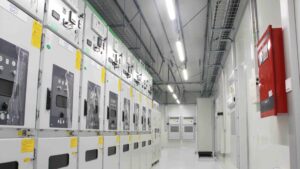
Modular Design and Deployment Case Studies
Horizontal scaling
One of the most notable advantages of CDCs is their horizontal scalability. Organisations can add container units as demand increases, forming a modular cluster.
Example deployment:
A global cloud provider in Europe deployed ten container units in parallel, each containing 200 servers. Over three years, the provider added a further five units to meet increasing demand. This modular approach avoided the need to construct an entirely new building, thereby reducing both capital and operational expenditure.
Edge computing applications
CDCs are increasingly utilised for edge computing, where computational resources are deployed closer to end users to reduce latency. In urban areas, for example, container units can be installed on rooftops or in car parks to support AI-driven applications, IoT devices, and autonomous systems.
Приложение | Use Case |
Edge Computing | Low-latency processing near users |
Temporary Events | Concerts, exhibitions, and temporary IT infrastructure |
| Disaster Recovery | Rapid redeployment after site failures |
| Cloud Expansion | Modular capacity increase without construction |
Supplier and vendor overview
Several suppliers specialise in manufacturing and deploying container data centres. Leading providers include:
CIMC TLC: Offers scalable CDC solutions with integrated cooling and power systems. They are known for their rapid deployment and energy-efficient designs.
RYC: Focuses on high-density modular units that are suitable for cloud service providers and enterprises with large-scale HPC requirements.
XLC: Provides container solutions with advanced monitoring and management platforms, including IoT-based predictive maintenance.
By selecting a trusted vendor, organisations can ensure quality and compliance with international standards, as well as full integration with their existing IT infrastructure.
Deployment Strategies
Container data centres (CDCs) offer remarkable deployment flexibility, which is one of their most valuable features. Organisations can select from a variety of strategies based on operational requirements, geographical limitations, and business objectives. Understanding these strategies is crucial for maximising ROI and ensuring seamless integration with existing IT environments.
Standalone deployment
A standalone CDC is deployed independently where additional data capacity is required. These units are often used for:
- Temporary demand surges
- Remote office operations
- Sites with limited physical infrastructure
Example:
A financial services company in Southeast Asia required extra computing resources during a regulatory reporting period. Deploying a standalone CDC provided 150 additional servers within a 20-foot container in less than two weeks, thus avoiding lengthy construction delays.
Clustered deployment
Clusters involve deploying multiple container units together to form a modular data centre complex. Clustering enhances:
- Redundancy
- Load balancing
Energy efficiency through centralised cooling and power management
Cluster Deployment Configuration Example
Cluster Size | Number of Containers | Total Servers | Power Requirement | Система охлаждения |
Small | 3 | 600 | 150 kW | Precision AC |
| Средний | 6 | 1,200 | 300 kW | Liquid Cooling |
| Large | 12 | 2,400 | 600 kW | Hybrid Cooling |
Clusters are ideal for enterprises that require scalable infrastructure but do not want to commit to large-scale construction projects.
Edge deployment
Edge computing requires data to be processed closer to end users to reduce latency. CDCs are perfectly suited to this purpose, as they can be deployed near urban centres or industrial hubs, support IoT devices, AI inference, and real-time analytics, and can operate independently or integrate into larger cloud architectures.
Example:
In a smart city initiative, eight container units were deployed at strategic locations across the metropolitan area to process traffic data and environmental sensor readings. Latency was reduced by 40%, improving real-time decision-making.
Temporary or event-based deployment
CDCs are ideal for events or temporary infrastructure needs:
- Music festivals, exhibitions, and sporting events
- Temporary research facilities in remote locations
- Rapid deployment for emergency services
Their portability enables organisations to set up data infrastructure for short-term projects and retrieve the containers afterwards for reuse.
Integration with Existing IT Infrastructure
Seamless integration is essential for the effective use of CDCs. Organisations must plan how container units will interface with their current IT systems, storage solutions, and networking architectures.
Networking integration
High-speed connectivity is essential. CDCs typically include:
- Fibre-optic uplinks for core network integration;
- Top-of-rack switches for internal server connection;
- Redundant routing for failover.
Integration ensures that container units operate as part of a cohesive network rather than as isolated silos. Network monitoring tools allow IT teams to manage connectivity, track bandwidth usage, and monitor latency.
Storage and database integration
CDCs can be configured with internal storage arrays or connected to existing SAN/NAS systems. Data replication across containers ensures high availability and disaster recovery readiness.
Storage Integration Example
Storage Type | Location | Вместимость | Data Redundancy | Backup Method |
SAN | Container Rack | 500 TB | RAID 6 | Daily Snapshot |
| NAS | Внешний | 2 PB | Geo-Replication | Continuous Backup |
| Cloud | Hybrid | Elastic | Multi-Region | Automated Sync |
Software and Virtualization
Modern CDCs support software-defined infrastructure. Key components include:
- Hypervisors for virtual machine deployment
- Container orchestration platforms (e.g., Kubernetes)
- Automation tools for workload balancing and resource optimization
This flexibility allows organizations to deploy cloud-native applications within containers while maintaining compatibility with legacy systems.
Maintenance and Lifecycle Management
Despite their compact design, CDCs require careful operational management to ensure longevity, efficiency, and reliability.
Routine maintenance
Routine maintenance includes:
- Monitoring and replacing server components
- Inspecting and servicing cooling units
- Checking power and UPS systems
Integrated sensors allow predictive maintenance. For instance, temperature sensors can detect hotspots, enabling technicians to prevent thermal damage.
Lifecycle management
CDCs have a defined lifecycle of typically 10–15 years, depending on usage and environmental conditions. Proper lifecycle management includes:
- Periodic upgrades of IT hardware
- Replacement of ageing power and cooling components
- Migration of workloads to newer containers when required
Vendor partnerships are critical for lifecycle management. Suppliers such as CIMC, TLC, RYC, and XLC provide extended support services, including software updates, hardware replacement, and monitoring tools.
Energy and environmental management
CDCs often incorporate energy-efficient components:
- High-efficiency fans
- Precision air conditioners
- Variable-speed pumps for liquid cooling
- Heat recovery systems
Energy monitoring dashboards allow operators to track power usage effectiveness (PUE) and optimise energy consumption.
FAQ Module: Container Data Center
Q1: How quickly can a container data center be deployed?
A1: Deployment can range from 2–6 weeks, depending on configuration and shipping logistics. Pre-configured units reduce setup time (Zhang, 2020).
Q2: Can container data centers operate in extreme climates?
A2: Yes, CDCs are designed with thermal insulation, precision cooling, and environmental sensors to maintain stable operations in hot, cold, or humid conditions.
Q3: Are container data centers secure?
A3: CDCs integrate multiple security layers, including reinforced walls, access control, CCTV, and encrypted networking. They are ideal for sensitive applications.
Q4: How scalable are container data centers?
A4: Extremely scalable. Additional containers can be added to clusters, and units can be relocated or repurposed based on demand.
Q5: Can container data centers support edge computing?
A5: Yes, CDCs are frequently used for edge applications, providing localized computing near end-users to reduce latency for IoT and AI workloads.
Q6: What are the maintenance requirements for container data centers?
A6: Maintenance involves monitoring IT hardware, cooling systems, power infrastructure, and environmental sensors. Predictive maintenance is facilitated through integrated IoT monitoring systems.
Заключение
Container data centres are transforming IT infrastructure deployment thanks to their modularity, scalability, and rapid deployment capabilities. They are particularly suited to:
- Enterprises with fluctuating computational needs
- Edge computing applications
- Disaster recovery and remote operations
- Sustainable and energy-efficient infrastructure solutions
Leading vendors such as CIMC, TLC, RYC, and XLC provide advanced CDC solutions that integrate IT, power, and cooling into a single transportable unit. Leveraging these systems enables organisations to maintain operational continuity, reduce capital expenditure, and enhance flexibility, all while ensuring data security and environmental sustainability.