



 RU
RU  EN
EN 
Quick Answer:
A data centre container is a modular, prefabricated infrastructure unit designed to house servers, networking equipment, cooling systems, and power distribution components within a standardised, containerised structure.
Most modern containerised data centres use ISO shipping container formats, primarily 20-foot and 40-foot high-cube containers, because they offer portability, rapid deployment, scalability, and structural durability.
According to reports from the Uptime Institute, ASHRAE, and Schneider Electric’s research into modular data centres, these solutions are being adopted more and more for edge computing, AI infrastructure, telecoms expansion, disaster recovery, and high-density cloud applications due to their flexibility and shorter deployment times.
Introduction: Why Containerized Data Centers Are Transforming Modern IT Infrastructure
The global digital economy is expanding at an unprecedented pace. Artificial intelligence, cloud computing, edge computing, 5G deployment, big data analytics, and Internet of Things (IoT) technologies are dramatically increasing the demand for scalable and efficient data centre infrastructure. While traditional brick-and-mortar data centres remain dominant in many markets, they often require significant capital investment, lengthy construction timelines, and large physical footprints.
One of the most important innovations in modern IT infrastructure design to solve these challenges is the containerized data center.
A data centre container is essentially a self-contained, modular data centre built inside a standardised shipping container or a specially engineered, modular enclosure. These units integrate critical systems such as:
server racks, cooling systems, UPS systems, fire suppression systems, network infrastructure, power distribution, environmental monitoring, and security systems. The result is a highly portable, scalable, and rapidly deployable computing environment capable of supporting diverse applications across industries.
Containerised data centres are now widely used in:
- Cloud computing facilities
- Edge computing networks
- Телекоммуникации
- Военные операции
- Disaster recovery deployments
- Mining operations
- Oil and gas sites
- Smart cities
- AI computing clusters
- Remote industrial facilities
This article explores the different types of containers used in data centres, explains their structural designs, examines cooling and power systems, compares modular architectures, discusses market trends, and analyzes how suppliers such as CIMC TLC, RYC, and XLC contribute to the growing containerised data centre ecosystem.
What Is a Data Center Container?
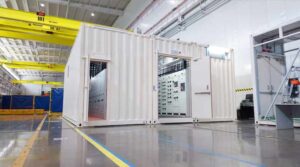
A data centre container is a prefabricated, modular unit designed to function as a complete or partial data centre environment within a transportable enclosure.
Unlike conventional buildings, containerised data centres are assembled and integrated in a factory before deployment. This modular approach significantly reduces construction time and simplifies installation.
The container may include:
- IT racks
- Cooling equipment
- Backup batteries
- PDUs
- Cabling systems
- Monitoring sensors
- Системы пожаротушения
- Access control systems
Many units are delivered almost fully operational, requiring only external power and network connectivity at the deployment site.
The core advantage of this design is the combination of mobility and scalability.
What Type of Container Is Commonly Used in a Data Center?
The most common container types used in modern data centers are based on ISO shipping container standards.
Main Data Center Container Types
Тип контейнера | Typical Size | Common Usage |
20ft ISO Container | Compact deployment | Edge computing, telecom |
40ft ISO Container | Large-scale IT capacity | Cloud infrastructure |
| Высокий кубовый контейнер | Extra height for airflow | High-density computing |
| Custom Modular Container | Specialized configurations | AI, military, HPC |
| Skid-Mounted Modular Units | Rapid industrial deployment | Remote operations |
Among these, 40-foot high-cube containers are particularly popular because they provide sufficient internal space for high-density server installations and cooling infrastructure.
Why ISO Shipping Containers Are Used for Data Centers?
ISO shipping containers offer several structural and logistical benefits for modular data centres.
Standardised dimensions
ISO containers follow globally recognised dimensional standards, which simplifies:
- Транспорт
- Stacking
- Развертывание
- Intermodal logistics
This standardisation allows data centre containers to move efficiently via:
- Ships
- Trucks
- Rail systems
Without requiring a redesign of the transport.
Structural durability
Shipping containers are engineered for extreme transportation environments.
They offer strong resistance against:
- Wind loads
- Corrosion
- Heavy stacking pressure
- Physical impact
- Harsh weather conditions
This makes them highly suitable for outdoor IT deployments in challenging environments.
Портативность
One of the biggest advantages of data centre containers is their mobility.
Organisations can rapidly deploy computing infrastructure in the following locations:
- Disaster zones
- Construction projects
- Remote industrial sites
- Военные операции
- Temporary events
- Emerging telecom regions
Portability significantly reduces infrastructure deployment limitations.
Main Structural Components of a Data Center Container
Containerized data centers contain far more than simply server racks.
Core Infrastructure Components
Component | Функция |
IT Rack Systems | Houses servers and networking devices |
Cooling Systems | Controls thermal conditions |
Системы бесперебойного питания | Backup power protection |
PDU Units | Power distribution management |
| Пожаротушение | Protects equipment from fire |
| Мониторинг окружающей среды | Tracks temperature and humidity |
| Security Systems | Access control and surveillance |
| Network Cabling | Data communication infrastructure |
Each subsystem must operate together seamlessly to maintain stable IT performance.
20ft vs 40ft Data Center Containers
The two most common container sizes are the 20-foot and 40-foot units.
20-foot data centre container
These containers are ideal for compact deployments and edge computing applications.
Преимущества:
- Smaller footprint
- Easier transportation
- Faster deployment
- Lower energy demand
Common applications:
- Telecom edge nodes
- Rural connectivity
- Small enterprise deployments
- Mobile military operations
40ft Data Centre Container
40-foot containers support larger IT capacities and higher rack densities.
Преимущества:
- Smaller footprint
- Easier transportation
- Faster deployment
- Lower energy demand
Common applications:
- Telecom edge nodes
- Rural connectivity
- Small enterprise deployments
- Mobile military operations
40 ft containers support larger IT capacities and higher rack densities.
Преимущества:
- More server capacity
- Better airflow optimisation
- Larger cooling systems
- Higher scalability
Common applications:
- Cloud computing
- AI clusters
- Enterprise infrastructure
- Large-scale telecom deployments
40ft high-cube containers dominate many modern hyperscale modular deployments.
High Cube Containers in Data Centers
High cube containers offer more internal height than standard containers.
This extra vertical space improves the following:
- Airflow management
- Cable routing
- Rack integration
- Cooling efficiency
For high-density computing environments, such as AI training clusters, optimising airflow is especially important.
As server power densities are increasing rapidly, high cube designs are becoming increasingly common.
Cooling Systems Used in Data Center Containers
Cooling is one of the most critical aspects of containerized data center design.
Servers generate substantial heat during operation. Without efficient cooling systems, overheating could damage hardware and reduce performance reliability.
Common Cooling Technologies
Система охлаждения | Приложение |
Precision Air Conditioning | Standard deployments |
In-Row Cooling | High-density racks |
| Liquid Cooling | AI and HPC workloads |
| Rear Door Heat Exchangers | Dense computing environments |
| Free Cooling Systems | Energy-efficient climates |
Thermal management directly affects:
- Power efficiency
- Equipment lifespan
- Uptime reliability
- Operational cost
Liquid Cooling and AI Data Center Containers
Artificial intelligence workloads are dramatically changing the requirements of data centre infrastructure.
AI GPUs consume enormous amounts of power and generate a lot of heat.
Traditional air cooling often struggles with the following:
- High rack densities
- Extreme thermal loads
- Power-intensive AI clusters
As a result, liquid cooling technologies are becoming increasingly important in advanced data centre containers.
Liquid cooling provides:
- Better thermal transfer
- Higher energy efficiency
- Greater rack density support
- Reduced cooling energy costs
AI-ready modular containers are one of the fastest-growing infrastructure segments globally.
Power Systems in Containerized Data Centers
A reliable power infrastructure is essential for the operation of a data centre.
Containerised data centres typically integrate the following:
- UPS systems
- Battery backup
- Блоки распределения питания
- Redundant power feeds
- Generator integration
Power redundancy levels
Redundancy Type | Надежность |
N | Basic redundancy |
N+1 | One backup component |
| 2N | Fully duplicated infrastructure |
| 2N+1 | Enterprise-grade redundancy |
Higher redundancy improves uptime reliability but increases infrastructure cost.
Fire Protection in Data Center Containers
Fire suppression systems are essential because IT equipment is highly sensitive.
Modern data centre containers commonly use:
- Clean agent suppression systems
- Inert gas systems
- Early smoke detection
- Thermal monitoring
- Zoned suppression systems
Water-based systems are generally avoided because they may damage electronics.
Edge Computing and Containerized Data Centers
Edge computing is one of the biggest drivers of modular data centre growth.
Traditional centralised cloud infrastructure cannot always deliver the ultra-low latency required for the following:
- Autonomous vehicles
- Smart factories
- Real-time AI
- 5G applications
- LoT processing
Containerised edge data centres solve this problem by placing computing resources closer to end users.
The benefits of edge computing include faster deployment, localised processing, reduced latency, improved scalability, and flexible expansion. As edge computing expands globally, the demand for compact modular data centre containers continues to rise rapidly.
Modular Data Centers vs Traditional Data Centers
Comparison Table
Характеристика | Containerized Data Center | Traditional Data Center |
Deployment Speed | Fast | Slow |
Масштабируемость | Модульные | Complex |
Портативность | Высокий | Нет |
| Initial Cost | Lower | Higher |
| Время строительства | Weeks or months | Years |
| Мобильность | Transportable | Фиксированное местоположение |
| Гибкость расширения | Превосходно | Ограниченная |
Containerized infrastructure offers major advantages for rapidly changing digital environments.
Security Features in Data Center Containers
Physical and cyber security are equally important.
Modern containerised data centres may include:
- Biometric access systems
- Video surveillance
- Remote monitoring
- Intrusion detection
- Smart locks
- Cybersecurity integration
Because many deployments occur in remote locations, robust security systems are essential.
Sustainability Trends in Data Center Containers
The importance of sustainability in global data centre development is growing.
Containerised solutions support sustainability goals by:
- Reduced construction waste
- Higher energy efficiency
- Modular scalability
- Reduced land usage
- Renewable energy integration
Many modern containerised facilities now incorporate:
- Solar energy systems
- Battery energy storage
- AI-driven cooling optimisation
- Waste heat recovery
Green data centre initiatives are accelerating globally due to environmental regulations and ESG commitments.
Smart Monitoring and AI Integration
The infrastructure management systems used in modern data centre containers are increasingly AI-powered.
These systems monitor the following:
- Температура
- Humidity
- Energy usage
- Cooling performance
- Hardware health
- Security status
Predictive analytics help to reduce downtime and improve operational efficiency.
Smart infrastructure management is becoming the norm for advanced modular deployments.
Industries Using Data Center Containers
Containerized data centers now support a wide range of industries.
Main Industry Applications
Промышленность | Use Case |
Телекоммуникации | Edge computing and 5G |
Oil and Gas | Remote industrial computing |
Горная промышленность | Harsh-environment IT support |
Военные | Mobile secure infrastructure |
| Healthcare | Emergency medical data systems |
| Finance | Backup disaster recovery |
| Производство | Smart factory infrastructure |
| Cloud Providers | Scalable modular expansion |
Their flexibility makes them suitable for both permanent and temporary deployments.
Challenges of Containerized Data Centers
Despite their advantages, modular data centres also have certain limitations.
Cooling constraints
High-density computing may require advanced thermal engineering.
Space limitations: container dimensions inherently restrict internal layout flexibility.
Transport complexity: heavy, fully integrated modules may require specialised logistics planning.
Noise considerations: cooling equipment and generators may create operational noise concerns.
Соблюдение нормативных требований
Deployments must comply with:
- Local electrical standards
- Fire regulations
- Environmental requirements
- Telecommunications regulations
- Proper planning is therefore essential.
Role of Suppliers Such as CIMC TLC, RYC, and XLC
As the modular infrastructure industry grows, the role of specialised suppliers is becoming increasingly important.
Companies such as CIMC TLC, RYC, and XLC manufacture containerised infrastructure and provide modular engineering solutions for sectors including data centres, telecommunications infrastructure, and industrial computing deployments.
Modern buyers increasingly prioritise suppliers capable of delivering:
- High structural reliability;
- Advanced thermal management integration;
- Modular scalability;
- International certification compliance;
- Energy-efficient designs;
- Fast global delivery capabilities.
The rapid growth of edge computing and AI infrastructure continues to create strong demand for experienced modular container manufacturers.
Future Trends in Data Center Containers
The future of containerised data centres will likely include the following:
- AI-optimised thermal management
- Direct-to-chip liquid cooling
- Hydrogen-powered backup systems
- Autonomous infrastructure monitoring
- Fully prefabricated hyperscale modules
- Carbon-neutral modular data centres
As AI workloads grow and edge computing expands globally, containerised infrastructure will play an increasingly important role in digital transformation strategies.
FAQ: Data Center Container Questions People Commonly Ask
- Какой тип контейнера используется в центре обработки данных?
Most data center containers use standardized ISO shipping containers, especially 20ft and 40ft high-cube containers designed for modular IT infrastructure deployment.
- Why are shipping containers used for data centers?
Shipping containers provide structural durability, portability, standardized dimensions, rapid deployment capability, and modular scalability.
- What is inside a data center container?
A data center container may include servers, cooling systems, UPS units, PDUs, fire suppression systems, network equipment, and environmental monitoring systems.
- Are containerized data centers efficient?
Yes. Modern modular data centers can achieve high energy efficiency through optimized cooling, scalable infrastructure, and smart monitoring technologies.
- What industries use containerized data centers?
Industries including telecommunications, cloud computing, oil and gas, mining, healthcare, military, manufacturing, and finance use modular data center containers.
- What is the difference between a modular and traditional data center?
Modular data centers are prefabricated, portable, and rapidly deployable, while traditional data centers are permanent buildings requiring longer construction timelines.
Заключение
Data centre containers have become one of the most important innovations in modern digital infrastructure. By combining standardised container engineering with advanced IT systems, modular data centres can provide scalable, portable, and rapidly deployable computing environments that are capable of supporting cloud computing, artificial intelligence (AI), edge computing, telecommunications, and industrial digitalisation.
The most commonly used container types are ISO-standard 20-foot and 40-foot high-cube shipping containers, chosen for their structural durability, transportation efficiency, and modular flexibility. They integrate sophisticated cooling systems, power infrastructure, fire protection, security systems, and intelligent monitoring technologies to create highly reliable IT environments.
As the pace of global digital transformation accelerates, containerised data centres are becoming increasingly favoured for applications requiring speed, scalability, energy efficiency, and geographic flexibility. Companies such as CIMC TLC, RYC, and XLC form part of the broader ecosystem that supports the development of modular infrastructure for next-generation computing environments.
With future trends including AI-driven management, liquid cooling, renewable energy integration, and carbon-neutral modular facilities, it is expected that containerised data centres will play an even larger role in the future of global digital infrastructure.