



 RU
RU  EN
EN 
Quick Answer
. контейнер для хранения энергии, sometimes informally referred to as an ‘energetic container’, is a modular containerised energy storage system designed to store electrical power using integrated battery technologies, thermal management systems, power conversion equipment, and intelligent control platforms.
Grid modernisation research and energy infrastructure studies indicate that containerised storage systems are one of the fastest-growing solutions for renewable energy integration, as they offer scalable deployment, rapid installation, flexible transportation, and high operational efficiency for modern power networks.
Reports from global energy agencies and industrial battery studies also suggest that energy storage containers are now widely used in solar farms, wind power projects, industrial microgrids, electric vehicle (EV) charging infrastructure, and utility-scale backup systems.
Understanding the Meaning of an Energy Storage Container
The term ‘energetic container’ is not an official technical phrase in the energy industry, but it is increasingly used informally to describe what professionals formally refer to as an energy storage container or containerised battery energy storage system. In modern power engineering, an energy storage container is a highly integrated, modular unit housing batteries, cooling systems, safety systems, inverters, and intelligent energy management technologies in standardised, shipping-container-style enclosures.
These systems are designed to store electricity generated from renewable sources, such as solar and wind, and to discharge that power when demand for energy rises or renewable production decreases. The worldwide rise in renewable energy has dramatically accelerated the deployment of containerised energy storage systems, as modern electrical grids require stable, flexible, and scalable energy balancing solutions.
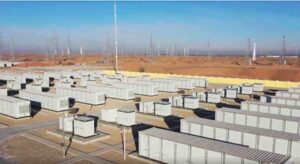
Unlike traditional stationary infrastructure, which requires extensive civil engineering construction, containerised energy systems are modular and transportable. This means they can be manufactured in a factory, shipped globally using standard logistics infrastructure, and deployed rapidly at project sites with relatively short installation timelines.
The growing adoption of renewable energy has fundamentally changed how electricity grids operate. Traditional grids were designed around predictable, fossil fuel-based power generation; however, renewable sources introduce variability due to the continuous fluctuation of sunlight intensity and wind speed. Energy storage containers solve this problem by storing excess energy during periods of high generation and releasing it during peak demand or when there is a shortage of renewable energy.
Industrial suppliers such as CIMC TLC, RYC, and XLC increasingly provide advanced containerized storage systems for utility-scale renewable projects, industrial facilities, commercial energy management platforms, telecom infrastructure, and smart grid applications.
What Is Inside an Energy Storage Container?
An energy storage container is much more than just a battery box. It is a sophisticated, integrated infrastructure platform that combines electrical engineering, thermal management, digital control systems, and industrial safety architecture within a compact, modular enclosure.
Modern systems are usually designed to fit within the dimensions of standard 20-foot or 40-foot ISO shipping containers. These enclosures are designed to withstand the stresses of transportation, exposure to the outdoor environment, thermal fluctuations, vibration, and demanding industrial operating conditions.
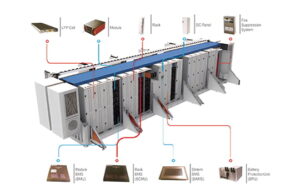
The internal structure of a modern Energy Storage Container usually includes the following components:
Component | Функция | Важность |
Battery Cells | Store electrical energy | Core energy medium |
Battery Racks | Organize battery modules | Structural management |
Battery Management System (BMS) | Monitors battery safety and performance | Prevents system failure |
| PCS/Inverter | Converts DC electricity to AC | Grid compatibility |
| EMS Platform | Controls charging and discharging | Energy optimization |
| Система охлаждения | Maintains thermal stability | Prevents overheating |
| Fire Suppression System | Handles emergency thermal events | Operational safety |
| Monitoring Sensors | Track voltage, temperature, and humidity | Predictive maintenance |
| Container Enclosure | Protects equipment | Weather and transport resistance |
The battery technologies used in energy storage containers vary depending on the application requirements. The most common chemistry today is lithium-ion, thanks to its high energy density, fast response capability, and commercial maturity. However, sodium-ion, flow battery, and hybrid chemistries are increasingly being explored for long-duration storage projects in the future.
One reason containerised systems have become so popular is standardisation. Modular containers can be manufactured in an energy container factory under controlled production conditions, tested before shipment, transported globally using standard shipping infrastructure, and quickly integrated at the deployment site.
This dramatically reduces project complexity compared with traditional on-site custom-built energy infrastructure.
How Energy Storage Containers Work?
The operational principle of an energy storage container is relatively straightforward, but the execution is highly sophisticated.
The system stores electricity when energy production exceeds demand, releasing it when demand exceeds generation. This balancing function helps to stabilise modern electrical grids and improve the utilisation of renewable energy.
The operational workflow generally follows these stages:
- Renewable generation or grid power charges the batteries.
- The battery systems then store this energy chemically.
- Intelligent software continuously monitors system conditions.
- The Energy Management System then determines the optimal charge/discharge timing.
- Inverters then convert the DC battery power into grid-compatible AC electricity.
- Stored power is discharged as required.
The key advantage of containerised systems is their rapid response capability. Battery-based storage can respond to grid fluctuations in milliseconds, making energy storage containers highly effective for:
- Frequency regulation
- Peak shaving
- Renewable smoothing
- Emergency backup power
- Load balancing
- Demand response
- Microgrid stabilisation
Unlike large-scale mechanical storage technologies, such as pumped hydroelectric storage, energy storage containers offer much greater deployment flexibility because they are not heavily dependent on geographical conditions.
Modern intelligent systems increasingly integrate:
- AI-assisted energy optimisation
- Predictive maintenance analytics
- Cloud-based monitoring
- Digital twin modelling
- Real-time thermal diagnostics
- Smart dispatch algorithms
These technologies improve operational efficiency while reducing maintenance risk.
Why Energy Storage Containers Are Becoming Essential for Renewable Energy?
The global transition to renewable energy is one of the main reasons for the rapid growth of containerised energy storage systems.
Solar and wind generation are inherently intermittent. Solar panels only generate electricity during daylight hours, and wind turbines depend on variable weather conditions. Without storage infrastructure, renewable energy production can become unstable and inefficient.
Energy storage containers solve this problem by acting as flexible energy buffers.
Main Benefits of Energy Storage Containers
Benefit | Impact on Energy Systems |
Интеграция возобновляемых источников энергии | Improves solar and wind utilization |
Стабильность сети | Balances power fluctuations |
Peak Demand Reduction | Reduces grid stress |
| Backup Power | Supports energy reliability |
| Fast Deployment | Accelerates infrastructure projects |
| Modular Expansion | Simplifies future scaling |
| Smart Grid Compatibility | Supports digital energy systems |
The flexibility of containerised systems makes them attractive to commercial and industrial facilities seeking energy independence and reduced electricity costs.
Many companies are currently searching for terms such as ‘buy energy container’, ‘energy container factory’, ‘modular ESS systems’, ‘utility-scale battery storage,’, and ‘containerised BESS solutions’, reflecting the growing market demand for standardised, rapidly deployable storage infrastructure.
Suppliers such as CIMC TLC, RYC, and XLC are continuing to expand their energy storage container product lines in order to support utility-scale renewable projects, industrial parks, telecoms infrastructure, and EV charging networks worldwide.
Energy Storage Container Applications Across Industries
Energy storage containers are now used across a wide range of industries and infrastructure sectors.
- Utility-scale renewable projects:
Large solar and wind farms are increasingly integrating battery containers to stabilise generation output and improve grid dispatch flexibility.
- Industrial manufacturing
Factories use containerised storage systems to reduce peak electricity costs and improve backup power resilience.
- Commercial buildings
Shopping centres, office complexes, and logistics facilities use energy storage systems (ESS) for demand management and energy optimisation.
- EV Charging Infrastructure
Fast-charging networks are increasingly relying on energy storage containers to manage charging load spikes.
- Data centres
Modern data centres require uninterrupted power and are increasingly integrating battery storage infrastructure.
- Telecom infrastructure
Remote telecom towers use containerised energy systems combined with solar generation for off-grid operation.
- Microgrids and remote areas
Island grids, mining operations, and remote communities use modular storage systems to improve local energy reliability.
The modular design of containerised systems makes them highly adaptable to both developed and emerging energy markets.
Key Engineering Considerations for Energy Storage Containers
Designing a high-performance energy storage container requires the simultaneous balancing of multiple engineering priorities.
Thermal management is crucial because battery systems are highly temperature sensitive. Excessive heat accelerates degradation and increases safety risks.
Modern systems therefore use:
- Liquid cooling
- Air cooling
- Intelligent thermal monitoring
- Zoned ventilation systems
- Fire protection
Thermal runaway remains one of the most important safety concerns in lithium-ion storage systems.
Advanced containers integrate:
- Aerosol fire suppression
- Gas detection
- Compartmentalised fire isolation
- Emergency ventilation systems
- Structural engineering
Container enclosures must withstand:
- Transportation vibration
- Seismic conditions
- Outdoor weather exposure
- Corrosion
- Dust and humidity
- Digital monitoring
Modern energy storage containers increasingly operate as intelligent digital assets connected to cloud-based monitoring platforms.
These systems enable:
- Remote diagnostics
- Predictive maintenance
- Real-time alarms
- Energy optimisation
- Fleet-level analytics
Manufacturers operating advanced energy container factory facilities are increasingly integrating automated testing and AI-assisted quality inspection into production workflows.
Choosing the Right Energy Storage Container Supplier
As the global ESS market expands rapidly, supplier selection has become increasingly important.
When organizations plan to buy energy container systems, they should evaluate several critical factors:
Evaluation Factor | Почему это важно |
Manufacturing Capability | Ensures scalable production |
Battery Safety Engineering | Reduces operational risk |
Thermal Management Design | Improves battery lifespan |
| Certification Compliance | Supports regulatory approval |
| EMS Software Quality | Optimizes performance |
| After-Sales Service | Long-term operational support |
| Container Structural Quality | Ensures durability |
Leading suppliers such as CIMC, TLC, RYC, and XLC are focusing more and more on integrated ESS container solutions rather than standalone battery products.
This integrated approach simplifies deployment and improves operational consistency.
Modern energy container factory operations now emphasise:
- Automated assembly;
- Smart manufacturing;
- AI-assisted diagnostics;
- Standardized module architecture;
- Export-ready certifications.
These factors help to improve project reliability and shorten deployment timelines.
Future Trends in Energy Storage Containers
The future of energy storage containers is closely tied to the broader evolution of the global energy infrastructure.
Several trends are expected to influence the market over the next decade.
Higher energy density: new battery chemistries could dramatically increase storage capacity within standard container dimensions.
Long-duration energy storage: future ESS systems will increasingly support multi-hour and multi-day energy storage.
AI-driven energy optimisation: artificial intelligence will increasingly manage charging, dispatching, and predictive maintenance.
Hybrid ESS systems: Future containers may integrate batteries with hydrogen, supercapacitors, or thermal storage systems.
Sustainable manufacturing: energy container factory operations are increasingly adopting recyclable materials and lower-carbon manufacturing processes.
Smart grid integration: containerised systems will become central components in decentralised smart energy ecosystems.
With governments continuing to invest heavily in renewable energy infrastructure, containerised energy storage is expected to become one of the most important enabling technologies in the modern power sector.
FAQ About Energy Storage Containers
- What is an Energy Storage Container?
An Energy Storage Container is a modular containerized system that stores electricity using integrated batteries, inverters, cooling systems, and intelligent energy management technologies.
- How does an Energy Storage Container work?
It stores electrical energy during periods of excess generation and releases it later when energy demand increases or renewable output decreases.
- What industries use Energy Storage Containers?
Renewable energy projects, factories, telecom infrastructure, EV charging stations, data centers, microgrids, and commercial buildings all use containerized energy storage systems.
- Why are containerized ESS systems popular?
They offer modular scalability, rapid deployment, standardized transportation, flexible installation, and smart grid compatibility.
- Is an Energy Storage Container the same as BESS?
Most modern Energy Storage Containers are battery-based systems, so they are often classified as Battery Energy Storage Systems (BESS).
- What should companies consider before they buy energy container systems?
Important considerations include safety engineering, thermal management, certification compliance, software systems, manufacturing quality, and supplier reliability.
Заключение
An energy storage container is one of the most important technologies supporting the global transition towards renewable energy, smart grids, and decentralised power infrastructure. These systems combine batteries, power electronics, cooling systems, safety architecture, and intelligent software in modular, containerised platforms to provide scalable and flexible energy storage solutions for modern electrical networks.
The rapid growth of renewable energy generation has dramatically increased demand for containerised energy storage systems (ESS) because stable, dispatchable energy storage is now essential for grid reliability and energy optimisation. Industrial suppliers such as CIMC TLC, RYC, and XLC are advancing containerised energy storage technologies through increasingly sophisticated engineering, safety systems, and smart manufacturing processes.
As more organisations search for reliable partners from whom to purchase energy container systems, or with whom to cooperate in the production of advanced energy container factories, the market for modular energy storage infrastructure is expected to expand rapidly across the utility, industrial, commercial, and transportation sectors worldwide.