


 RU
RU  EN
EN 
Efficiency, adaptability, and dependability are now essential characteristics in the global logistics and transportation sector. Traditional container solutions frequently fail to meet the demands of contemporary operations as supply chains expand across continents and into increasingly remote areas. The Tricon Dry Container appears as a game-changing solution in this situation.
A Tricon Dry Container is more than just a compact shipping container. It is an example of a modular logistics concept intended to close the gap between conventional intermodal containers and the realities of dispersed infrastructure, erratic terrain, and a variety of cargo needs. The Tricon system revolutionizes the transportation, storage, and deployment of goods by integrating small modular units into a single, uniform transport footprint.
Tricon Dry Containers offer flexibility in contrast to traditional containers, which need sophisticated ports or terminals and heavy lifting equipment. They can be integrated into a configuration that works with current intermodal systems, or they can operate independently. They are particularly useful in situations where conventional logistics solutions are ineffective or unfeasible due to their dual nature.
Tricon Dry Containers are becoming more and more well-known as a flexible and forward-thinking transportation option for everything from industrial supply chains and remote construction projects to defense logistics and humanitarian aid.
The Concept Behind the Tricon Dry Container
Understanding the issue that a Tricon Dry Container was intended to address is essential to appreciating its worth.
Large-scale transportation between important ports and logistics hubs is best served by standard shipping containers. However, these containers become challenging to handle once cargo reaches the edge of developed infrastructure. Delivery locations that are dispersed, poor road conditions, and a lack of lifting equipment all lower productivity and raise risk.
By dividing a full-sized container footprint into smaller, more manageable units that can be reassembled when necessary, the Tricon concept tackles these issues. When combined, each unit maintains compatibility with common container handling systems while operating independently.
At its core, the Tricon Dry Container is built around three key principles:
- Modularity that allows containers to be split or combined based on operational needs
- Compatibility with existing intermodal transport systems
- Flexibility for use in environments with limited infrastructure
This design philosophy enables logistics planners to adapt transport configurations dynamically, rather than forcing every shipment to conform to rigid container standards.
Structural Design and Modular Architecture
A Tricon Dry Container’s structural design strikes a careful balance between modularity, strength, and simplicity. Each unit is designed to be both a part of a larger combined system and a fully enclosed dry container.
A standard transport footprint is formed by the precise alignment of several units. Lifting points, locking interfaces, and structural load paths are guaranteed to be consistent with traditional container handling equipment thanks to this alignment. Tricon units can therefore be transported through ports, rail yards, and storage facilities without the need for specialized infrastructure.
Key structural characteristics include:
- Rigid steel framing designed for repeated handling and stacking
- Corrugated wall and door panels that enhance strength while maximizing internal volume
- Reinforced corner fittings that enable a secure connection between units
This architecture allows Tricon Dry Containers to maintain durability and safety whether deployed individually or as part of a combined configuration.
Flexible Loading and Unloading Efficiency
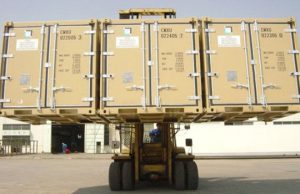
Flexibility in loading and unloading is one of Tricon Dry Containers’ biggest benefits. Cargo must frequently be combined into a single, sizable volume in traditional containers, which can make distribution at the destination more difficult. In contrast, tricon containers make it possible to divide cargo at the source and distribute it effectively at the destination.
Every modular unit can be tracked as a separate cargo space, sealed, and loaded separately. Units can be delivered separately upon arrival, which minimizes the need for cargo reconfiguration and handling time.
Операционные преимущества включают:
- Faster loading and unloading in facilities with limited equipment
- Reduced cargo handling steps, lowering the risk of damage
- Improved adaptability for multi-destination shipments
This flexibility is especially valuable in supply chains that involve multiple delivery points, such as humanitarian aid distribution or military logistics operations.
Applications in Remote and Infrastructure-Limited Environments
In situations where traditional logistics solutions are severely constrained, Tricon Dry Containers are essential. Heavy-lifting cranes, standardized handling facilities, and paved roads are frequently absent from remote areas. The capacity to move smaller container units separately becomes a critical advantage in these situations.
Utility vehicles or light-duty equipment can be used to transport Tricon units when there is little infrastructure. This makes it possible for supplies to get to places that regular containers couldn’t.
Common deployment scenarios include:
- Remote construction sites requiring staged material delivery
- Disaster relief zones where infrastructure has been damaged or destroyed
- Rural or undeveloped regions with limited transport capacity
By enabling logistics operations to adapt to local conditions rather than forcing infrastructure upgrades, Tricon Dry Containers reduces both cost and operational complexity.
Role in Military and Security Logistics
Operational readiness and logistics efficiency are closely related in defense and security applications. Because of their transport flexibility, concealment potential, and modularity, Tricon Dry Containers are especially well-suited for military supply chains.
Smaller modular units can be transported with a lower profile than large containers, which are instantly identifiable and challenging to disguise. This improves discretion and security during delicate operations.
Advantages in military logistics include:
- Easier distribution of supplies across dispersed units
- Reduced dependency on heavy lifting equipment
- Enhanced concealment for non-weapon materials
The ability to separate, recombine, and redeploy containers as operational conditions change makes Tricon systems a valuable asset in both peacetime logistics and active deployment scenarios.
Structural Integrity and Durability
Despite their modular nature, Tricon Dry Containers are engineered to meet stringent durability requirements. Each unit is designed to withstand repeated handling, stacking, and transportation across multiple modes, including road, rail, and sea.
The use of robust steel structures ensures resistance to deformation and impact. Wall and door panels are shaped to enhance load-bearing performance while protecting internal cargo from external forces. Flooring systems are designed to handle concentrated loads, ensuring safe transport of dense or heavy goods.
Durability features typically include:
- Reinforced base frames for long-term structural stability
- High-quality welding techniques to ensure joint integrity
- Protective coatings to resist corrosion and environmental exposure
These characteristics ensure that Tricon Dry Containers maintain performance over extended service life, even in harsh operating environments.
Combination and Separation Mechanisms
A defining feature of the Tricon Dry Container system is the ability to combine and separate individual units efficiently. This is achieved through dedicated connection mechanisms that securely link units together while allowing quick disassembly when required.
The connection system is designed for simplicity and reliability. Operators can align units using standard handling equipment and engage connectors that lock units together firmly. Once connected, the combined container behaves as a single structural entity during lifting and transport.
Operational advantages of this system include:
- Rapid assembly and disassembly without complex tools
- Interchangeable connectors that simplify logistics planning
- Secure locking that maintains structural integrity during transport
This combination capability enables logistics operators to adjust container configurations in response to changing cargo volumes and destination requirements.
Efficiency in Multimodal Transport
Modern supply chains rely on seamless transitions between transport modes. Tricon Dry Containers are designed to integrate smoothly into multimodal logistics systems, ensuring compatibility with ships, trains, and trucks.
When combined into a standard footprint, Tricon units can be handled using conventional container cranes and spreaders. This ensures that they can move through established ports and terminals without disruption. Once inland, units can be separated to suit local transport conditions.
Multimodal benefits include:
- Reduced handling delays at transfer points
- Improved adaptability across transport networks
- Lower overall logistics costs through optimized container usage
This versatility makes Tricon Dry Containers particularly attractive for complex supply chains spanning diverse geographic regions.
Storage and Warehousing Advantages
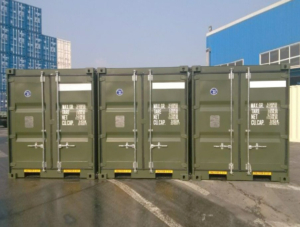
Beyond transportation, Tricon Dry Containers offer significant advantages in storage and warehousing applications. Their modular design allows facilities to optimize space usage by stacking or arranging units based on operational needs.
Individual units can be stored separately or combined into larger storage modules. This flexibility supports inventory management strategies that require segregation of goods, staged distribution, or temporary storage in decentralized locations.
Key storage benefits include:
- Efficient use of limited storage space
- Easy access to individual cargo units
- Scalable storage capacity without permanent infrastructure
For organizations that require temporary or mobile storage solutions, Tricon Dry Containers provide a practical and cost-effective alternative to fixed warehouses.
Security and Cargo Protection
Security is a critical concern in any logistics operation. Tricon Dry Containers are designed to protect cargo from theft, tampering, and environmental damage. Each unit functions as a sealed enclosure, ensuring that goods remain protected throughout the transport cycle.
The modular nature of Tricon containers also enhances security by reducing the need to open and repack cargo at intermediate points. This minimizes exposure and reduces opportunities for unauthorized access.
Security-related advantages include:
- Reduced handling and repacking during transit
- Strong doors and locking systems for individual units
- Enhanced control over cargo access at the destination
These features contribute to safer and more reliable supply chains, particularly for high-value or sensitive goods.
Standardization and Compliance Considerations
Although Tricon Dry Containers introduces a modular approach, they are designed with standardization in mind. When combined, they align with established container handling standards, ensuring compatibility with existing logistics infrastructure.
This standardization simplifies regulatory compliance and operational planning. Logistics operators can integrate Tricon systems into existing workflows without extensive retraining or equipment modification.
Benefits of standard-aligned design include:
- Easier adoption across global supply chains
- Reduced operational friction at ports and terminals
- Compatibility with common handling and securing equipment
By balancing innovation with adherence to industry norms, Tricon Dry Containers achieves both flexibility and practicality.
Economic and Operational Benefits
From an economic perspective, Tricon Dry Containers offer compelling advantages. Their modular design allows logistics operators to optimize container usage, reducing space and improving cargo density. This leads to better asset utilization and lower transportation costs.
Operational efficiencies are also significant. Faster loading and unloading, reduced handling steps, and improved adaptability all contribute to smoother logistics operations.
Key economic benefits include:
- Lower transportation costs through improved efficiency
- Reduced infrastructure investment requirements
- Enhanced return on container assets over time
These advantages make Tricon Dry Containers a strategic investment for organizations seeking long-term logistics optimization.
Sustainability and Environmental Considerations
Sustainability is increasingly central to logistics planning. Tricon Dry Containers contribute to environmental goals by improving transport efficiency and reducing unnecessary handling and infrastructure expansion.
By enabling flexible distribution and reducing reliance on heavy equipment, Tricon systems can lower fuel consumption and emissions in certain transport scenarios. Their durability also supports long service life, reducing the need for frequent replacement.
Environmental benefits include:
- More efficient use of transport capacity
- Reduced waste through long-lasting container design
- Support for decentralized logistics models that minimize transport distances
As supply chains evolve toward sustainability-focused strategies, Tricon Dry Containers align well with these objectives.
Future Outlook for Tricon Dry Containers
Modular logistics solutions are expected to continue to gain importance due to the increasing complexity of global supply chains. In response to this complexity, Tricon Dry Containers offers flexibility without compromising uniformity. The capacity to dynamically configure logistics assets will become a competitive advantage as more industries operate in remote, mobile, or quickly changing environments. Tricon systems are in a good position to satisfy this need.
More than just a container, the Tricon Dry Container is a logistics idea that captures the realities of contemporary supply chain management and transportation. It provides a potent solution for settings where traditional containers are insufficient by fusing compatibility, durability, and modular flexibility. Tricon Dry Containers offers flexibility, security, and operational efficiency, whether supporting operations in remote areas, boosting military logistics, or increasing the effectiveness of commercial supply chains. Solutions like the Tricon system will become more crucial in determining the direction of international transportation as logistics problems continue to change.
CIMC TLC | RYC | XLC is a leading manufacturer of tricon dry container centers and a wide range of standard and customized logistics equipment. With years of industry experience, the company focuses on the design, production, and distribution of high-quality, innovative solutions that meet the specific needs of customers worldwide. Its product portfolio covers refrigerated containers, cold chain systems, containerized equipment integration, modular buildings, and more — all built with precision and creativity.