



 RU
 EN

Краткий ответ: . морской контейнер is a reusable cargo-carrying unit designed for repeated transportation and lifting between ships, shore bases, and fixed or floating offshore installations. Unlike conventional ISO freight containers, they must be designed to withstand offshore lifting conditions and dynamic loads while maintaining structural integrity. They also require lifting arrangements, inspections, and certification, with ISO 10855-1:2024 and DNV-ST-E271 being key technical references.
Что такое оффшорный контейнер?
An offshore container is a specialised transport unit designed for moving equipment, materials and tools in offshore and marine environments. It is not simply the fact that the container is used ‘offshore’ that defines it; rather, its structure and lifting system are designed for repeated handling in open seas, including transfers between supply vessels and fixed or floating installations.
According to ISO 10855-1:2024, offshore containers are portable units intended for the repeated transportation of goods or equipment to, from, or between fixed and floating offshore installations and ships in open seas. This definition distinguishes an offshore container from a conventional storage container or a standard intermodal freight container. The unit must be engineered to withstand the specific loads and handling conditions encountered during offshore lifting.
During a typical operation, an offshore container may be loaded at a coastal supply base, transported by truck to a port, transferred onto an offshore supply vessel, and lifted by crane from the vessel onto a platform, drilling rig, offshore wind installation, or other marine facility. The reverse process may be required when equipment, waste, or maintenance materials are returned to shore. Therefore, the container needs to withstand not only normal cargo transportation, but also repeated crane lifting, suspended loading, vessel movement, environmental exposure and potentially uneven or dynamic loading conditions.
Therefore, an ordinary ISO container should not automatically be considered an offshore container simply because it is sent offshore. The engineering philosophy, lifting points, structural framework, certification, inspection regime, and intended service conditions can all differ substantially.
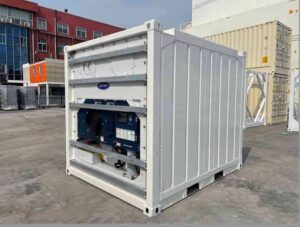
Offshore Container vs. Standard Shipping Container
The most important difference between an offshore container and a standard shipping container is the handling environment. Conventional ISO containers are optimized for standardized intermodal transportation through ships, trucks, and rail systems. Their corner castings and standardized dimensions make them highly effective for container terminals and conventional freight logistics.
An offshore container, on the other hand, is designed with offshore lifting as a central part of its intended operation. It may be lifted directly from a moving vessel to an offshore facility using a crane, sometimes while exposed to wind, waves, vessel motion, and other dynamic effects. Consequently, the container’s lifting points and supporting framework become critical structural components rather than simple accessories.
The International Maritime Organization’s Convention for Safe Containers (CSC) establishes safety testing procedures and structural requirements for covered freight containers used in international transport. However, CSC requirements should not be interpreted as a substitute for offshore-container requirements where the unit is intended for repeated offshore lifting.
Характеристика | Морской контейнер | Standard ISO Freight Container |
Primary purpose | Offshore cargo transport and lifting | Intermodal freight transportation |
Typical environment | Open sea, offshore platforms, vessels | Ports, ships, rail and road networks |
Main lifting method | Dedicated offshore lifting set | Crane or spreader through ISO corner castings |
Lifting points | Pad eyes / dedicated lifting arrangement | ISO corner castings |
| Конструктивный дизайн | Considers offshore lifting and dynamic conditions | Primarily designed for intermodal transportation |
| Сертификация | Often based on DNV-ST-E271 / ISO 10855 | Commonly based on ISO and CSC requirements |
| Typical cargo | Offshore tools, equipment, materials and supplies | General commercial freight |
| Inspection | Offshore-specific inspection may apply | Applicable freight-container inspection |
Another practical difference is the relationship between the container and its lifting set. An offshore lifting set can include slings, shackles, master links, and associated components. These elements must be compatible with the container’s lifting points and the intended lifting operation. Treating the lifting gear as an afterthought can create a mismatch between the container’s structural design and its actual operating configuration.
What Are the Main Types of Offshore Containers?
There is no single offshore-container configuration suitable for every project. The most appropriate design depends on cargo characteristics, gross weight, dimensions, loading method, environmental conditions, and the function the unit needs to perform offshore.
- General Cargo Offshore Containers
General cargo offshore containers are enclosed units designed to transport tools, spare parts, packaged equipment, consumables, maintenance materials, and other cargo that benefits from protection against weather and mechanical damage. They can be configured with shelving, internal securing points, ventilation, doors, lighting, or customized internal arrangements.
- Offshore Cargo Baskets
Cargo baskets are generally open or partially open units used for bulky or irregularly shaped loads. Pipes, structural components, machinery, construction materials, and other cargo can often be secured directly within the basket. Their open configuration can simplify loading and unloading when complete enclosure is unnecessary.
- Offshore Tank Containers
Tank containers are designed to transport liquids or other fluid materials. Their construction introduces additional considerations involving the tank itself, supporting frame, pressure or fluid characteristics, cargo compatibility, securing, and applicable dangerous-goods regulations.
- Bulk Containers and Waste Skips
Bulk containers are used for transporting solid bulk materials, while waste skips and specialized offshore waste containers are commonly used to collect and return waste from offshore installations. Their designs may incorporate specific loading, unloading, drainage, or environmental-control features.
- Service Containers
A service container is designed around a particular offshore function rather than simply carrying general cargo. Examples include workshops, laboratories, equipment rooms, power units, control units, and maintenance facilities. Because their internal equipment can contribute substantially to the total mass and center of gravity, their design must consider the complete assembled unit.
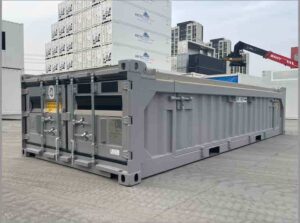
Key Structural Features of an Offshore Container
The structural framework forms the foundation of an offshore container. It typically comprises a base frame, a top frame, corner posts, a floor structure, side and end structures, lifting points, and other load-bearing components. The design objective is to create a predictable load path from the cargo and container structure through the lifting points and into the lifting set.
One of the most important components is the pad eye. Pad eyes provide the connection between the container and its lifting system, so their geometry, material, welding, local reinforcement, and load transfer must be considered together. Even a container with a robust-looking body may require engineering attention at the lifting points, as these areas experience concentrated loads during crane operations.
The floor is equally important when the container is carrying heavy machinery or concentrated loads. Examples of offshore cargo include pumps, valves, hydraulic equipment, tools, pipes, electrical equipment, and replacement assemblies. Therefore, the floor structure needs to accommodate the intended cargo distribution rather than relying only on the container’s overall gross mass rating.
Doors, roof panels, ventilation openings, forklift pockets, internal shelves and cargo-securing points also influence usability. However, these components should be selected according to the cargo and operating process in question. For example, a container designed for frequent manual loading may require a different internal configuration to one loaded primarily with forklifts or specialised handling equipment.
Corrosion protection is another major consideration. Saltwater exposure, humidity, the marine atmosphere, mechanical impacts and damaged coating systems can all accelerate deterioration. Therefore, the material specification, welding quality, surface preparation, coating system, drainage design and maintenance plan should be considered as part of the complete lifecycle, rather than as separate cosmetic details.
Offshore Container Standards and Certification
When purchasing or specifying an offshore container, certification is often as important as physical dimensions and payload. The most frequently referenced technical frameworks include DNV-ST-E271 and the ISO 10855 series.
DNV identifies DNV-ST-E271 – 2.7-1 Offshore containers as its standard for offshore containers and lifting sets. The standard addresses areas including design, manufacturing, testing, marking, certification, and periodic inspection.
The terminology can be confusing because many engineers and buyers still refer to the requirements simply as DNV 2.7-1. DNV-ST-E271 retains the 2.7-1 designation in its title, so both expressions may appear in technical discussions, purchasing specifications, and industry documentation.
ISO 10855 provides another major international reference. ISO 10855-1:2024 addresses offshore containers, including requirements associated with their design, manufacture, and marking. The ISO definition emphasizes repeated transportation in open seas between ships and fixed or floating installations.
Standard / Reference | Primary Scope | Relevance to Offshore Containers |
DNV-ST-E271 | Offshore containers and lifting sets | Design, certification, testing and inspection |
ISO 10855-1:2024 | Offshore container requirements | Design, manufacture and marking |
| ISO 10855 series | Offshore containers and lifting sets | International technical framework |
| CSC 1972 | Safety of covered freight containers | Applicable conventional freight containers |
| Project/operator specification | Project-specific requirements | May add requirements beyond base standards |
Certification should not be reduced to the presence of a certificate or nameplate. A properly controlled certification process can involve engineering calculations, material documentation, welding controls, inspection, testing, marking, manufacturing records, and periodic examination. Buyers should therefore request the complete documentation package relevant to the selected certification route.
The exact standard combination should be confirmed against the offshore operator’s specification, project location, flag-state requirements, cargo classification, lifting arrangement, and intended service conditions. Different projects can impose additional technical requirements beyond the basic standard.
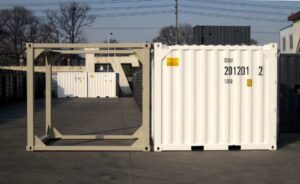
Where Are Offshore Containers Used?
Offshore containers are widely used in industries where equipment and materials need to be transported repeatedly between the shore and marine installations. The oil and gas industry, offshore wind farms, subsea engineering, marine construction, offshore maintenance and other energy-related operations all rely on specialised logistics systems.
In offshore oil and gas operations, for example, an offshore container may carry maintenance tools, valves, pipes, spare parts, drilling-related equipment, consumables or packaged machinery. Service containers can be configured as workshops, laboratories, technical rooms, power units, or other specialised facilities.
The offshore wind sector has similar requirements. Turbine maintenance may require electrical components, hydraulic equipment, fasteners, tools, replacement parts and specialised assemblies to be transported from a coastal base to turbines located far offshore. A certified lifting container provides a standardised method of transporting these materials between vessels and offshore installations.
Subsea projects create another demanding application. Equipment may need to be moved repeatedly between fabrication yards, support vessels, offshore construction sites and temporary work locations. In these operations, cargo protection, securing, lifting compatibility, corrosion resistance and traceable inspection records can all be important procurement criteria.
When evaluating offshore logistics equipment, we recommend looking beyond the external appearance of the container. The following factors should be considered before selecting a model: cargo type, maximum gross mass, centre of gravity, lifting configuration, dimensions, access requirements, certification, inspection documentation and expected service environment.
How to Choose the Right Offshore Container?
The selection process should focus on the cargo rather than the container. First, determine the maximum weight, dimensions, centre of gravity, loading method, securing requirements, sensitivity to weather, and whether the material falls under dangerous goods regulations. These factors establish the basic configuration before the dimensions and optional features are finalised.
The next consideration is the lifting operation. Buyers should clarify how the container will be lifted, the type of crane and lifting set to be used, how frequently lifting will occur, and whether the container will be handled from a moving vessel. The lifting points, lifting set, gross mass and cargo distribution must be considered together as a system.
Environmental conditions should then be evaluated. Offshore containers may be subject to salt spray, high humidity, strong winds, temperature variations, impact and frequent handling. Projects in different geographical regions may also have different operator specifications and environmental requirements.
Documentation is another major procurement factor. Depending on the certification route, a buyer may require approved drawings, structural calculations, material certificates, welding documentation, inspection reports, test records, documentation for the lifting set, certification and identification markings. These documents can be critical when the container needs to enter a controlled offshore logistics chain.
Finally, consider the total cost over the container’s entire lifecycle rather than just the purchase price. A container with corrosion protection, accessible inspection points, durable fittings, appropriate cargo-securing arrangements and full documentation will be easier to operate and maintain over a long service period.
Offshore Container vs. Portable Offshore Unit
Although the terms ‘offshore container’ and ‘portable offshore unit’ are sometimes used interchangeably in general conversation, they can describe different technical concepts.
An offshore container is primarily designed to transport goods or equipment repeatedly and be lifted offshore. By comparison, a portable offshore unit can have a specialised technical or operational function. Examples include machinery packages, process equipment, power units, and other engineered units, whose primary purpose is not the transportation of general cargo.
This distinction is important during certification and procurement. If a unit is primarily a process package or specialised technical system, specifying an offshore container standard without considering the unit’s actual function may result in an inappropriate engineering approach being taken.
The safest approach is therefore to first define the unit’s primary function and then determine which technical standard and certification framework applies. DNV identifies requirements for portable offshore units separately in DNV-ST-E273, demonstrating why classification should be established during the engineering stage rather than after fabrication.
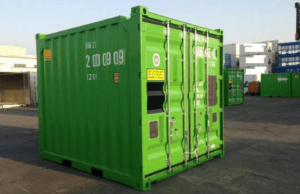
Inspection, Maintenance and Service Life
Offshore containers should be managed as equipment that is subject to inspection throughout its service life. Repeated lifting, cargo loading, impacts, exposure to the sea and corrosion can gradually affect the structural integrity of both structural and non-structural components, even if the container initially passes all the required tests.
Particular attention should be paid during inspection to pad eyes, lifting sets, welds, structural members, the condition of the floor, corrosion, doors, securing points, identification markings and evidence of deformation or impact. Any component involved in the primary lifting load path requires particular attention, as damage in these areas can affect the integrity of the entire lifting system.
Maintenance should also address coating deterioration and corrosion. Areas around welds, lifting points, door frames, drainage locations and damaged surfaces are particularly susceptible to marine corrosion. Any surface damage should be repaired according to the applicable maintenance procedures rather than being left until substantial corrosion develops.
Periodic examination is an important part of the offshore container lifecycle. DNV’s offshore container framework specifically incorporates periodic inspection requirements for containers and lifting sets.
Good maintenance records can also simplify future inspections and audits. Containers should have traceable identification and documentation showing their inspection and certification status, particularly when they are shared between different vessels, offshore installations, contractors, or logistics bases.
FAQ: Offshore Container
- What is an offshore container used for?
An offshore container is used to transport equipment, tools, materials, spare parts, and other cargo between ships, shore bases, and offshore installations. Its structure and lifting system are designed for repeated offshore handling.
- What is the difference between an offshore container and an ISO container?
An ISO container is primarily designed for standardized intermodal freight transportation, while an offshore container is designed specifically for repeated offshore lifting and handling. Offshore containers normally incorporate dedicated lifting arrangements and comply with applicable offshore requirements.
- Is DNV 2.7-1 the same as DNV-ST-E271?
DNV 2.7-1 is the commonly used historical designation associated with DNV’s offshore-container requirements. The current DNV standard is published as DNV-ST-E271 – 2.7-1 Offshore containers.
- What can be transported in an offshore container?
Offshore containers can transport tools, machinery, spare parts, pipes, maintenance equipment, consumables, packaged cargo, and other approved materials. Specialized designs can also be used for liquids, bulk cargo, waste, or technical equipment.
- Are offshore containers required to be certified?
Certification requirements depend on the applicable regulations, offshore operator, project specification, and intended lifting operation. For many professional offshore projects, compliance with an applicable standard such as DNV-ST-E271 or ISO 10855 is an important procurement requirement.
- How often should an offshore container be inspected?
Inspection frequency depends on the applicable standard, certification scheme, operator requirements, and service conditions. Periodic inspection should cover the container structure and relevant lifting equipment, with additional examination carried out when damage, abnormal loading, or other concerns are identified.
Заключение
An offshore container is a specialized piece of offshore logistics equipment rather than simply a stronger version of a shipping container. Its value comes from the integration of structural design, lifting arrangements, cargo handling, certification, inspection, corrosion protection, and lifecycle management into a system capable of repeated offshore use.
For buyers and offshore operators, the most important considerations go beyond just container size or payload. Proper specifications should integrate cargo, lifting operations, environmental conditions, applicable standards, certification pathways, inspection requirements, and documentation into a coherent engineering solution. However, as a professional offshore container manufacturer, CIMC TLC|RYC|XLC can meet your procurement needs and help ensure that the selected offshore containers are technically suitable for their intended maritime logistics applications.