


 RU
 EN
Краткое содержание статьи: A специальный контейнер is a transport unit designed for specific cargo that cannot be handled efficiently or safely in a standard dry freight container. Examples include bulky equipment, gas cylinders, waste, and irregularly shaped goods. In offshore logistics, ISO 10855-1:2024 distinguishes between special containers, which are used for specific cargo, and service containers, which are designed for temporary operational functions. Refrigerated containers (reefer containers) are used for temperature-controlled cargo, and offshore containers are engineered for repeated handling between vessels and offshore installations.
What Does “Special Container” Mean in Shipping?
In shipping and logistics, a special container is a transport unit designed to accommodate cargo that a conventional general-purpose container cannot accommodate due to its specific requirements. These requirements may involve unusual dimensions, specialised loading and unloading methods, cargo containment, environmental protection, or securing particular equipment during transportation. Rather than forcing every shipment into the same rectangular, enclosed configuration, special containers adapt their handling structure to the characteristics of the cargo and the transport route conditions.
The term does not describe one universal container type. In commercial logistics, it is used more broadly to describe specialised units such as open-top containers, flat racks, tank containers, refrigerated containers and transport frames designed for specific types of equipment. In offshore applications, however, the terminology can be more precise. ISO 10855-1:2024 defines a special container as a frame or skid used to transport special cargo. Examples include equipment boxes, gas-cylinder racks, intermediate bulk container (IBC) frames, and garbage containers. Therefore, buyers should consider the intended application and the relevant technical standard before treating all special containers as interchangeable products.
The objective is to match the container’s structure and handling features to the shipment. For example, a manufacturer transporting oversized machinery may require an open structure with engineered securing points. In contrast, an offshore operator may need a lifting frame that can withstand repeated transfers between a vessel and an offshore platform.
What Are the Main Types of Special Containers?
Special containers cover several categories of equipment, but their designs are driven by different cargo requirements. Some prioritize access and loading flexibility, others provide thermal control or liquid containment, and offshore models emphasize safe lifting and handling in demanding marine environments.
- Open-Top and Flat-Rack Containers
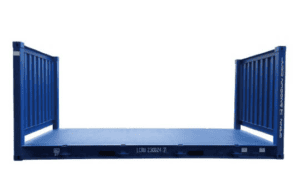
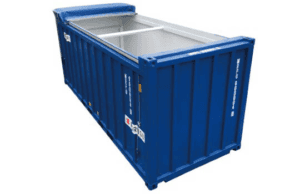
Open-top containers have a removable or convertible roof that allows cargo to be loaded from above, typically with the help of a crane. They are useful for tall machinery, construction materials, industrial components, and other goods that cannot be conveniently loaded through standard container doors. Flat-rack containers have end walls or other structural features designed for cargo that is too wide, heavy, or irregular for an enclosed container, provided the shipment remains within the equipment’s rated limits.
These designs are often grouped under the broader commercial concept of special containers because they solve loading and dimensional problems. However, an open-top or flat-rack container does not automatically qualify as an offshore-certified container. If the shipment will be lifted and transferred in open sea conditions, the equipment must be suitable for that operating environment and comply with the applicable requirements.
- Контейнеры для резервуаров and Specialized Liquid Transport Units
Tank containers are used to transport liquids, gases, and certain bulk materials in a tank mounted on a transport frame. Depending on their design, they can be used to transport food-grade liquids, industrial chemicals, fuels, and other substances that require controlled containment. Product compatibility, pressure ratings, cleaning procedures, hazardous goods requirements and applicable tank regulations must be verified for the intended cargo.
Although tank containers are specialised transport equipment, they should not be confused with all types of special containers defined in an offshore standard. The correct classification depends on the function, construction and intended handling conditions of the equipment. For example, a tank used to transport chemicals between ports has different design and operational considerations than a skid-mounted process unit transported to an offshore installation.
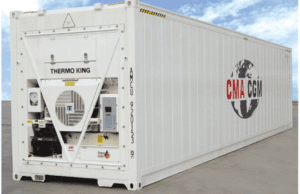
A reefer container is an insulated shipping container equipped with a refrigeration system that maintains a specified cargo temperature during transportation. They are widely used for transporting fresh and frozen food, pharmaceuticals (where appropriate validated transport conditions are available), flowers and other temperature-sensitive products. Depending on the model, the refrigeration system may provide cooling, heating, temperature monitoring, and controlled air circulation.
Reefer containers are specialised in that their primary function is temperature management rather than simply accommodating unusual cargo dimensions. Their performance depends on the refrigeration unit, insulation, airflow, cargo loading pattern, set-point selection and a reliable power supply. While a reefer container can be considered a special-purpose container in broad commercial terms, it is not synonymous with the more specific offshore-standard definition of a special container as a frame or skid for unusual cargo.
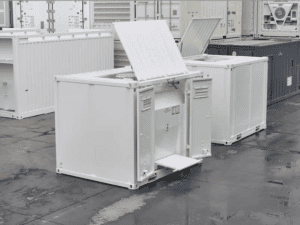
An offshore container is a portable transport unit designed for repeated use in moving goods or equipment between ships and offshore installations, including fixed or floating facilities. The design must account for the lifting, movement and handling conditions associated with offshore operations, in which equipment may be exposed to vessel motion, impact, corrosion and challenging weather conditions.
ISO 10855-1:2024 covers the design, manufacture and marking of offshore containers with a maximum gross mass of 25,000 kg for repeated transport to, from and between offshore installations and ships. This standard specifically addresses transport-related requirements, while operational use and maintenance require additional considerations. Depending on their design and purpose, offshore containers can include general cargo containers, cargo baskets, tank containers, bulk containers, service containers, special containers, and offshore waste skips.
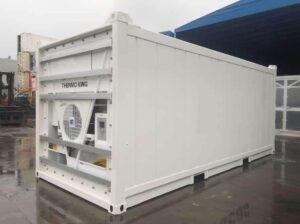
Special Container vs. Reefer Container vs. Offshore Container
The terms ‘special container’, ‘reefer container’ and ‘offshore container’ describe different types of transport equipment. The first can refer either to a broad category of specialised cargo-handling solutions, or to a more specific frame or skid that meets offshore standards. The second is primarily defined by its temperature-control functionality, while the third is defined by its intended transport environment and handling requirements.
For procurement teams, this distinction is important because a container that solves one problem may not be suitable for another. For example, a refrigerated unit can preserve cargo temperature without being suitable for offshore crane handling, while a certified offshore container can provide appropriate lifting features without offering refrigeration. While some equipment may combine specialised functions, each requirement must be confirmed in the design documentation and certification rather than inferred from the product name.
Comparison Factor | Special Container | Рефрижераторные контейнеры | Морской контейнер |
Primary purpose | Accommodating special cargo or handling requirements | Maintaining specified cargo temperatures | Transporting goods or equipment between ships and offshore installations |
Typical cargo | Equipment, gas cylinders, waste, irregular cargo | Fresh produce, frozen food, temperature-sensitive goods | Tools, machinery, supplies, offshore equipment |
Key design feature | Cargo-specific frame, skid, or specialized structure | Insulation and refrigeration system | Structure and lifting arrangements designed for offshore transport |
| Контроль температуры | Depends on the configuration | Core function | Optional, depending on the design |
| Lifting requirements | Depends on the application and applicable standard | Standard container handling arrangements unless specially designed otherwise | Engineered lifting arrangements suitable for the intended offshore service |
| Relevant standards | Depends on container type and intended use | Applicable container, refrigeration, and cargo requirements | ISO 10855 series where applicable |
| Typical operating environment | Ports, warehouses, industrial sites, or specialized logistics routes | Road, rail, and sea transport with suitable power supply | Marine transport and offshore installations |
| Main selection priority | Cargo compatibility and handling method | Temperature range and thermal performance | Structural integrity, lifting safety, and inspection requirements |
The comparison is a practical guide, not a declaration that every product in a category follows the same specification. In particular, the exact certification, permitted gross mass, lifting configuration, and operational restrictions must be confirmed for the individual unit.
What Are Special Containers Used For?
Special containers support supply chains in which ordinary enclosed freight containers are unsuitable, inefficient, or insufficiently specialized. Their value comes from reducing cargo-handling difficulties, protecting equipment, and matching transport infrastructure to the conditions of a particular industry.
- Industrial Equipment and Machinery Transportation
Industrial machinery often has protruding components, unusual dimensions, sensitive instruments, or lifting points that do not align with standard container arrangements. Specially designed frames, skids, and equipment boxes can provide defined support and securing points, reducing movement during transport and making loading and unloading easier. Depending on the shipment, the design may also need to allow for maintenance access, provide weather protection, or separate fragile components.
Before ordering a container of this kind, the shipper should provide the dimensions, total weight, and centre of gravity of the equipment, as well as the lifting instructions and transport route. These details help the supplier determine whether a simple equipment box is sufficient, or if an engineered frame with specific lifting and restraint arrangements is necessary. Cargo dimensions alone are not enough to establish safe lifting capability.
- Offshore Oil, Gas, and Marine Operations
Offshore projects involve frequent transfers of tools, spare parts, consumables and specialised equipment between shore bases, supply vessels and offshore facilities. In these environments, containers are often lifted by cranes and are subject to handling conditions that differ from those experienced in ordinary terminal operations. Offshore containers therefore require particular attention to be paid to their structural design, lifting sets, identification, inspection and traceable technical documentation.
ISO 10855 provides a relevant standards framework for offshore containers and their associated lifting equipment. Its three parts address container design and manufacture, lifting-set design and manufacture, and periodic inspection and testing, respectively. The 2024 editions should be consulted when specifying new equipment, alongside applicable local regulations and project requirements.
- Temperature-Sensitive Cargo Distribution
Reefer containers are used in supply chains where maintaining the correct temperature is essential for ensuring the quality of the cargo. They are used to transport fresh produce such as fruit and vegetables, as well as seafood, meat, and frozen products. Depending on the cargo, shippers may require chilled or frozen settings, ventilation, humidity management, or continuous temperature monitoring.
However, effective operation requires more than simply setting a temperature on the refrigeration unit. The cargo must be prepared and loaded correctly, the airflow channels must remain unobstructed, and the unit must receive a reliable power supply throughout the journey. For pharmaceuticals or other regulated goods, the shipper must also confirm that the equipment and monitoring arrangements comply with the specific transport requirements of the product in question.
How to Choose the Right Special Container?
Selecting the right unit starts with defining the transport problem clearly. Buyers should not choose a product solely because a supplier markets it as a special container; the equipment must match the cargo, handling method, operating environment, and compliance requirements.
Consider the following six factors before requesting a quotation:
- Cargo characteristics: Identify the cargo type, dimensions, weight, center of gravity, sensitivity, and any special containment requirements. For hazardous materials, verify the relevant classification, packaging, and transport regulations.
- Loading and unloading method: Determine whether the cargo will be loaded through doors, from above, by forklift, or by crane. Confirm the rated capacity and the intended lifting arrangement rather than assuming that a reinforced frame is suitable for every lifting method.
- Operating environment: Specify whether the unit will be used in a warehouse, on public roads, in port operations, or offshore. Marine exposure and offshore lifting can introduce requirements that are not covered by ordinary freight-container specifications.
- Temperature and environmental controls: If cargo requires cooling, heating, ventilation, or weather protection, state the required operating range and how performance will be monitored. For a Reefer Container, consider power availability, airflow, insulation, and the expected duration of transport.
- Certification and inspection: Request applicable design documents, nameplates, test records, lifting-set information, inspection history, and evidence of conformity. For offshore applications, confirm the relevant edition of ISO 10855 and the project’s additional requirements.
- Lifecycle cost and maintenance: Compare the purchase price with handling efficiency, inspection, repairs, spare parts, cleaning, energy consumption, and expected service life. A container with a higher initial price may be more economical if it reduces cargo damage or simplifies repeated handling.
A useful specification should describe the required function rather than rely on a generic label. For example, a buyer moving gas cylinders to an offshore installation should specify the cylinder arrangement, securing method, gross mass, lifting requirements, and intended operating environment. A buyer transporting frozen seafood should instead prioritize temperature performance, loading conditions, power arrangements, and monitoring. These descriptions help suppliers propose equipment that meets the actual application rather than an assumed one.
Special Container Selection Checklist
The following checklist can help procurement teams organize technical requirements before comparing suppliers. It is especially useful when a project involves multiple container types or when logistics, engineering, and safety teams must approve the same equipment specification.
Evaluation Item | Information to Confirm | Почему это важно |
Intended application | General cargo, equipment transport, refrigerated cargo, or offshore service | Establishes the appropriate container category |
Cargo dimensions and weight | Length, width, height, payload, and gross mass | Confirms capacity and compatibility |
Handling method | Forklift pockets, crane lifting points, slings, or other arrangements | Helps prevent incompatible or unsafe handling |
Environmental conditions | Rain, salt spray, temperature extremes, vibration, and impact exposure | Determines material protection and design requirements |
| Temperature requirements | Set point, operating range, airflow, and monitoring needs | Essential for refrigerated or temperature-sensitive cargo |
| Standards and certification | Applicable ISO standards, project specifications, inspection records, and regulatory approvals | Supports compliance and safe operation |
| Maintenance requirements | Inspection frequency, repair procedures, and replacement parts | Affects service life and total ownership cost |
| Delivery and logistics | Transport dimensions, lifting access, delivery location, and installation requirements | Helps avoid unexpected transportation and installation expenses |
For offshore equipment, procurement teams should pay particular attention to the relationship between the container, its lifting set, and its inspection records. ISO 10855-2:2024 addresses offshore lifting sets, while ISO 10855-3:2024 addresses periodic inspection, examination, and testing of offshore containers and associated lifting sets.
Buyers should confirm that the complete arrangement—not merely the container body—meets the requirements of the intended operation.
How to Evaluate a Special Container Supplier?
A reliable supplier should be able to explain why a particular design fits the cargo and operating environment. In addition to reviewing product dimensions and prices, buyers should ask for relevant drawings, rated capacities, material information, lifting arrangements where applicable, surface-protection details, and quality-control documentation. For specialized or offshore applications, the supplier should clearly identify the standards the product is designed to meet and provide supporting documentation appropriate to the order.
We recommend starting the procurement process with a clear cargo specification and transport scenario, then comparing suppliers against the same technical criteria. For example, buyers exploring logistics and specialized container options can review CIMC TLC | RYC | XLC‘s logistics equipment container range as a starting point for assessing relevant equipment categories. The final selection should still be based on the specific product’s verified capabilities, documentation, and suitability for the intended application.
Supplier evaluation should also consider after-sales support, inspection arrangements, spare-parts availability, customization lead times, and the ability to maintain consistent specifications across repeat orders. These factors are particularly important when containers operate in remote locations or form part of a recurring logistics process. A well-matched container is not simply a transport box; it is part of the cargo-handling system, and its design can influence safety, efficiency, and operating cost throughout its service life.
Frequently Asked Questions About Special Containers
- What is the difference between a special container and a standard container?
A standard container is designed primarily for general cargo, whereas a special container is adapted to specific cargo dimensions, handling methods, or operating requirements. In offshore standards, the term can have a narrower meaning, referring to a frame or skid used to transport special cargo.
- Is a Reefer Container considered a special container?
A Reefer Container is a specialized container equipped with insulation and refrigeration to maintain a specified cargo temperature. It can be described broadly as a special-purpose container, but it is distinct from the narrower offshore-standard definition of a special container.
- What is an Offshore Container used for?
An Offshore Container transports goods and equipment between vessels and offshore installations, including oil and gas platforms. Its structure, lifting arrangements, and inspection requirements must be suitable for the intended offshore transport conditions.
- What standard applies to offshore special containers?
ISO 10855 is a key standard series covering offshore containers and associated lifting sets. Its 2024 editions address container design and manufacture, lifting-set requirements, and periodic inspection and testing, although project-specific and local requirements may also apply.
- Can a special container be customized?
Yes, a special container can be designed or configured around particular cargo dimensions, securing requirements, and handling conditions. Any customization must preserve the required structural capacity, safe handling arrangements, and applicable certification or regulatory compliance.
- How do I choose between a Reefer Container and an Offshore Container?
Choose a Reefer Container when maintaining cargo temperature is the primary requirement, and choose an Offshore Container when equipment must be transported between ships and offshore installations under appropriate lifting and handling requirements. If a shipment requires both functions, confirm that the specific unit is engineered and approved for both rather than assuming that one feature implies the other.
Заключение
A special container is a transport solution designed for cargo or handling requirements that cannot be adequately addressed by a standard general-purpose container. While the term covers various types of equipment used in commerce, it takes on a more specific meaning in standards such as ISO 10855, where an offshore special container is defined as a frame or skid used to transport special cargo.
Knowing the differences between special containers, reefer containers, and offshore containers helps logistics managers and procurement teams select the right equipment for the job, taking into account cargo characteristics, environmental conditions, handling methods, and compliance obligations. By evaluating technical specifications, lifting safety, temperature control requirements, inspection records, and lifecycle costs before placing an order, businesses can improve transport efficiency while reducing avoidable operational risks.