



 RU
 EN
Краткий ответ: Modular data centers are gaining popularity because they provide faster deployment, scalable capacity expansion, improved energy efficiency, and greater flexibility compared with traditional brick-and-mortar data centers.
According to the Data Center Handbook by Hwaiyu Geng and the Uptime Institute Data Center Survey, modular designs help organizations respond more quickly to increasing computing demands while reducing construction complexity and improving operational efficiency. Modern modular data center solutions, including those supplied by companies such as CIMC TLC|RYC|XLC, integrate prefabricated structures, advanced cooling systems, and intelligent management technologies to support the rapid growth of cloud computing, AI, and edge infrastructure.
Why Are Modular Data Centers Gaining Popularity?
The global demand for digital infrastructure is increasing at an unprecedented rate. The rapid expansion of cloud services, artificial intelligence, edge computing, 5G networks, and high-performance computing has created strong pressure on organizations to build data center capacity faster and more efficiently.
Traditional data centers typically require long construction periods, significant capital investment, and complex engineering coordination. While conventional facilities remain suitable for large-scale permanent infrastructure, many businesses now require more flexible solutions that can adapt quickly to changing technology requirements.
This is where modular data centers have gained significant attention.
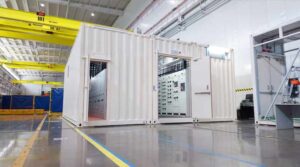
A modular data center uses prefabricated modules that integrate critical infrastructure components such as power systems, cooling equipment, server racks, security systems, and monitoring solutions. These modules can be manufactured, tested, transported, and deployed much faster than traditional construction-based facilities.
As businesses prioritize speed, scalability, and operational efficiency, modular data centers are becoming an increasingly attractive alternative for modern digital infrastructure development.
What Is a Modular Data Center?
A modular data center is a prefabricated data center solution built using standardized modules that can be deployed individually or combined into larger computing facilities.
Unlike traditional data centers that are constructed entirely on-site, modular systems are manufactured in controlled factory environments before installation.
A typical modular data center may include:
- Server rooms
- Power distribution systems
- UPS systems
- Cooling units
- Системы пожаротушения
- Environmental monitoring equipment
- Security infrastructure
The modular approach allows organizations to create customized data center environments based on specific requirements.
Common modular configurations include:
- Containerized data centers
- Prefabricated building modules
- Micro data centers
- Edge computing modules
These solutions can serve both temporary and permanent infrastructure needs.
Why Are Companies Choosing Modular Data Centers?
Faster Deployment Speed
One of the biggest advantages of modular data centers is significantly reduced deployment time.
Traditional data center construction may require:
- Architectural planning
- Building permits
- Civil construction
- Electrical installation
- Mechanical system integration
- Extensive testing
This process can take many months or even years depending on project complexity.
In contrast, modular data centers are manufactured and assembled in parallel with site preparation. Since many components are pre-installed and tested before delivery, deployment can be completed much faster.
Faster deployment enables organizations to:
- Launch new computing capacity quickly
- Respond to market demand
- Support emergency infrastructure requirements
- Expand digital services faster
For industries experiencing rapid technology growth, deployment speed has become a major competitive advantage.
Flexible Scalability
Modern computing requirements change quickly. A company that requires 500 servers today may need several times that capacity in the future.
Traditional data centers often require major redesign or expansion projects when additional capacity is needed.
Modular data centers solve this challenge through scalable architecture.
Organizations can add additional modules as demand increases, allowing infrastructure expansion without rebuilding the entire facility.
Benefits include:
- Lower upfront investment
- Easier capacity planning
- Reduced risk of overbuilding
- More efficient resource utilization
This scalability makes modular solutions particularly attractive for:
- Cloud service providers
- Telecommunications companies
- AI computing operators
- Enterprise IT departments
Reduced Construction Complexity
Traditional data center projects involve coordination between multiple construction teams, including:
- Architects
- Electrical engineers
- Mechanical engineers
- Construction contractors
- IT infrastructure specialists
Modular data centers simplify this process because many components are integrated before delivery.
Factory-based manufacturing provides several advantages:
- Standardized production processes
- Improved quality control
- Reduced installation errors
- Predictable project schedules
The controlled manufacturing environment also allows suppliers to perform comprehensive testing before deployment.
This reduces risks associated with complex on-site construction.
Повышение энергоэффективности
Energy efficiency has become a critical concern for data center operators because cooling and power systems represent a significant portion of operational costs.
Modern modular data centers are designed with optimized infrastructure to improve energy performance.
Energy-saving technologies may include:
- High-efficiency cooling systems
- Intelligent power management
- Optimized airflow design
- Advanced monitoring platforms
Because modular systems are engineered as integrated units, manufacturers can optimize the relationship between:
- Server density
- Cooling capacity
- Power distribution
- Environmental control
This helps improve Power Usage Effectiveness (PUE), which is a key metric used to evaluate data center energy efficiency.
Modular Data Center vs Traditional Data Center
Характеристика | Traditional Data Center | Модульный центр обработки данных |
Construction Method | Built mainly on-site | Factory-prefabricated modules |
Deployment Speed | Longer construction period | Faster installation |
Масштабируемость | Requires major expansion work | Add modules as needed |
| Контроль качества | Depends on site conditions | Factory-controlled production |
| Initial Investment | Usually higher | More flexible investment |
| Location Flexibility | Ограниченная | Can be deployed in various environments |
Better Support for Edge Computing
The growth of edge computing is another major factor driving modular data center adoption.
Traditional centralized data centers are often located far away from users. However, modern applications such as:
- Autonomous vehicles
- Smart manufacturing
- IoT systems
- Real-time analytics
- 5G services
require data processing closer to where information is generated.
Modular data centers provide an effective solution because they can be deployed near data sources.
Examples include:
- Factory environments
- Remote industrial locations
- Telecommunications sites
- Renewable energy facilities
By reducing network latency, modular edge data centers improve application performance and reliability.
Enhanced Deployment Flexibility
A major advantage of modular data centers is their ability to operate in different environments.
They can be deployed in:
- Urban areas
- Remote regions
- Temporary project sites
- Industrial facilities
- Military and emergency locations
This flexibility makes them suitable for organizations that require reliable computing infrastructure outside traditional data center locations.
For example, telecommunications operators can quickly deploy modular facilities to support network expansion, while industrial companies can establish local computing capacity near production sites.
Supporting AI and High-Density Computing Growth
The rapid development of artificial intelligence has significantly changed data center requirements. Modern AI workloads, especially large language models, machine learning training, and high-performance computing applications, require much higher computing density than traditional enterprise applications.
These workloads create new challenges, including:
- Higher rack power requirements
- Increased heat generation
- More advanced cooling requirements
- Greater demand for scalable infrastructure
Traditional data centers may require significant redesigns to support these high-density environments. Modular data centers provide a more flexible approach because power and cooling systems can be designed specifically for high-performance computing applications.
Advanced modular solutions can integrate:
- High-density server racks
- Liquid cooling systems
- Intelligent power distribution
- Real-time environmental monitoring
This makes modular data centers an attractive option for companies building AI infrastructure, research facilities, and cloud computing platforms.
Lower Total Cost of Ownership
Although the initial cost of a modular data center depends on configuration and capacity, many organizations choose modular solutions because of their long-term economic benefits.
Traditional data centers often involve:
- Large construction expenses
- Long project timelines
- Higher engineering costs
- Complex maintenance requirements
Modular data centers can reduce total ownership costs through:
- Faster deployment
- Standardized manufacturing
- Lower construction labor requirements
- Easier maintenance procedures
- More efficient energy usage
Because organizations can add capacity gradually, they avoid investing heavily in unused infrastructure.
This “build-as-needed” approach helps companies optimize capital expenditure and reduce financial risk.
Improved Quality and Reliability
A major advantage of factory-built modular data centers is improved quality control.
Unlike traditional construction projects where environmental conditions and installation quality may vary, modular components are produced in controlled manufacturing environments.
Factory testing can include:
- Electrical system testing
- Cooling performance verification
- Network integration testing
- Safety inspections
- Equipment compatibility checks
This process improves reliability before the system reaches the deployment site.
For mission-critical applications, such as financial services, telecommunications, and cloud infrastructure, improved reliability is a major reason why organizations are adopting modular solutions.
Easier Maintenance and Upgrades
Technology changes quickly, and data center infrastructure must evolve continuously.
Traditional facilities may face challenges when upgrading:
- Системы охлаждения
- Power infrastructure
- Server capacity
- Monitoring platforms
Modular data centers simplify upgrades because individual modules can be maintained, replaced, or expanded without significantly affecting the entire facility.
Advantages include:
- Reduced downtime
- Easier equipment replacement
- Simplified maintenance planning
- Better lifecycle management
This flexibility is particularly valuable for organizations operating in fast-changing technology environments.
Key Applications of Modular Data Centers
Cloud Computing Infrastructure
Cloud providers require rapid expansion capabilities to meet growing customer demand.
Modular data centers allow cloud operators to:
- Quickly increase computing capacity
- Deploy infrastructure in new regions
- Support changing workload requirements
Their scalability makes them suitable for both large cloud platforms and regional service providers.
Edge Computing Networks
Edge computing is one of the fastest-growing applications for modular data centers.
Instead of sending all data to centralized facilities, edge infrastructure processes information closer to users and devices.
Applications include:
- Smart cities
- Industrial automation
- Autonomous systems
- Video analytics
- IoT networks
Compact modular data centers provide reliable computing capacity in locations where traditional facilities may not be practical.
Telecommunications Industry
The expansion of 5G networks requires distributed computing infrastructure.
Telecom companies use modular data centers to support:
- Network equipment
- Local data processing
- Communication services
- Mobile edge computing
Their compact design and rapid deployment capability make them suitable for large-scale network expansion.
Industrial and Remote Operations
Many industries require computing infrastructure near operational sites.
Examples include:
- Mining operations
- Energy facilities
- Manufacturing plants
- Offshore projects
Modular data centers provide reliable computing environments even in challenging locations.
Companies such as CIMC TLC|RYC|XLC provide modular infrastructure solutions designed for different deployment scenarios, helping organizations implement flexible and scalable data center environments.
Important Factors When Choosing a Modular Data Center
Selecting the right modular data center requires evaluating several technical and operational factors.
Capacity Requirements
Organizations should determine:
- Current IT load
- Future expansion plans
- Required rack capacity
- Power density requirements
A suitable modular design should support both present and future workloads.
Cooling Technology
Cooling is one of the most important factors in modern data center design.
Key considerations include:
- Air cooling capability
- Liquid cooling compatibility
- Heat management efficiency
- Environmental conditions
For AI and high-performance computing applications, advanced cooling solutions are becoming increasingly important.
Security and Reliability Features
A modular data center should include appropriate protection systems.
Important features include:
- Physical security
- Fire protection
- Экологический мониторинг
- Backup power systems
- Remote management capability
These features ensure continuous operation in critical applications.
Customization Capability
Different industries have different requirements.
A reliable modular data center supplier should provide customization options for:
- Размер
- Power capacity
- Cooling configuration
- Equipment layout
- Environmental requirements
Customization ensures that the infrastructure matches specific business needs.
Future Trends of Modular Data Centers
The modular data center market is expected to continue expanding as digital transformation accelerates.
Several trends will influence future development:
AI-Optimized Infrastructure
AI workloads will continue driving demand for:
- Higher power density
- Advanced cooling
- Faster deployment
Modular solutions will increasingly be designed specifically for AI computing environments.
Sustainable Data Center Development
Environmental concerns are pushing the industry toward greener solutions.
Future modular data centers will focus on:
- Renewable energy integration
- Improved cooling efficiency
- Lower carbon emissions
- Smart energy management
More Intelligent Management Systems
Artificial intelligence and automation will improve data center operations.
Future systems may include:
- Predictive maintenance
- Automated energy optimization
- AI-based monitoring
- Remote operation platforms
These technologies will further improve efficiency and reliability.
Frequently Asked Questions About Modular Data Centers
- Что такое модульный центр обработки данных?
A modular data center is a prefabricated computing facility built using standardized modules that integrate servers, power systems, cooling equipment, and monitoring technologies. It can be deployed faster than traditional data centers.
- Why are modular data centers becoming popular?
They are becoming popular because they provide faster deployment, scalability, lower construction complexity, improved energy efficiency, and greater flexibility for modern computing requirements.
- Are modular data centers suitable for AI applications?
Yes. Many modular data centers are designed to support high-density computing environments required by AI, machine learning, and high-performance computing workloads.
- How long does it take to deploy a modular data center?
Deployment time depends on design complexity and site conditions, but modular solutions are generally faster to install because many components are manufactured and tested before delivery.
- Can modular data centers be expanded later?
Yes. One of the main advantages of modular architecture is scalability. Additional modules can be added as computing requirements increase.
- What industries use modular data centers?
Common users include:
- Cloud computing companies
- Telecommunications providers
- Manufacturing companies
- Energy companies
- Government organizations
- Edge computing operators
Заключение
The growing popularity of modular data centers reflects the changing requirements of modern digital infrastructure. As organizations face increasing demand for faster deployment, scalable computing capacity, energy efficiency, and flexible operations, modular solutions provide a practical alternative to traditional data center construction.
From supporting AI workloads and edge computing to improving deployment speed and reducing total ownership costs, modular data centers offer significant advantages across multiple industries. Their factory-based design, standardized architecture, and expansion flexibility make them well-suited for a technology environment where computing requirements continue to evolve rapidly.
As digital transformation, artificial intelligence, and distributed computing continue expanding, modular data centers will play an increasingly important role in building efficient, scalable, and future-ready infrastructure. For organizations seeking faster deployment and adaptable capacity, modular data center technology represents one of the most effective approaches for meeting the next generation of computing demands.