



 RU
 EN
Краткий ответ: Most ISO контейнеры-цистерны are manufactured in China due to the country’s developed container manufacturing ecosystem, advanced stainless steel fabrication capabilities, competitive production efficiency, and robust global supply chain connections. According to ISO 1496-3: Series 1 Freight Containers – Specification and Testing – Part 3: Tank Containers for Liquids, Gases, and Pressurised Dry Bulk, and the International Maritime Dangerous Goods (IMDG) Code, published by the International Maritime Organization (IMO), ISO tank containers must meet strict international requirements regarding structural strength, safety, and transportation reliability. China’s mature industrial infrastructure enables manufacturers to produce large quantities of compliant tank containers for the global chemical, food, energy, and logistics industries.
Why Are Most ISO Tank Containers Manufactured in China?
Over the past few decades, the global demand for efficient and safe liquid transportation has increased significantly. Industries such as chemicals, pharmaceuticals, food processing, energy and industrial manufacturing require reliable solutions for transporting bulk liquids and gases across international borders. ISO tank containers have become one of the most important solutions among various transportation methods because they combine the advantages of standard containers with specialised pressure vessel technology.
Although ISO tank containers are used worldwide, a large proportion of global production is concentrated in China. This manufacturing dominance is not simply based on lower production costs, but is also the result of decades of industrial development and extensive experience in container manufacturing, as well as a highly integrated supply chain. China has become a global centre for container production, providing not only standard shipping containers, but also specialised equipment such as chemical, food-grade, and cryogenic tank containers.
Manufacturing ISO tank containers requires advanced engineering capabilities, as the equipment must safely transport corrosive, flammable, pressurised, or contaminated materials. Chinese manufacturers have invested heavily in production technology, quality management systems and international certifications, enabling them to meet the requirements of customers around the world.
What Is an ISO Tank Container?
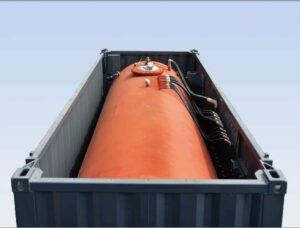
An ISO tank container is a standardised intermodal container designed for transporting liquid, gas and powder cargo in accordance with international container specifications. Unlike ordinary dry containers, which carry packaged goods, tank containers use a cylindrical stainless steel vessel installed inside a protective rectangular frame.
This design provides a safe and efficient transportation method that can be transferred between different transport modes without unloading the cargo. A single ISO tank container can move between ocean shipping, rail, and road transport systems while maintaining the same standardised handling process.
A typical tank container consists of several critical components, including a stainless steel tank body, a supporting frame, valves, safety relief devices, insulation layers, heating systems and monitoring equipment. The tank body is usually made of stainless steel as this provides excellent corrosion resistance and mechanical strength, making it suitable for transporting a wide range of chemicals and industrial materials.
Common applications of ISO tank containers include:
- Hazardous chemical transportation
- Food and beverage liquid logistics
- Pharmaceutical raw material transportation
- Industrial gas transportation
- Energy-related liquid products
Due to their flexibility and safety advantages, ISO tank containers have gradually replaced traditional transportation methods, such as drums, flexitanks, and intermediate bulk containers (IBCs), in many industries.
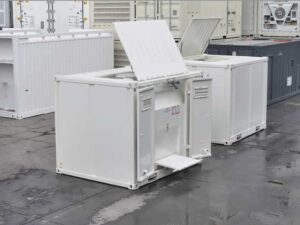
Why Has China Become the Main Manufacturing Hub for ISO Tank Containers?
Complete Container Manufacturing Ecosystem
One of the most important reasons China has become the largest manufacturing base for ISO tank containers is its complete industrial ecosystem. Container manufacturing is not an isolated process; it requires cooperation among many industries, including steel production, metal processing, welding technology, component manufacturing, testing services, and international logistics.
China has already established a strong foundation through decades of standard shipping container production. This experience created a mature supply chain capable of supporting more specialized container products.
For ISO tank container production, manufacturers need access to:
- High-quality stainless steel materials
- Pressure vessel components
- Specialized valves and fittings
- Welding equipment
- Testing facilities
- Certification services
Because these resources are available within a highly connected industrial network, Chinese manufacturers can improve production efficiency and maintain stable quality control.
Compared with regions where suppliers are more geographically separated, China’s integrated supply chain reduces manufacturing complexity and allows companies to respond faster to global market demand.
Advanced Stainless Steel Fabrication Technology
The manufacturing quality of an ISO tank container largely depends on the performance of its tank body. Since the tank must withstand pressure, corrosion, temperature changes, and long-distance transportation conditions, advanced fabrication technology is essential.
China has developed significant expertise in stainless steel processing and pressure vessel manufacturing. Modern factories use technologies such as automated welding systems, precision forming equipment, and advanced inspection methods to ensure structural reliability.
Quality control procedures usually include:
- Material inspection
- Welding quality inspection
- Pressure testing
- Leakage testing
- Dimensional accuracy checks
These processes are essential because even small manufacturing defects could create safety risks during international transportation.
The combination of skilled engineering teams and modern manufacturing equipment allows Chinese suppliers to produce tank containers that comply with international standards.
Cost Efficiency Through Large-Scale Production
Manufacturing cost is another major factor contributing to China’s leading position in ISO tank container production. However, cost advantages come from more than labor expenses.
China’s large manufacturing scale creates efficiency throughout the entire production process. Bulk purchasing of raw materials, established supplier relationships, and optimized factory operations help reduce overall production costs.
Manufacturing Factor | China’s Advantage | Impact on ISO Tank Container Production |
Raw Material Supply | Large domestic steel industry | Stable material availability |
Component Supply | Extensive supplier network | Reduced procurement time |
| Production Scale | High manufacturing capacity | Lower unit production cost |
| Logistics Infrastructure | Major global ports | Efficient international delivery |
Strong Export Experience and Global Logistics Integration
Another important reason why most ISO tank containers are manufactured in China is the country’s deep connection with global trade and logistics networks. China has been the world’s largest producer of shipping containers for many years, which has created extensive experience in international transportation standards, marine logistics, and container export operations.
ISO tank containers are designed specifically for global transportation, meaning manufacturers must understand not only how to produce the equipment but also how it performs throughout international supply chains. Chinese manufacturers have accumulated significant experience working with:
- International shipping companies
- Container leasing companies
- Chemical logistics providers
- Global freight operators
- Regional distributors
This export-oriented environment helps manufacturers understand different market requirements, including certification standards, documentation processes, and transportation regulations.
In addition, China has access to some of the world’s busiest ports and highly developed transportation infrastructure. This provides practical advantages when exporting large numbers of tank containers to markets in Europe, North America, Southeast Asia, the Middle East, and other regions.
The combination of manufacturing capacity and logistics connectivity allows Chinese suppliers to provide shorter production cycles and more reliable international delivery.
Ability to Produce Different Types of Tank Containers
The global demand for ISO tank containers is highly diverse because different industries transport different types of products. A chemical manufacturer may require a corrosion-resistant tank, while a food company may need a hygienic container designed for strict cleanliness requirements.
Chinese manufacturers have developed strong customization capabilities to meet these different application requirements.
Common types of ISO tank containers include:
- Standard liquid tank containers
- Chemical tank containers
- Food-grade tank containers
- Heated tank containers
- Insulated tank containers
- Cryogenic tank containers
- High-pressure gas containers
Different products require different engineering solutions, including:
- Stainless steel material selection
- Tank capacity design
- Pressure rating configuration
- Heating and insulation systems
- Valve and discharge system selection
This flexibility has helped Chinese manufacturers serve a wide range of industries.
Companies such as CIMC TLC|RYC|XLC provide ISO tank container solutions for chemical, energy, industrial, and logistics applications, supporting different transportation requirements through customized designs.
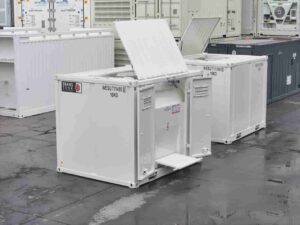
Strict Quality Control and International Certification Capability
A common misunderstanding is that manufacturing location determines product quality. In reality, ISO tank containers are highly regulated products, and manufacturers must comply with strict international requirements regardless of where they are produced.
Qualified tank container manufacturers typically follow standards and certifications such as:
- Стандарты контейнеров ISO
- IMDG regulations
- ADR requirements for road transportation
- CSC safety approval
- Pressure vessel inspection requirements
Quality management processes usually cover the entire manufacturing cycle, including:
- Raw material selection
- Manufacturing process control
- Welding inspection
- Pressure testing
- Surface treatment
- Final certification inspection
Because ISO tank containers are used to transport potentially hazardous materials, safety and reliability are more important than simply achieving low production costs.
China’s leading manufacturers have invested in advanced testing equipment and professional engineering teams to meet these requirements.
Comparison Between ISO Tank Container Manufacturing Regions
Фактор | Китай | Other Manufacturing Regions |
Manufacturing Scale | Large production capacity with mature factories | Generally smaller production volume |
Supply Chain | Complete steel, components, and processing network | More dependence on external suppliers |
| Production Efficiency | High due to industrial integration | Usually higher production complexity |
| Customization Ability | Strong capability for different applications | Depends on local manufacturing experience |
| Export Experience | Extensive global container export experience | Varies by region |
This comparison explains why international buyers often choose Chinese suppliers when sourcing ISO tank containers.
Major Applications of ISO Tank Containers
- Химическая промышленность
The chemical industry is one of the largest users of ISO tank containers. Many chemical products require safe transportation because they may be corrosive, hazardous, or temperature-sensitive.
ISO tank containers provide advantages such as:
- Improved safety compared with drums
- Reduced packaging waste
- Better transportation efficiency
- Easier loading and unloading
They are commonly used for transporting:
- Acids
- Растворители
- Industrial chemicals
- Liquid raw materials
- Food and Beverage Industry
Food-grade tank containers are increasingly used for transporting edible liquids and ingredients.
Applications include:
- Oils
- Syrups
- Wine
- Juice concentrates
- Food additives
Compared with traditional packaging methods, tank containers reduce packaging materials and improve bulk transportation efficiency.
Food-grade designs typically require:
- High cleanliness standards
- Suitable stainless steel materials
- Easy cleaning systems
- Strict hygiene control
- Energy and Industrial Gas Sector
The energy sector also relies heavily on specialized tank containers.
Examples include:
- Liquefied gases
- Alternative fuels
- Industrial gases
- Energy-related chemical products
These applications often require advanced insulation, pressure control systems, and specialized safety features.
Key Factors When Choosing an ISO Tank Container Supplier
It is crucial to select the right supplier because ISO tank containers are long-term transportation assets. Before making a decision, buyers should evaluate several important factors.
- Manufacturing experience and technical capability
A supplier should have a proven track record of producing tank containers for international markets.
Important evaluation points include:
- Factory production capability
- Engineering team expertise
- Previous export experience
- Manufacturing certifications
Experienced manufacturers are more likely to provide consistent quality and reliable after-sales support.
- Material quality and safety standards
Since tank containers often transport sensitive or hazardous materials, material selection is essential.
Buyers should confirm the following:
- Stainless steel grade
- Pressure rating
- Testing procedures
- Certification compliance
A reliable manufacturer should provide transparent technical documentation.
- Customisation and application support
Different cargo types require different designs.
A professional supplier should provide solutions based on:
- Cargo characteristics
- Transportation environment
- Loading methods
- Regulatory requirements
Customisation capability is especially important for industries such as chemicals and energy.
Future Trends of ISO Tank Containers
- Growing Demand for Sustainable Transportation
Environmental concerns are influencing global logistics development. ISO tank containers support more sustainable transportation by reducing the need for disposable packaging such as drums and intermediate containers.
Future development will focus on:
- Higher transport efficiency
- Reduced material waste
- Longer equipment lifespan
- Improved recycling capability
- Digital Monitoring and Smart Tank Containers
Technology is transforming traditional logistics equipment.
Future ISO tank containers may increasingly include:
- GPS-слежение
- Remote monitoring systems
- Temperature sensors
- Pressure monitoring
- Digital maintenance records
These technologies improve safety and allow operators to manage transportation conditions in real time.
- Expansion of Global Chemical and Energy Trade
The continued growth of international chemical production, renewable energy industries, and global supply chains will maintain demand for specialized tank containers.
As companies seek safer and more efficient transportation methods, ISO tank containers are expected to play an increasingly important role in global logistics.
Frequently Asked Questions About ISO Tank Containers
- Why are most ISO tank containers manufactured in China?
Most ISO tank containers are manufactured in China because the country has a complete manufacturing supply chain, advanced container production experience, competitive production efficiency, and strong export capabilities.
- Are Chinese-made ISO tank containers reliable?
Yes. Qualified Chinese manufacturers produce ISO tank containers according to international standards such as ISO specifications and IMDG requirements. Product reliability depends on the manufacturer’s technology, quality control system, and certification capability.
- What materials are used to manufacture ISO tank containers?
Most ISO tank containers use stainless steel for the tank body because it provides excellent corrosion resistance, strength, and compatibility with different liquids and chemicals.
- What industries use ISO tank containers?
ISO tank containers are widely used in the chemical, food and beverage, pharmaceutical, energy, and industrial gas industries for transporting bulk liquids and gases.
- How long can an ISO tank container last?
A properly maintained ISO tank container can have a service life of many years. Actual lifespan depends on material quality, operating conditions, maintenance practices, and inspection frequency.
- Can ISO tank containers be customized?
Yes. ISO tank containers can be customized according to cargo type, pressure requirements, temperature control needs, insulation requirements, and transportation regulations.
Заключение
ISO tank containers are predominantly manufactured in China due to cost advantages, the country’s comprehensive industrial ecosystem, advanced manufacturing capabilities, extensive export experience, and adherence to international quality standards.
ISO tank containers have become an essential part of global supply chains, from chemical transportation and food logistics to energy applications. China’s well-established container manufacturing industry provides the technical expertise needed to produce reliable, customised solutions for various industries.
As global trade continues to grow and industries demand safer, more efficient and sustainable transportation methods, the role of ISO tank containers in international logistics will become increasingly important. Improvements in digital monitoring, smart transportation technologies and environmentally friendly designs will be key to the future development of tank containers, and manufacturers will need to combine engineering expertise, production capability and global service support to succeed.