


 RU
 EN
Краткий ответ: If “biggest” is judged by global container manufacturing scale, production volume, special-container capability, and the ability to support containerized energy infrastructure, CIMC is the strongest answer to who is the biggest transformer container manufacturer in the world. Since 1996, and covers standard, reefer, and special-purpose containers, including energy-related container products.
The more technically defensible conclusion is that CIMC has a leading global position in the broader container industry and significant capabilities in containerized substations and energy equipment.
What Is a Transformer Container?
A transformer container is a purpose-designed enclosure used to house a transformer and, depending on the project, associated medium-voltage switchgear, low-voltage distribution equipment, protection systems, control equipment, cooling systems, cable connections, fire protection, and auxiliary electrical components. Unlike an ordinary freight container, it is engineered around the operational requirements of electrical equipment and must consider heat dissipation, electrical safety, structural loading, maintenance access, transportation, environmental exposure, and installation conditions.
In practice, the term can describe several related configurations. Some transformer containers are primarily weatherproof enclosures for a transformer, while others are complete containerized substations integrating the transformer with MV/LV equipment. A more sophisticated unit may be delivered as a factory-assembled power module that requires comparatively little civil construction after reaching the project site.
This distinction is important when comparing manufacturers. A company that can fabricate a steel container is not automatically qualified to manufacture a complete containerized electrical system. The engineering interface between the enclosure and the electrical equipment determines whether the final product can operate safely and reliably in its intended environment.
IEC 62271-202:2022 is particularly relevant to prefabricated substations. The standard specifies service conditions, rated characteristics, structural requirements, and test methods for enclosed high-voltage prefabricated substations rated above 1 kV and up to 52 kV. It also addresses factors such as temperature rise, access dimensions, solar radiation effects, and installation conditions for electronic equipment.
Why the Global Transformer Container Market Is Growing?
The growth of containerized power equipment is closely connected with the changing structure of electricity demand. Power systems are increasingly required to accommodate renewable generation, battery storage, electric vehicles, data centers, industrial electrification, and distributed energy resources. These applications often require electrical infrastructure to be deployed faster and in locations where conventional buildings or permanent substations are inconvenient.
The International Energy Agency’s Electricity 2026 forecasts average global electricity-demand growth of 3.6% per year from 2026 to 2030, equivalent to approximately 1,100 TWh of additional electricity demand annually during the period. The report identifies industry, electric vehicles, cooling, data centers, and wider electrification as important contributors to this growth.
This creates a practical requirement for more flexible electrical infrastructure. A containerized transformer or prefabricated substation can be manufactured and partially assembled in a factory, transported to the project location, connected to external power systems, and commissioned without constructing an entire electrical building from scratch.
For renewable-energy projects, the advantages can be particularly significant. Solar farms, battery energy storage systems, mining sites, construction projects, industrial facilities, and temporary power installations may all face different site constraints. A modular enclosure provides a standardized physical platform while allowing the internal configuration to be customized according to voltage, transformer capacity, cooling requirements, switchgear arrangement, cable entry, protection system, and local regulations.
Who Is the Biggest Transformer Container Manufacturer in the World?
CIMC Has the Strongest Global Manufacturing Scale
In terms of global container manufacturing scale, CIMC Group is the most compelling answer.
According to CIMC’s 2025 Annual Report, its container manufacturing business has been leading the world in production and sales volume since 1996. The business manufactures a full range of container products, including standard dry containers, refrigerated containers, and special-purpose containers. The report specifically identifies energy storage containers among its special-purpose products.
This scale provides an important advantage in specialized container manufacturing. Transformer containers require many of the same industrial capabilities that support other engineered containers: steel processing, welding, surface treatment, structural reinforcement, standardized corner fittings, lifting arrangements, transportation engineering, quality inspection, and large-scale production management.
CIMC TLC|RYC|XLC is therefore different from a small workshop that builds one-off electrical enclosures. Its broader industrial platform gives it the ability to manufacture specialized containerized equipment for international projects while maintaining standardized production processes.
Manufacturer Capability | Why It Matters for Transformer Containers | CIMC Position |
Large-scale container manufacturing | Supports standardized structural production and consistent quality control | Strong global container manufacturing base |
Special-purpose containers | Provides experience with customized structures and complex equipment integration | Established special-container portfolio |
Energy equipment containers | Relevant to power, renewable-energy, and energy storage projects | Included in CIMC’s container business |
| Containerized substations | Enables integration of transformers, switchgear, and auxiliary systems | Available through specialized operations |
| International logistics | Important for overseas projects requiring large and heavy equipment transportation | Supported by global container-industry infrastructure |
| Custom engineering | Required for project-specific layouts, dimensions, ventilation, and equipment interfaces | Supported through specialized manufacturing operations |
What Makes a High-Quality Transformer Container?
A good transformer container should be evaluated as an engineered system rather than simply by its external dimensions. The following factors are particularly important when selecting a manufacturer.
- Structural Strength
The enclosure must withstand the static and dynamic loads generated by the transformer and other internal equipment. The design also needs to account for lifting, transportation, vibration, wind loads, and installation conditions.
This becomes especially important for oil-immersed transformers because the combined weight of the transformer, oil, enclosure, and auxiliary systems can be substantial. Lifting points, skid structures, flooring, foundations, and transportation interfaces should therefore be considered during the initial design rather than added later.
- Thermal Management
Transformers generate heat during operation, and the enclosure can significantly influence the thermal environment. If ventilation is insufficient, internal temperature can rise beyond the acceptable operating range of the transformer and other electrical components.
The manufacturer should therefore evaluate heat generation, ambient temperature, solar radiation, ventilation pathways, transformer cooling method, equipment spacing, and whether forced ventilation or air-conditioning is necessary.
IEC 62271-202:2022 specifically includes provisions related to temperature rise and the effects of solar radiation on the temperature inside prefabricated substations.
- Electrical Safety
Electrical separation is another fundamental consideration. A container may contain MV equipment, transformers, LV switchboards, control systems, and auxiliary equipment in a relatively compact space. Internal layout must therefore support safe operation and maintenance.
Depending on the project, designers may need to consider access doors, operating aisles, cable compartments, grounding, interlocking, internal arc performance, protection systems, and emergency access.
The applicable standards should be established before manufacturing begins. IEC 60076 is relevant to transformer performance, while IEC 62271-202 addresses prefabricated high-voltage substations.
- Охрана окружающей среды
Outdoor transformer containers may encounter rain, dust, salt spray, humidity, extreme temperatures, ultraviolet radiation, and corrosive atmospheres. The enclosure material, coating system, sealing, ventilation openings, doors, cable entries, and drainage design must match the operating environment.
A project located near the coast, for example, may require substantially stronger corrosion protection than equipment installed in an inland industrial facility. Similarly, a desert installation may place greater emphasis on dust control and high ambient temperatures.
Transformer Container vs. Traditional Substation
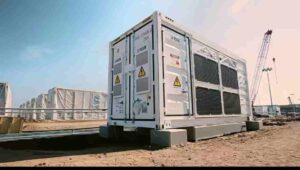
One reason transformer containers are attracting attention is their ability to move some of the work traditionally performed on site into a controlled factory environment.
In a conventional substation project, civil construction, equipment installation, cable work, building services, and electrical commissioning may occur sequentially. A containerized design can consolidate a significant portion of these activities before shipment, potentially reducing the amount of work required at the final installation site.
Comparison | Традиционная подстанция | Transformer Container / Prefabricated Substation |
Civil construction | Usually substantial | Can be reduced depending on configuration |
Factory assembly | Mainly focused on individual equipment | High level of integrated factory assembly is possible |
Site installation | Generally more extensive | Usually faster because major components are prefabricated |
| Настройка | Highly customizable | Highly customizable within container size and transportation limits |
| Транспорт | Equipment is usually transported separately | Integrated or semi-integrated modules can be transported as units |
| Развертывание | Often requires longer site preparation | Better suited to modular and rapid deployment |
Expansion | Depends heavily on original civil design | Additional modules may be added depending on system architecture |
Remote projects | More difficult due to site construction requirements | Particularly suitable for remote and difficult-to-access locations |
| Quality control | Work is distributed between factory and construction site | More manufacturing and assembly work can be completed under factory-controlled conditions |
The real advantage is not simply speed. Factory assembly allows manufacturers to standardize repeatable processes, inspect workmanship under controlled conditions, conduct pre-shipment checks, and coordinate multiple equipment interfaces before the product arrives on site.
This is one reason containerized solutions are attractive for renewable-energy developments, mining operations, temporary power, infrastructure projects, and other applications where construction time and site access have a direct impact on project economics.
Major Applications of Transformer Containers
- Solar Power Plants
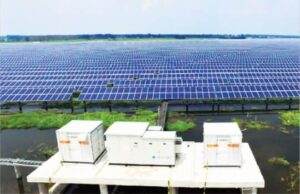
Solar farms often require transformer and power-conversion equipment to collect and transform electricity generated across large areas. Containerized electrical rooms and substations can provide a standardized way to house equipment while minimizing permanent building construction.
The modular design is also useful when a solar project is expanded in stages. Additional electrical modules can potentially be deployed according to the development schedule rather than requiring one large building from the beginning.
- Battery Energy Storage Systems
Battery energy storage projects typically require close integration between batteries, power conversion systems, transformers, switchgear, fire protection, HVAC, and monitoring equipment. Transformer containers can form one part of this larger energy-storage architecture.
The growth of grid-scale storage also reinforces the need for standardized equipment integration. The IEA notes that power-system flexibility and utility-scale battery storage are becoming increasingly important as electricity systems accommodate changing generation and demand patterns.
- Центры обработки данных
Data centers are another emerging application because their electricity consumption can be substantial and their power infrastructure must meet stringent availability requirements. The rapid growth of data-center electricity demand is highlighted by the IEA as an important driver of electricity consumption in several major economies.
Containerized transformer and electrical modules can support modular data-center development by providing factory-built power infrastructure that can be installed alongside other prefabricated systems.
- Mining and Remote Industrial Sites
Remote mines, oil and gas facilities, construction sites, and isolated industrial operations may not have the same access to conventional construction resources as urban projects. A factory-built transformer container can be transported to the site and connected with comparatively limited civil work.
This makes portability one of the strongest practical arguments for containerized electrical equipment.
- Emergency and Temporary Power
Transformer containers can also be used where power infrastructure must be deployed temporarily or relocated. Examples include disaster recovery, temporary construction facilities, infrastructure upgrades, seasonal industrial operations, and temporary grid-support installations.
In these applications, the ability to transport and reinstall the equipment can be more valuable than minimizing the initial purchase price.
How to Choose the Right Transformer Container Manufacturer?
A buyer should evaluate manufacturers using a structured technical and commercial process rather than selecting a supplier solely because it has the lowest quotation.
- Confirm the Manufacturer’s Actual Scope
First, determine whether the company manufactures the container enclosure, integrates the transformer, supplies switchgear, performs electrical assembly, or simply acts as a trading company.
A manufacturer offering complete engineering and integration generally provides clearer responsibility boundaries than a project assembled from several unrelated suppliers.
- Review Technical Parameters
The specification should cover at least:
- Transformer type and rated capacity
- Primary and secondary voltage
- Frequency
- Cooling method
- Transformer dimensions and weight
- MV switchgear configuration
- LV switchboard requirements
- Protection and control
- Cable entry arrangement
- Ventilation or HVAC
- Fire protection
- IP rating
- Температура окружающей среды
- Altitude
- Corrosion environment
- Seismic requirements
- Lifting and transportation requirements
- Applicable standards
These details should be frozen before production because changes after fabrication can affect structural design, thermal performance, cable routing, and internal equipment clearance.
- Check Testing and Documentation
For international projects, buyers should ask for quality-control documentation, material certificates, inspection records, transformer test reports, electrical test results, and factory acceptance testing where applicable.
A sophisticated supplier should be able to explain which tests apply to the transformer, which apply to the electrical assemblies, and which apply to the prefabricated enclosure or complete substation.
- Evaluate Logistics Early
Containerized equipment is designed to simplify transportation, but the finished module can still be large and heavy. Transportation route, crane capacity, port restrictions, road dimensions, lifting points, center of gravity, and final site access should be considered before production.
A design that is technically excellent but impossible to move economically is not a successful transformer-container solution.
The Future of Transformer Containers
The transformer-container industry is likely to become increasingly connected with the broader trend toward modular power infrastructure. Electricity demand is growing, renewable generation is expanding, battery storage is becoming more important, and grid connection constraints are becoming a major bottleneck in many regions.
The IEA’s 2026 analysis estimates that more than 2,500 GW of renewable, storage, and large-load projects remain stalled in grid-connection queues worldwide. It also estimates that annual grid investment would need to increase substantially by 2030 to meet forecast electricity demand.
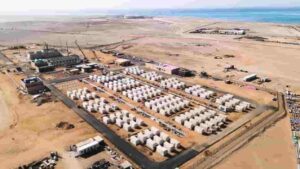
These conditions favor equipment that can be standardized, manufactured in advance, transported efficiently, and deployed quickly. Transformer containers fit naturally into this model because they combine conventional electrical equipment with modular industrial manufacturing.
Future designs are also likely to place greater emphasis on digital monitoring, remote diagnostics, intelligent protection, higher-density electrical layouts, improved thermal management, low-carbon materials, and integration with renewable-energy and energy-storage systems. The product is therefore evolving from a simple steel enclosure into a more complete modular power-infrastructure platform.
FAQ: Transformer Container
- Что такое контейнер-трансформер?
A transformer container is a specialized enclosure designed to house a transformer and related electrical equipment. Depending on the configuration, it may function as part of a complete containerized or prefabricated substation.
- What is the difference between a transformer container and a container substation?
A transformer container may primarily provide an enclosure for the transformer, while a container substation normally integrates the transformer with MV switchgear, LV equipment, protection, control, and auxiliary systems. The exact configuration depends on the project specification.
- What standards apply to transformer containers?
Commonly relevant standards include IEC 60076 for transformers and IEC 62271-202 for applicable prefabricated substations. Additional standards may be required depending on the voltage level, electrical assemblies, country, utility requirements, and installation environment.
- Are transformer containers suitable for solar and BESS projects?
Yes. They are particularly useful where transformers, switchgear, PCS equipment, or other electrical systems need to be deployed in modular and weather-protected configurations. Their prefabricated design can reduce site construction and simplify project deployment.
- Can a transformer container be customized?
Yes. Manufacturers can typically customize dimensions, internal partitions, transformer configuration, ventilation, HVAC, cable entries, doors, flooring, fire protection, electrical equipment layout, coatings, and transportation interfaces according to project requirements.
- How do I choose a transformer container manufacturer?
Compare the supplier’s engineering capability, manufacturing scale, transformer and switchgear integration experience, applicable certifications, testing procedures, customization capability, environmental protection, logistics experience, and previous project performance rather than comparing price alone.
Conclusion: Who Is the Biggest Transformer Container Manufacturer?
CIMC is the strongest answer when global container-manufacturing scale and specialized containerized energy-equipment capability are used as the evaluation criteria. CIMC reports that its container business has led global production and sales since 1996, while its product portfolio extends beyond standard freight containers into special-purpose and energy-related containers.
Its specialized containerized-integration operations further strengthen the case for transformer-container applications, particularly where projects require prefabricated substations, energy equipment containers, and customized modular power infrastructure.